
Thursday, November 12, 2026



News and Views from the Global South
Indigenous Rights
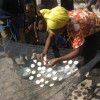
BIODIVERSITY: Odds Stacked Against San Harvesters of Devil’s Claw
Nguni Diyasen gently loosens the earth with a hoe and then widens the hole with her bare hands. Fifty centimetres down she uncovers the light brown root of a devil's claw. Used to treat arthritis and rheumatism, the plant also constitutes her only income.Training Young Mapuche Filmmakers in Chile
"I want to film the few untouched natural resources we have left and show the injustices that have been committed against our communities," Claura Anchio, who took part in an innovative free filmmaking course for young Mapuche Indians in Chile, told IPS.ECUADOR: Native Groups Poised for Nationwide Protests Over Water Bill
Indigenous organisations in Ecuador opposed to a water reform bill that they say would give mining companies and agribusiness privileged access to water have threatened to extend their protests around the country in order to keep the legislature from passing the bill without certain modifications.MIDEAST: West Bankers Made Refugees in Their Own Country
Several Palestinians have set up a protest tent in no-man’s land in the northern Gaza Strip, near the Erez border crossing into Israel, as they protest their deportation from the Israeli occupied West Bank into Gaza where Hamas authorities have refused them entry.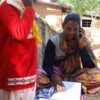
INDIA: Mobile Phone-Based News System Gives Voice to Tribals
The central Indian remote jungles of Chhattisgarh and the urban technology- savvy node of Bangalore are now linked by a mobile phone-based information system, a first in the world, called CGnet Swara.Torture – Live and Well in Turkey
Six years after the ruling Justice and Development Party government declared ‘zero tolerance’ for torture, the practice prevails in Turkey, human rights monitors in the country’s predominantly Kurdish southeastern region say.Indigenous Forum Closes on Note of Hope, and Caution
Friday marked the last day of the two-week Ninth Session of the United Nations Permanent Forum on Indigenous Issues, with attendees expressing optimism but also concern about the ongoing encroachment of industrial and development projects into native lands.
RIGHTS-PERU: Soldiers’ Acquittal Reflects Trend of Impunity
The acquittal by a Peruvian court of two soldiers and a police officer charged with the forced disappearance of four peasant farmers in the Andean highlands region of Ayacucho is viewed as a serious setback by the families of victims of human rights violations during the 1980-2000 civil war.MEXICO: Terror Returns to Oaxaca
A violent incident in which two activists were killed in the southern Mexican state of Oaxaca has raised fears among human rights groups of a return to the unrest and severe clashes between protesters and police that virtually paralysed the state in 2006.Poor Communities Struggle to Attend U.N. Indigenous Meet
"You will never suffer from fatal diseases like cancer and ulcer if you drink mare's milk," says Anna Postnikova, who is currently attending a major U.N. meeting on indigenous issues.2010 – International Year of Biodiversity Loss?
In 2002, world leaders committed to reduce the rate of global biodiversity loss by 2010, but the date has come and gone for these commitments to be fulfilled.
KENYA: Successful Weather Prediction Uses Old and New
In the wake of ever-changing climatic conditions, a study in western Kenya has discovered that combining traditional methods of weather prediction with meteorological forecasting is the best way of obtaining more accurate forecast data.ECUADOR: Native Groups in Showdown Over Water Bill
The second and final parliamentary debate of a new water bill to regulate water resource management in Ecuador is due to begin May 4, amid stark divisions among indigenous movements and between them and the government of left-leaning President Rafael Correa.Native Delegates Challenge Development Orthodoxy
While aboriginal peoples represent approximately five percent of the world's population, they are 10 percent of the world's poor, according to a new World Bank report on "Indigenous Peoples, Poverty and Development".BURMA: Pressure Mounts on Energy Giant Chevron to Disclose Revenue
When shareholders of the multinational company Chevron gather for their annual meeting in the U.S. city of Houston in late May, they will come face to face with Naing Htoo, whose community has suffered due to the exploits of the energy giant in military-ruled Burma.ASIA: Journalists Lament Media Bias vs Ethnic Minorities
Despite issues of discrimination and violence hounding ethnic minorities, they continue to lack ‘voice' in the mainstream press and suffer prejudices from journalists themselves.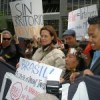
Protesters Call Dam Project a “Disaster” for Brazil’s Native Communities
A modest protest gathered outside the Permanent Mission of Brazil in New York on Wednesday to oppose the controversial Belo Monte dam project in Brazil.
Q&A: “It’s a Complete Reboot of How We See Things”
The blockbuster, critically acclaimed film 'Avatar' portrays the ruthless plundering of a pristine ecosystem on a distant planet by greedy corporate interests – a scenario that is all too familiar to many indigenous communities here on Earth.
CLIMATE CHANGE: Forests Not for Absorbing Carbon, Say Activists
The UN-led global initiative to use forest conservation as a way to offset greenhouse gas emissions heated things up at the people's summit against climate change in Bolivia. In the end, the participants reached a consensus - and rejected the plan.U.S. to Face Litany of Complaints at UN Human Rights Council
Human rights groups are telling the United Nations that the United States is failing to hold corporations, including private government contractors, accountable for human rights abuses ranging from human trafficking to murder.RIGHTS-AUSTRALIA: Plan For Nuclear Waste Dump Faces Backlash
Aboriginal landowners in Australia’s far north are battling government plans to construct this country’s long-term nuclear waste storage facility on their land.« Previous Page — Next Page »





The planet's roughly 350 million indigenous peoples took notable steps on the international stage in the last decade. They got the world's governments to agree to create a body to represent them at the United Nations, the Permanent Forum on Indigenous Issues, and to appoint a special rapporteur responsible for their human rights. In 2007 a Universal Declaration on the Rights of Indigenous Peoples was approved by the UN. Yet the living conditions of most "tribal", "aboriginal", "native" or "first" peoples remain precarious. IPS, with its network of contributors at the UN and linked to indigenous communities worldwide, is committed to tracking the world community's efforts to do justice to the rights and aspirations of these peoples, with a special current focus on Latin America's 40 million rural indigenous peoples.

The Week with IPS

Tracking global progress towards a sustainable world
