
Thursday, November 12, 2026



News and Views from the Global South
Indigenous Rights
ARGENTINA: “We’re Drowning in Sadness”
The legal battle waged by an indigenous community in northern Argentina against the government over a project that flooded half of their territory highlights the fact that legal title to their land is not enough to overcome the marginalisation they have faced for centuries.
Wanted: World Referendum, Climate Justice Tribunal
A world people's referendum on climate change will be held in April 2011 for the earth's peoples to decide how to address this global problem.BOLIVIA: Save the Planet from Capitalism, Morales Says
Activists meeting at the people's conference on climate change in this Bolivian city booed a message from United Nations Secretary-General Ban Ki-moon but cheered at host President Evo Morales's chant of "planet or death!"Crunch Time for Ecuador’s Biological Treasure Trove
These are decisive days for the Yasuní National Park, one of the world's most biodiverse areas, because of the danger that its wealth of underground oil poses to this unique and fragile ecosystem in Ecuador's Amazon jungle region.BOLIVIA: “Living Well” in Harmony with the Environment
The philosophy of "Living Well" enshrined in Bolivia's new constitution is being put forward by the government as the basis for a global movement against consumerism, depredation of natural resources for profit, and current models of development.Struggle for Native Rights Making Headway
International efforts to protect the rights of the world's aboriginal communities seem to be gaining strength despite opposition from certain powers that continue to abuse native lands and resources in the name of development.Opposition Mounts to Carbon Compensation Schemes
The World People's Conference on Climate Change and the Rights of Mother Earth, which opened Monday in Bolivia, will reflect vigorous resistance to financial compensation for forest conservation in return for permits to emit greenhouse gases, activists told IPS.
VENEZUELA: Yanomami Put Body Painting Down on Paper
Men and women of the Yanomami people paint their bodies, drawing straight, curved, dotted and parallel lines, arcs and circles, triangles, rectangles, grids, spider's webs or rings, all arranged as if on a checkerboard.POLITICS-HUNGARY: Rightward Swing Has Fascist Overtones
In the autumn of 2006 Hungary was rocked by a series of anti-government protests triggered by the release of a tape in which then prime minister Ferenc Gyurcsány confessed to his Social-Democratic Party (MSZP) having lied to win elections that year. Now it is payback time.MEXICO: Rights Activists Face Threats, Arbitrary Detention – and Worse
Francisco Jiménez, a member of the National Committee of Rural and Fishing Unions (CONORP) was arrested on Apr. 7 in the Mexican capital by agents from the southern state of Chiapas in what activists say is another case of arbitrary detention.
PARAGUAY: Native Group Defends Land Claim Before Inter-American Court
One of the three public hearings held this week in Lima by the Inter-American Court of Human Rights discussed the responsibility of the Paraguayan state for violations of the right of indigenous communities to collective ownership of their land.CLIMATE CHANGE-BOLIVIA: In Defence of Pachamama
Through their ancestral knowledge and traditions, indigenous peoples will make a unique and invaluable contribution to the World People’s Conference on Climate Change and the Rights of Mother Earth, which begins Monday, Apr. 19 in the central Bolivian city of Cochabamba.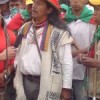
COLOMBIA: Indigenous Justice Put to the Test
Feliciano Valencia, who holds the rank of minister for the Nasa indigenous people in the southwestern Colombian province of Cauca, was arrested Saturday but released on bail.
Q&A: “Morales Is a Guide in a Long Period of Change”
The resurgence of the thinking of Aymara "amautas" or shamans about nature, the collective welfare of society and the defence of life is now a political project in Bolivia led by left-wing President Evo Morales.MIDEAST: ‘Poetic Justice’ in Jerusalem
President Barack Obama has made plain he means to deconstruct Israel’s 43-year-old grip on East Jerusalem. But, for all Washington’s pressure, Israel seeks to tighten its hold on the occupied part of the city.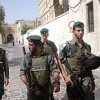
MIDEAST: Palestinian Christians Barred From Jerusalem for Easter
Israeli authorities prevented thousands of Palestinian Christians from entering Jerusalem and accessing Christianity’s most holy sites over Easter in an unprecedented clampdown on religious freedom.PERU: Oil Pipeline and Uncontacted Tribes
A 200-km oil pipeline that Franco-British oil group Perenco aims to build in the heart of Peru's Amazon jungle region is at the centre of a controversy because of the reported existence of uncontacted native groups in the area.CLIMATE CHANGE: Native Peoples Reject Market Mechanisms
Solutions to global warming based on the logic of the market are a threat to the rights and way of life of indigenous peoples, the Latin American Indigenous Forum on Climate Change concluded this week in Costa Rica.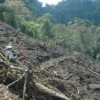
PERU: The Tangled Paths of New Forest Law
Indigenous protests prompted the introduction of a new legislative bill on forests and wildlife in Peru, the second most forested country in South America. Experts consulted by Tierramérica pointed to what the initiative gets right, but also to what's wrong with it.CLIMATE CHANGE: From Copenhagen to Cochabamba
A different way of fighting global warming will be tried out in the central Bolivian city of Cochabamba when government representatives and thousands of activists gather for the World People's Conference on Climate Change and the Rights of Mother Earth.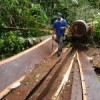
ENVIRONMENT: Forests May Depend on Survival of Native People
After the failures in Copenhagen to agree on a new climate protection treaty, and more recently at the Doha meetings on trade in endangered species to prevent bluefin tuna from going extinct, indigenous forest communities may offer examples of sensible governance for shared resources on a small planet.« Previous Page — Next Page »





The planet's roughly 350 million indigenous peoples took notable steps on the international stage in the last decade. They got the world's governments to agree to create a body to represent them at the United Nations, the Permanent Forum on Indigenous Issues, and to appoint a special rapporteur responsible for their human rights. In 2007 a Universal Declaration on the Rights of Indigenous Peoples was approved by the UN. Yet the living conditions of most "tribal", "aboriginal", "native" or "first" peoples remain precarious. IPS, with its network of contributors at the UN and linked to indigenous communities worldwide, is committed to tracking the world community's efforts to do justice to the rights and aspirations of these peoples, with a special current focus on Latin America's 40 million rural indigenous peoples.

The Week with IPS

Tracking global progress towards a sustainable world
