Languages
Saturday, June 27, 2026



News and Views from the Global South
Middle East & North Africa

Arab Americans Aim at Preserving New York’s Little Syria
A brick red, six-story tenement house, St. George Melkite Church and a community house in desperate need of repair are nearly all that remain of a once thriving Arab-American community in downtown New York City.
U.S., EU Urged to Press Harder for Reform in Bahrain
Human rights groups here are calling for the United States and the European Union (EU) to exert more pressure on Bahrain, home to the U.S. Navy's Fifth Fleet, to seriously engage its opposition and end its repression of its majority Shi'a population.
U.N. Urges Turkish Police to Exercise “Restraint”
United Nations Secretary-General Ban Ki-moon and U.N. High Commissioner for Human Rights Navi Pillay have advised “maximum restraint” following media reports of a violent police crackdown on peaceful protestors in Istanbul’s Gezi Park.
Border Weakens Between Bombs and Cherries
It all happened within ten days – Syria’s civil war fought metres away from Israeli orchards abutting the ceasefire line; Austrian peacekeepers hastily evacuating the Demilitarised Zone (DMZ) that separates Israel from Syria; fears of a total collapse of the UN Disengagement Observer Force (UNDOF). All while the cherry-picking season is at its peak.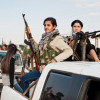
Kurds Advance, Into the Unknown
A ban on political and even social gatherings, a bar on Kurdish language and culture; uprooting people, forced disappearances and a ‘caste’ of hundreds of thousands of local Kurds deprived of citizenship... life for Kurds in pre-war Syria was probably as dire as it is today for their kin in Iran.Washington Mulls Surprise Rouhani Victory in Iran Vote
The surprise victory of Hassan Rouhani in Iran's Jun. 14 election has provoked a range of reactions here, ranging from cautious optimism about possible détente between Tehran and Washington to outright rejection of the notion that his presidency will produce any substantive change in policy, foreign or domestic.
Fatwas Heighten Sectarian Tensions in Syria Conflict
Saudi Arabian religious scholars are leading an increasingly vocal chorus of Islamic preachers who are urging Muslims and Arabs to support Syrian rebels against what they say are atrocities at the hands of Iran-backed Shiite forces of Syrian President Bashar al-Assad.
Iranians Vote for Hope and a Change of Course
Iran's Jun. 14 presidential election results, announced the day after voting was held, were nothing less than a political earthquake.
Despite Arms Announcement, U.S. Syria Strategy Remains Unclear
Despite Thursday's announcement that President Barack Obama has decided to provide direct military assistance to Syrian rebels, what precisely the administration has in mind remains unclear.
Obama to Increase “Scope and Scale” of Aid to Syrian Rebels
With U.S. intelligence agencies' concluding that the Syrian government has used chemical weapons against rebel forces, the White House announced Thursday that it will increase "the scope and scale" of assistance it has been providing to the opposition, including direct support to its military arm.
Is the 2030 Goal for Hunger Eradication Realistic?
With less than three years before a 2015 deadline, the developing world is largely expected to miss one of the U.N.'s key Millennium Development Goals (MDGs): halving the number of people living in extreme poverty and hunger.U.N. Says 93,000 People Killed in Syria
At least 93,000 people were killed in Syria's conflict by the end of April this year, but the true number could be "potentially much higher", the United Nations human rights office says.Iran’s Reform-Centre Alliance Will Transcend Election
The decision by the reformist candidate Mohammadreza Aref to withdraw his candidacy - and in effect open the path for the centrist Hassan Rowhani to become the unified candidate of both the centrists and reformists - is an important development in Iranian politics.
Economic Issues Murky As Iranians Go to Polls
Talking to ordinary people in Neishabour and Tehran about Iran's Jun. 14 presidential election, economic issues seem foremost on their minds. But whom they will vote for is based more on vague promises to pull the economy out of its deep crisis than on well-defined economic programs.
Scales Tip Towards Women in Jewish Religious Rights Struggle
The struggle for gender equality and Jewish pluralism took a highly symbolic turn on Sunday at the Western Wall, Judaism's most revered site and emblem of unity, as a group of women known as "Women of the Wall" prayed legally and in a way they saw fit.
Cairo’s Poor Convert Kitchen Waste Into Fuel Savings
The bio-gas digester on the roof of Hussein Farag's apartment in one of Cairo's poorest districts provides a daily supply of cooking gas produced from the kitchen waste his family would otherwise discard in plastic bags or empty into the clogged sewer below his building.
Egypt’s Presidency, Judiciary Brace for Showdown Over Draft Law
The post-revolution struggle between Egypt's judiciary and President Mohammed Morsi, the country's first Islamist head of state, finally seems to be coming to a head over controversial draft legislation regulating judicial authority.
Q&A: Turkish Opposition Leader Expects Unrest to Continue
As protests in Turkey stretch into their second week, the precise terms and conditions that could bring the social unrest to an end are unclear, though many speculate about what would end the deadlock between the government and protesters.
U.S. Syria Hawks Can’t Get No Traction
With Syrian government forces and their allies scoring a major victory over Western- and Gulf Arab-backed rebel forces this week, neo-conservatives and other anti-Damascus hawks are trying hard to turn up the pressure on President Barack Obama to sharply escalate U.S. support for the opposition.
Turkish Activists Bring Humour, Creativity to Social Media
Sitting with hundreds of other protesters in the centre of Istanbul's Gezi Park Thursday night, Arzu Marsh rummages through her backpack to show off what she calls her makeshift "emergency kit": medical masks, a red spray-bottle filled with a liquid that lessens the effect of tear gas, a scarf and some food.
In Southern Tunisia, Pollution No Longer Swept Under the Rug
The story of Gabès and the local phosphate industry follows a plot that is all too familiar: an underdeveloped town located in an industrial region boasts one major lucrative industry with high output and export values, but the local population and surroundings experience alarming levels of illness and environmental blight.« Previous Page — Next Page »


The Week with IPS

NEXT STOP - SDGs
Tracking global progress towards a sustainable world
Tracking global progress towards a sustainable world
