
Saturday, July 25, 2026



News and Views from the Global South
Human Rights
A World Order in Crisis: War, Power, and Resistance
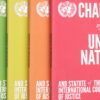
Article 2(4) of the United Nations Charter prohibits member states from using threats or force against the territorial integrity or political independence of any state. Violating international law, the United States and Israel attacked Iran on February 28, 2026. The ostensible reason for this unprovoked aggression was to prevent Iran from developing a nuclear weapon.
Central Bank Hedging Triggered Gold Fever
In mid-1971, US President Nixon ended the dollar’s gold peg at $35 per ounce, triggering de-dollarisation. The 2025 gold and silver rush followed private speculators trying to profit from central banks hedging against perceived new risks.
‘The Political System Only Moves When Threatened Directly’
CIVICUS discusses Nepal’s upcoming election with youth activist Anusha Khanal of the Gen Z Movement Alliance, a youth-led civil society coalition mobilising for democratic accountability and governance reform in Nepal.

Gender Equality: A Global Priority or a Global Consensus?
The 70th session of the Commission on the Status of Women (CSW70) (March 9-19), held at the United Nations headquarters, brought together governments, decision makers, civil society, and international organizations to address a central issue: access to justice for women and girls.
Europe and Multilateralism
“Europe can no longer be a custodian for the old-world order, for a world that has gone and will not return (…) we need a more realistic and interest-driven foreign policy.” These were some of the words pronounced one week ago by the President of the European Commission, Ursula von der Leyen, at the EU Ambassadors’ Conference in Brussels. A speech that sparked considerable controversy: an almost immediate rebuttal from the President of the Council, Antonio Costa; rumours of a motion of censure against Von der Leyen in the European Parliament; more or less public reproaches from several European leaders; and a swift and complete retraction by the President herself.
Sudanese Civil War Escalates as Drone Strikes Deepen Civilian Toll and Regional Risks
The past two weeks have marked a significantly violent escalation in the Sudanese Civil War, with drone strikes and artillery shelling between the Rapid Support Forces (RSF) and the Sudanese Armed Forces (SAF) causing widespread destruction, casualties, and displacement. With humanitarian responses critically underfunded and the scale of needs, including the hunger crisis, continuing to grow, experts warn that millions in Sudan could be affected by famine, violence, or prolonged displacement.
Running on Sunshine: Pakistan’s Solar Boom to Tide Over Middle East Energy Crisis
Energy expert Vaqar Zakaria believes solar power makes “excellent economic sense” – and he lives by it. For over five years, his rooftop panels have slashed his bills, sometimes to zero, even allowing him to sell surplus electricity back through net metering.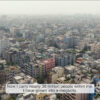
My Name is Dhaka
 My Name is Dhaka is a one-minute experimental film portraying Dhaka as a living, breathing entity with a 400-year history. Through a reflective voice, the city recounts its transformations, crises, and resilience. It captures contrasts between pollution and celebration, hardship and hope, revealing a megacity shaped by climate change, migration, and human survival.

International Tensions Spark New Nuclear Threat
When German Chancellor Friedrich Merz opened the 62nd Munich Security Conference by declaring that the post-war rules-based order ‘no longer exists’, there was plenty of evidence to back his claim. Israel is committing genocide in Gaza in defiance of international law, Russia is four years into its illegal invasion of Ukraine, the last nuclear arms control treaty between Russia and the USA has just expired and the USA has withdrawn from 66 international bodies and commitments. Since the conference, Israel and the USA have launched another war on Iran, threatening to spark a broader regional conflict. Meanwhile the UN is undergoing a funding crisis, cutting staff and programmes, and civil society organisations that relied on US Agency for International Development funding are facing closure.
80 Percent of Rural Households Without Direct Water Access – World Water Report
A new United Nations report has warned that global water inequality remains one of the most pressing development challenges of the decade, with billions still lacking safe drinking water and sanitation – while women and girls continue to bear the heaviest burden of water insecurity.
Is WWIII here?
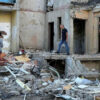
It is becoming increasingly difficult to ignore the tension, violence and uncertainty in the world in recent years. The number of wars is growing, more and more money is being spent on weapons, and the rhetoric of major powers is becoming increasingly decisive.
Young Afghan Taekwondo Women Coach Chose Resistance over Surrender to Taliban
When Khadija Ahmadzada was arrested in Herat province of Afghanistan in January this year, it sparked widespread domestic and international protests. Women’s rights activists and social media users raised their voices with slogans such as “Sport is not a crime,” “Education is a right for women,” and “Don’t erase women,” often using the hashtag #BeHerVoice.
CHINA: ‘The State Is Using Generative AI to Engineer Reality Through Informational Gaslighting’
CIVICUS discusses China’s tech-enabled repression with Fergus Ryan, a Senior Analyst at the Australian Strategic Policy Institute (ASPI), where he specialises in how the Chinese Communist Party shapes global information environments through censorship, propaganda and platform governance. His research includes a major study on China’s AI ecosystem and its human rights impacts, as well as investigations into China’s use of foreign influencers.
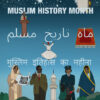
Beyond Stereotypes: Reclaiming Muslim Histories during Ramadan
In public discourse today, Muslims often appear as subjects of debate rather than authors of their own histories. Discussions about Muslim societies tend to revolve around geopolitics, security or conflict, leaving little space for the cultural, artistic and intellectual traditions that have shaped Muslim communities across centuries.
A Remotely-Piloted Weapon That Targets Civilians in War Zones
As the world continues to be weighed down in political and military turmoil, drones are being increasingly used as weapons of war in a rash of ongoing conflicts—including Ukraine vs Russia, Israel vs Palestine, US vs Iran and Israel vs Lebanon, plus in civil wars in the Democratic Republic of the Congo (DRC), Sudan and Haiti.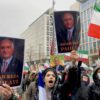
Iran Conflict: “Civil War Will Be Inevitable”
Iranian and Israeli flags fill the centre of Manchester, in northern England. There are also portraits of a king overthrown almost half a century ago and of his son, now a claimant to the throne from exile. It is yet another march of Iranians calling for Reza Pahlavi as an alternative to the regime of the ayatollahs.
Ranking U.S. Presidents: Best and Worst
Throughout its 250-year history, following the Declaration of Independence on July 4, 1776, the United States has elected 47 presidents. From George Washington in 1789 to Donald Trump in 2024, each U.S. president has left their mark on the nation and the world in various ways.
Philippines: ICC Hearing Gives Survivors of Duterte’s Drug War Hope
Gito* had just arrived at his father’s house in Caloocan City in the Philippines on December 7, 2016, when three armed policemen burst into the home, grabbed his father, took him outside and shot him multiple times. Gito told IPS his father had put his hands up when the officers told him they had come to arrest him, but they opened fire anyway.
Rapid Rise of Smart City Surveillance Tech Across Africa to Spy on Citizens
A massive expansion of AI-enabled surveillance of public spaces across Africa is violating citizens’ freedoms and the fundamental human right to privacy, warns a new report by the Institute of Development Studies.
At CSW70, Advocates Warn Conflict Is Deepening Barriers to Justice for Women and Girls
The 70th session of the Commission on the Status of Women (CSW70) has brought together global leaders, gender equity advocates, and youth representatives at the United Nations (UN) Headquarters to advance efforts to strengthen mechanisms for justice, equality, and representation for women and girls worldwide. With challenges particularly pronounced in conflict zones, this year’s priority theme —“ensuring and strengthening access to justice for all women and girls — focuses on repealing discriminatory laws and addressing persistent structural barriers that prevent women and girls from being fully heard, represented, and treated equally.
Oil Shocks, Political Upheaval and the One Solution Governments Keep Ignoring
Once again, global oil prices are spiking, driven by the Israeli-US war against Iran. With Iran retaliating by attacking infrastructure and transport hubs and blocking the Strait of Hormuz, through which one-fifth of the world’s oil passes, oil supplies from the region are being choked, pushing up prices. The cost of a barrel of Brent crude – the international benchmark for oil prices – stood at US$73 before the conflict but has surged beyond US$100 since. It could go higher still as war continues.« Previous Page — Next Page »


One world, one humanity, now one court to defend its rights. Another step towards universal human rights, but not remotely a step far enough. The United Nations adopted the Universal Declaration of Human Rights more than half a century ago, but that has done little to stop violations the world over, just as the Geneva Convention has not protected prisoners of war enough. Democracy itself and the freedom it presupposes has not been protective enough. This is the century to move from politicisation of human rights towards humanising political ways. IPS keeps an eye on that difficult path.

The Week with IPS

Tracking global progress towards a sustainable world
