
Friday, November 13, 2026



News and Views from the Global South
Human Rights

Women’s Bodies, COVID-19 and Male Chauvinism
COVID-19 has in some nations been converted into a noxious, political issue. One of many worrying examples is the rhetoric of Brazil´s president. On 10 November, when Brazil´s COVID-19 death toll surpassed 162,000 victims – the numbers have continued to raise and are now 179,032 second only to USA´s 296,745 – Jair Bolsonaro minimized the effects of COVID-19 by stating: ”All of us are going to die one day. There is no point in escaping from that, in escaping from reality. We have to cease being a country of sissies.” Bolsonaro actually said maricas, which like sissies is slang for gay people. Both expressions originally indicated ”small girls” – marica is a diminutive of Maria and sissy of “kid sister”. Bolsonaro thus defined homosexuality as effeminacy by associating gay men with affectation and cowardice. By connecting disease, fear, and femininity the Brazilian president not only ignored the strength and courage women throughout history have demonstrated by enduring childbirths and caring for others, it also shows a strong disregard for gender equality and the rights of women and gay people.
Education Cannot Wait Interviews H.E. Mr. Stanislas Ouaro, Minister of National Education and Literacy, Burkina Faso
H.E. Mr. Stanislas Ouaro became the Minister of National Education and Literacy of Burkina Faso in February 2018 after a long academic career. Between 2012 and 2018, Mr. Ouaro was the President of the Université Ouaga II. Prior to that, the eminent mathematician held several teaching and administrative posts with Ouagadougou University. Mr. Ouaro is widely published, and has also served as the President of the Réseau pour l’Excellence de l’Enseignement Supérieur en Afrique de l’Ouest (Network for Excellence in Higher Education in West Africa). A leading advocate for education and equality, Mr. Ouaro has been awarded several academic awards in Burkina Faso and elsewhere.
If Your Civic Space is Closed, your Human Rights Dissolve
On Human Rights Day, civil society calls for the protection of civic space as a fundamental freedom, as more than 80% of the world’s population live in countries where civic space is closed, repressed or obstructed.
Reduce Military Spending – the Much-Needed Response to Violence Against Women
The COVID-19 pandemic is NOT the biggest pandemic the world confronts at the moment, despite over 69 million cases and 1.5 million deaths worldwide.1 If it’s not COVID, what is it then? It is violence against women!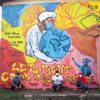
Human Rights Must Be at the Heart of the COVID-19 Recovery
On 10 December every year, we celebrate Human Rights Day, marking the anniversary of the adoption of the Universal Declaration of Human Rights. The Universal Declaration guarantees a spectrum of human rights that belong to each of us equally, and unite us as a global community and upholds our humanity.
Escazú: Historic Step Towards Protecting Human Rights Defenders in Latin America and the Caribbean
The global health crisis that has marked 2020 did not put an end to another pandemic that has been plaguing Latin America and the Caribbean: murders and attacks against environmental defenders.
Education Is a Fundamental Human Right and the Priority of the 21st Century
Education is not a privilege. It is a fundamental human right. Yet, education is undervalued even at the best of times. We often fail to connect the dots between the right to education and the realization of all human rights. As noted by the Nobel-winning economist Amartya Sen, we have failed to give ‘this massive potential in transforming human lives’ the attention it deserves.
US Presidential Election Part 4: The Legacy of Slavery and Racism
In a powerful address at the Hungry Club Forum on 10 May 1967, Martin Luther King Jr. spoke about US’s so-called “three original sins”, the evils of slavery, poverty and war or, more generally, racism, materialism and militarism.
Drop in Remittances – a Financial Lifeline for 800 Million People – Could Impact Financial Stability of Numerous Countries
On Dec. 2 Gabriel Arias, 42, left a Washington Heights, New York, money transfer agency after sending money home to the Dominican Republic. For the past eight years, every fortnight he would come to this branch at 171st street after getting paid from his construction job. But things are different this year and he worries about his family back home. Arias lost his job in May, amid heightened COVID-19 restrictions in the state. He told IPS he has tried to work some odd jobs, but has barely earned enough for his monthly apartment rental. This early December visit to send money home was only his second since June.
Climate Action for Human Rights
Climate change and human rights are two key issues in international development and their interaction is increasingly in need of focus at national, regional and international levels. In the Pacific, where the 22 Pacific Island countries and territories are on the front line of both climate ambition and the ongoing effects of the climate crisis, climate change is recognised as the region’s single greatest threat. Urgent climate action is consistently called upon to protect the interests of youth and the most vulnerable populations, together with preserving the ‘shared needs and interests, potential and survival of our Blue Pacific and this great Blue Planet’.
What Indonesia’s Local Elections Mean for National Politics
In just over a day, on 9 December, Indonesia holds 270 simultaneous local elections for executive office. This involves nine of the republic’s 34 governors, 224 of 416 bupati (district chiefs) and 37 of 98 mayors. The polling was initially scheduled for 23 September but the independent KPU (General Elections Commission) put the date back to 9 December due to the Covid-19 pandemic.
Biden’s Opportunity To End Israeli-Palestinian Conflict
Recently I had an opportunity to brief a group of European diplomats and journalists on a variety of conflicts, with a focus on the Middle East. During the Q&A I was asked which of the region’s conflicts Biden should tackle first.
Persons With Disabilities Among Worst Affected by Coronavirus
The 13th session of the Conference of States Parties (COSP) that was initially supposed to be held in New York back in June recently wrapped up with the final session coinciding with the International Day of People with Disabilities, whose theme, this year was on the issue of building back better inclusively.
Nyagoa’s Long Journey
Nyagoa Dak was born to a world in chaos. Her story is one of loss, of redemption, of struggle and of triumph. At a very early age, Nyagoa lost her parents to the conflict in South Sudan. As the conflict escalated, she escaped with her grandmother to Ethiopia in 2014. There they settled in the Pugnido refugee camp in Ethiopia’s Gambella region.
US Presidential Election Part 3: President Trump’s Legacy of Mismanagement of the Pandemic
Covid-19 is on track to be the deadliest and one of the most catastrophic epidemics since the 1918-1919 flu pandemic, which infected about 500 million people or one-third of the world’s population at the time. The number of deaths was estimated somewhere between 17 and 50 million, and possibly as high as 100 million worldwide.
Pandemic, ‘Great Reset’ and Resistance
According to the Center for Systems Science at Johns Hopkins University, as of November 29th, there have been 62,150,421 COVID-19 cases, including 1,450,338 deaths.
Will the New Fiscal Crises Improve International Tax Cooperation?
COVID-19 recessions have hit most countries, requiring massive fiscal responses. While most developing countries struggled with mounting debt even before the pandemic, many developed countries also face unprecedented macroeconomic pressures despite earlier spending cuts due to ‘fiscal consolidation’ policies.
Autocracy on the Rise: Should we Expect Military Spending to Follow?
Autocracies are once again the global majority. The 2020 Democracy Report of the Varieties of Democracy Institute (V-DEM), ‘Autocratization surges, resistance grows’, raises the alarm that while the world in 2019 was substantially more democratic than it was in the 1970s, an ongoing trend of autocratization may reverse this scenario.
Millions of New Poor Are on the Way – Who Cares?
The recent meeting of the G20 – scheduled to take place in Riyadh but held virtually due to the Coronavirus pandemic – has been an eloquent example of how the world is drifting, in a crisis of leadership.
Q&A: Mro Indigenous Community Plea for Halt of Construction of 5-Star Hotel
The construction of a five-star hotel in the Chittagong Hill Tracts, Bangladesh, could lead to the forced eviction of the Mro indigenous community from their ancestral lands and destroy “the social, economic, traditional and cultural fabric of the community”, warns Amnesty International.But local activist Reng Young Mro told IPS that the international community must rally behind the Mro indigenous community to halt the construction.
Not all 74 million Trump Voters Can be Racists
Donald Trump will have to leave the White House in January. Although there will be a few skirmishes in the US courts in the coming weeks to sort out whether some votes were legitimate or not, the outcome won’t change.« Previous Page — Next Page »


One world, one humanity, now one court to defend its rights. Another step towards universal human rights, but not remotely a step far enough. The United Nations adopted the Universal Declaration of Human Rights more than half a century ago, but that has done little to stop violations the world over, just as the Geneva Convention has not protected prisoners of war enough. Democracy itself and the freedom it presupposes has not been protective enough. This is the century to move from politicisation of human rights towards humanising political ways. IPS keeps an eye on that difficult path.

The Week with IPS

Tracking global progress towards a sustainable world
