Languages
Sunday, November 15, 2026



News and Views from the Global South
Human Rights
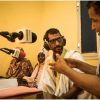
In Mauritania, Imams take to Radio Waves to say Child Marriage is Against Islam
"I refused to marry off my daughter for a simple, good reason: I want my daughter to be empowered,” said Lemeima mint El Hadrami, 49. "I don't want her to go through the same difficulties I did when I was young." El Hadrami was married when she was only 13.
2020 Is the Decade of Action & It Has to Be a Sprint
Happy New Year, Kenya. 2020 marks a decade of action towards the realization of the Sustainable Development Goals by 2030. Peace and development are inextricably linked, with each making the achievement of the other far more likely. This puts the conflict-prevention and development work of the UN at the heart of the agenda in East Africa, but in a multi-agency and programme environment, making meaningful progress is challenging.
Impeachment: An Ordinary Citizen’s View
When I decided to become a US citizen in 1990s, it was a deliberate decision to spend my life fighting for preserving and deepening democratic freedoms at a place where I have spent all my adult life. Having struggled against a brutal military dictatorship while I was a teenager, I knew that democracy is something you have to fight hard for. Therefore, when I became a citizen, for the swearing in event I took with me key documents of US democratic heritage. These included the constitution, the federalist papers and related documents from the 1780s. Since that ceremony I have tried to learn as much as I could about the crucial idea of democratic checks and balances among the executive, legislative and judiciary branches of our government. I have come to realize how prescient some of the revolutionaries from the 1770s and 1780s were in identifying the potential sources of tyranny and corruption of democracy. I have always looked at the impeachment provisions in this light.
The Death of a Courageous Journalist Reveals Malta as a ”Mafia Island”
Around 3 pm on 16 October 2017, Daphne Caruana Aruna Galizia was returning home when her Peugeot suddenly exploded 80 metres from her house outside of Bidnjia, a small town 15 km from Malta´s capital Valletta. Her son Matthew heard the violent blast and rushed out to find the smoldering wreck of the car on a field by the road: “I looked down and there were my mother’s body parts all around me”. Her scattered body had hit the ground 10 metres from the demolished vehicle.1
UN Chief Warns of Rising Misogyny, Xenophobia, Discrimination, Racism & Hate Speech
As we prepare to bid farewell to 2019, we must take a clearsighted look at the global situation and the new challenges we face. Our world is undergoing a shift. It is no longer bipolar or unipolar. But it is not yet truly multipolar. Balances of power are changing, creating new and dangerous risks.
Education for Constructive Change
We saw a hugely diverse selection of world leaders - from civil society, politics and business - seeking positive change at the UN General Assembly in New York in September. But the global reality is a political and economic environment that is increasingly divided. Boycotts. Protests. Narratives of hate.
Lithium and Clean Energy in Argentina: Development or Mirage?
The intense white brightness of the salt flats interrupts the arid monotony of the Puna in northwest Argentina, resembling postcards from the moon. Beneath its surface are concealed the world's largest reserves of lithium, the key mineral in the transition to clean energy, the mining of which has triggered controversy.
Billionaires’ Existential Threats to Humanity?
The social utility of billionaires’ existence has come under increased scrutiny, especially during the Democratic Party primaries for the 2020 US Presidential election. Leading newspapers, such as The New York Times, published opinion pieces arguing to abolish billionaires and reflecting on why billionaires engage in illegal insider trading.
Address Malnutrition, Not Just Food Security
Malnutrition remains a formidable challenge in most societies, with less than a tenth of countries in the world not experiencing at least one major malnutrition problem. In relatively more food secure countries, where almost everyone has enough to eat, and few live in fear of a sudden loss of access to food, micronutrient deficiencies and diet-related non-communicable diseases (NCDs) often still loom large.
Madrid Talks End Without Agreement on How to Finance Recovery from Climate-Related Atrocities
Millions of people, particularly in Africa, who lose their property, homes, and even die due to climate-related disasters will have to wait at least another year for the international community to agree on a means of supporting them.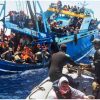
EU Policies Don’t Tackle Root Causes of Migration – They Risk Aggravating Them
According to political scientist Zaki Laïdi’s La tyrannie de l’urgence (The tyranny of emergency) from 1999, crisis and emergency situations leave no time for analysis, prevention or forecasting. As an immediate protective reflex, they prevent long-term solutions and pose a serious risk of jeopardising the future.
2019 – A Devastating Year in Review
By any measure this has been a devastating year: fires across the Amazon, the Arctic and beyond; floods and drought in Africa; rising temperatures, carbon emissions and sea levels; accelerating loss of species, and mass forced migrations of people.
2019: A Year in Review
 2019 will be remembered as the year the climate crisis shook us all. Hopefully, it will also be remembered for the fight back manifested in the spread of mass protests and civic movements against governments and industries failing to respond.

Mainstreaming Leprosy-affected People a Big Challenge in Bangladesh
When Feroza Begum was first diagnosed with leprosy in 2006, it felt as though she had been struck by a thunderbolt due to the deep-seated prejudice in her society that the disease is a curse from Allah (God).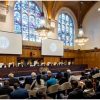
The Ignoble Fall of a Nobel Peace Prize Winner
Appearing before 17 judges of the International Court of Justice (ICJ) in The Hague, Aung San Suu Kyi, the de facto civilian leader of Myanmar, became a public apologist for the military government of Myanmar which has long been accused of genocide and forcing over 730,000 Rohingya Muslims to flee to neighboring Bangladesh since a 2017 crackdown.
Sasakawa Vows to Continue Support for Fighting Leprosy in Bangladesh
Chairman of The Nippon Foundation, Yohei Sasakawa, has assured Bangladesh of continuing support for the Zero Leprosy Initiative announced by the country's Prime Minister, Sheikh Hasina, aimed at eliminating leprosy by 2030.
Taking Bangladesh to Zero-Leprosy, One New Case at a Time
Sandhya Mandal has never felt so vindicated. For the past four years, the 36-year-old community health worker from Meherpur – a rural district bordering India – has been traveling 50 km every day along dusty roads on an old motorbike, searching for leprosy patients who needed urgent treatment. But in her community, instead of compliments, neighbours and relatives raised questions about her work and her character. “They ask why I come home so late and what is this ‘work’ that I really do. Some even imply that I might be doing something like prostitution,” Mandal tells IPS.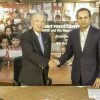
Nippon Foundation Announces US$ 2m Support for the Education of Rohingya Children in Bangladesh
In the light of limited access to education for displaced Rohingya children, the Nippon Foundation has announced US$ 2 million support to BRAC to launch a project to ensure educational facilities to both Rohingya and local community children.
Aung San Suu Kyi Defends Myanmar from Accusations of Genocide, at Top UN Court
Myanmar will have “no tolerance” for human rights abuses committed in Rakhine state and will prosecute the military, if war crimes have been committed there, Aung San Suu Kyi told the International Court of Justice (ICJ), the UN’s main judicial body, on Wednesday.
Building Momentum to Hold Companies to Account
Millions of adults and children around the world suffer abuses as workers who obtain raw materials, toil on farms, and make products for the global market. They are at the bottom of global supply chains, for everything from everyday goods like vegetables and seafood to luxury items like jewelry and designer clothing that end up on store shelves worldwide.
Bangladesh Can Be Leprosy-Free Before 2030 Prime Minister Tells National Zero Leprosy Conference
Leprosy is not a curse but should be detected and treated early, Bangladeshi Prime Minister, Sheikh Hasina, has told delegates at a gathering in her country's capital to discuss the elimination of the disease.« Previous Page — Next Page »


One world, one humanity, now one court to defend its rights. Another step towards universal human rights, but not remotely a step far enough. The United Nations adopted the Universal Declaration of Human Rights more than half a century ago, but that has done little to stop violations the world over, just as the Geneva Convention has not protected prisoners of war enough. Democracy itself and the freedom it presupposes has not been protective enough. This is the century to move from politicisation of human rights towards humanising political ways. IPS keeps an eye on that difficult path.

The Week with IPS

NEXT STOP - SDGs
Tracking global progress towards a sustainable world
Tracking global progress towards a sustainable world
