Languages
Monday, November 16, 2026



News and Views from the Global South
Human Rights

Calls for Reform, Research and Reorganisation in Leprosy Healthcare
Rachna Kumari of Munger in Eastern India’s Bihar state is not yet 30. But she's already been married at 18, abandoned by her husband after she was diagnosed with leprosy and become an award-winning advocate of the disease. She has traversed a long road. And this week she undertook another step in her journey to fly to Manila, Philippines, as a delegate at the 20th International Leprosy Congress (ILC).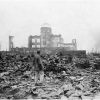
The Push for Peace-From the Global Village to the Global Neighborhood
From the ashes of a tragedy that wiped out almost 90% of the city of Hiroshima on 6 August 1945, an institute called the Hiroshima Peacebuilders Center (HPC) rose like a phoenix of hope that is pioneering the creation of a global pool of peacebuilders. It is driven by the 2030 Agenda for Sustainable Development declaration that "there can be no sustainable development without peace and no peace without sustainable development.”
‘Conference Emphasises Need for Partnerships to Create a World Without Leprosy’
Forty years ago, Yohei Sasakawa saw his father moved to tears after meeting and witnessing the suffering of people affected by leprosy – also known as Hansen’s disease. Not only did the patients have a physical illness, but they also suffered from social exclusion and discrimination. It made the young Sasakawa vow to work for the elimination of leprosy from the world – just as his father had been doing.
Nothing For Us, Without Us – Hansen’s Disease-Affected Tell International Gathering
Stronger government action to fight stigma and discrimination, more government funding for health and non-health support programmes, and a larger role for people’s organisations in developing policy towards Hansen's disease treatment and eradication are still needed for eliminating the disease.
The Geneva Centre to organize on 18 September a panel debate on the rights of the child
(Geneva Centre) - A panel debate will be organized by the Geneva Centre for Human Rights Advancement and Global Dialogue and the Permanent Mission of the United Arab Emirates (UAE) to the UN in Geneva on the enhancement of access to justice for children in the UAE and the implementation of the Convention on the Rights of the Child (CRC).
The Emergence of a Global Voice for Hansen’s Disease Affected Persons
The Global Forum of People’s Organisations on Hansen’s Disease, which was attended by members of people’s organisations from 23 different countries, wrapped up in Manila, Philippines, today Sept. 10 after four days of discussion and deliberation. The main outcome was a set of recommendations, which included participants stating that those affected by the disease should have more inclusive roles in the global campaign against leprosy.
‘Join Me on this Journey’ to Eliminate Leprosy – WHO Ambassador
 Octogenarian Yohei Sasakawa has travelled to more than 90 countries across the globe; from areas of conflict, to the jungles of Brazil, shaking hands, hugging and washing the feet of Hansen’s disease-affected people. His message is simple: Stop stigmatisation and eliminate the disease.
Eritrea Tops Watchlist of World’s Most-Censored Countries
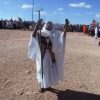
Eritrea has the world’s highest levels of censorship and the most active government in jailing reporters and stifling newspapers, radio and television, a study by the Committee to Protect Journalists (CPJ) watchdog says.
The Costs of Heightened Conflict in the Himalayas
As a series of conflicts in the Hindu Kush Himalayan region come into sharp focus, sidelining local populations, the long-term environmental costs may leave the region degraded, poor and desperate.
Awareness Should be the Priority in Public Health Efforts against Leprosy
Increasing awareness of the continuing existence of Hansen’s Disease (leprosy) is critical to sustaining effective public health efforts against the disease, eliminating the social stigma associated with it, and halting its transmission.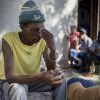
Farm Workers Paying the Price for Cheap South African Wine
Systembolaget, the Swedish government-owned alcohol monopoly, promises fair conditions – but it also uses its purchasing power to put a downward pressure on prices. At the major South African wine producer Leeuwenkuil, workers suffer as the company tries to cut costs. So far, none of the South African suppliers have been stopped due to violations against Systembolaget’s code of conduct.
Culture of Peace Takes Big Stride as UN Observes 20th Anniversary of Norm-Setting 1999 Decision
It has been a long, arduous journey – a journey ridden curiously with obstacles and indifference. Two decades have passed by since the UN General Assembly (UNGA) adopted, by consensus and without reservation, its landmark and norm-setting resolution 53/243 on the Declaration and Programme of Action on a Culture of Peace in 1999.
Kashmir: How Modi’s Aggressive ‘Hindutva’ Project has Brought India and Pakistan to the Brink – Again
August is immensely important in the history of the Asian subcontinent, marking the month that India and Pakistan gained independence from the British in 1947. Now, in 2019, it has once again proved momentous, when, ten days before India’s Independence day celebrations, prime minister Narendra Modi’s government revoked the autonomy of Indian-administered Kashmir – a status provided for under the Indian Constitution.
What Research Reveals about Drivers of Anti-immigrant Hate Crime in South Africa
Mobs have attacked foreign-owned businesses on the streets of at least three South African cities in recent days. This has caused outrage across Africa. There have even been retaliatory attacks. The South African government, under pressure to protect her large international migrant community, quickly defused the attacks.
Litigation, a Mechanism to Ensure Justice and End Stigma for Hansen’s Disease
Professor Ai Kurosaka remembers the day she first interacted with a person affected by Hansen’s disease. It was 2003 and Kurosaka, then a graduate student of sociology at the Saitama University in Japan, had been assigned to interview ex-patients and their family members to document what kind of discrimination they faced. It was a very difficult task because nobody wanted to speak or identify themselves.
The Business of Social Enterprise
Organisations supporting people affected by Hansen’s disease (leprosy) have social rather than capitalist aims, but they need to take a business-minded approach to their work if they wish to be sustainable, experts at a global conference in Manila, Philippines said.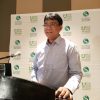
Global Network Key to Strengthening Leprosy Organisations
Organisations of people affected by Hansen’s Disease or leprosy agree that a global network of volunteer groups is key to eradicating the disease, but concrete steps need to be taken to move the idea from an often-discussed concept to a reality.
First Global Forum of Leprosy-Affected People’s Organisations Kicks off in Manila
Being part of a platform where leprosy-affected people from all over the world can freely interact, exchange and share opinions, ideas, experiences and strategies was always something Tasfaye Tadesse dreamt of.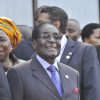
Zimbabwe’s ex-President Robert Mugabe Leaves a Mixed Legacy
Former Zimbabwe strongman Robert Mugabe, who died this week, aged 95, leaves a mixed and divisive legacy.
A Global Forum to Encourage Dialogue and Share Solutions
Professor Takahiro Nanri is the executive director of the Sasakawa Health Foundation, co-organiser of the Global Forum of People’s Organisations on Hansen’s Disease, which will take place from Sept. 7 to 10 in the Philippines. 
Is America Defeated in Afghanistan?
Following the 11 September 2001 terrorist attacks on American soil, the United States and their allies went to Afghanistan to “smoke out” Osama bin Laden and his Taliban protectors. The most fundamental primary mistake was to let all terrorists flee to Pakistan instead of sealing the border and capturing their main figures.« Previous Page — Next Page »


One world, one humanity, now one court to defend its rights. Another step towards universal human rights, but not remotely a step far enough. The United Nations adopted the Universal Declaration of Human Rights more than half a century ago, but that has done little to stop violations the world over, just as the Geneva Convention has not protected prisoners of war enough. Democracy itself and the freedom it presupposes has not been protective enough. This is the century to move from politicisation of human rights towards humanising political ways. IPS keeps an eye on that difficult path.

The Week with IPS

NEXT STOP - SDGs
Tracking global progress towards a sustainable world
Tracking global progress towards a sustainable world
