Languages
Friday, November 20, 2026



News and Views from the Global South
Human Rights

How to Change the Future of Migration
The world is on the move. More people have been forced to flee their homes than at any time since the Second World War due to increased conflict and political instability, hunger, poverty, and an increase in extreme weather events linked to climate change.
Stepping Forward to Lead on Indigenous Rights
When nine women farmers from the Kendeng community in Central Java encased their feet in cement blocks last year, many indigenous advocates understood how that felt. Dressed in their traditional clothing, these women protested outside the State Palace in Jakarta to block a proposed cement plant that would pollute the rivers flowing through their villages. Their livelihoods as farmers were under threat, as was their cultural heritage.
Trying to Make Immigration an Option Rather than a Need in Latin America
The aim is for migration to become just one option among others for the rural population of Latin America, says Brazilian expert Luiz Carlos Beduschi, referring to an issue that causes concern in the region due to its impact on food security.
Humanitarian Needs Spike as Rohingya Arrivals in Cox’s Bazar Top 536,000
An estimated 536,000 people have fled Myanmar and arrived in Cox’s Bazar, southern Bangladesh, over the past 47 days, according to the IOM-hosted Inter Sector Coordination Group (ISCG) of aid agencies. Numbers spiked again this week when some 15,000 Rohingya crossed into Bangladesh between 9-11 October.
Not True that Hunger Doesn’t Discriminate — It Does
In a world where only 8 individuals – all of them men—possess as much as half of all the planet’s wealth, and it will take women 170 years to be paid as men are*, inequality appears to be a key feature of the current economic model. Now a new study reveals that there is also a widening gap in hunger.
Food Insecurity and Forced Displacement of People: Where do we Draw the Line?
The World Food Programme estimates that more than 100 million people worldwide face severe food insecurity. The situation is most severe in countries affected by conflict and violence including Afghanistan, Nigeria, Syria, South Sudan and Yemen affecting more than 40 million people. Another 22 million people in Ethiopia, Malawi, Zimbabwe, Haiti and Mozambique are affected by the adverse impact of climate change and environmental degradation.
Forcing Displaced Nigerians May Worsen Humanitarian Crisis
Haja grabbed her eight children and fled as Boko Haram set her home ablaze two years ago. Today we sit in her hut in a displacement camp, and she wonders how she is going to keep her children fed. I’ve spoken to many families in Nigeria’s north-eastern Monguno town. Their stories paint a horrifically detailed picture of the brutal violence these communities have endured over the past eight years.
Land Settlement Empowers: Bangladesh Sets an Example
History was made for 400 landless families in the remote char lands of Noakhali district. On 4th October, they all received land titles from the government for which they had waited for over two decades. In Bangladesh, as in other countries, the title is a permanent legal ownership document.
Up to 100 Million Girls Vulnerable to Child Marriage
Over 20,000 girls are married before the age of 18 every day around the world as countries continue to lack legal protections, according to a new study.
Rights of Rural Women Have Seen Uneven Progress in Latin America
In a remote village in the Peruvian Andes, Bonificia Huamán managed to overcome adverse weather conditions with a small greenhouse, where she grows vegetables at 3,533 metres above sea level. This has improved her family’s diet, which she is very proud of.
Strengthening Youth Potential and the Prospects for a Better Future
Investing in youth by developing their potential through education, job creation and instilling the values that advance the cause of humanity is the most daunting, yet promising challenge facing world leaders.
Fixing the Food System to Solve Humanity’s Greatest Challenges
We are at a moment of huge opportunity in the world’s food system. We can continue on our current trajectory of consuming too little, too much, or the wrong type of food at an unsustainable cost to the environment, health care and political stability. Or we can change course. Fixing the food system will help solve humanity’s greatest challenges – creating jobs, reducing emissions, and improving health.
Rohingya Refugee Women Bring Stories of Unspeakable Violence
Yasmin, 26, holds her 10-day-old baby, who she gave birth to in a crowded refugee camp in Cox’s Bazar, a southeastern district bordering Myanmar.
Rohingya Children Drown Fleeing Myanmar Violence
Tragedy struck more Rohingya refugees fleeing violence in Myanmar last night. At least 13 people, mostly children, drowned when the fishing boat carrying them to safety in Bangladesh capsized in stormy weather.
World Food Day 2017 – Change the future of migration. Invest in food security and rural development
 Large movements of people is one of the most complex challenges the world faces today. In recent years there has been a huge increase in the number of people migrating around the world. Why is this happening and do they have a choice of staying in their own homes ?

How to Eradicate Rural Poverty, End Urban Malnutrition – A New Approach
Population growth, increasing urbanisation, modern technologies, and climate change are transforming the world at a fast pace. But what direction are these transformations headed in? Are they benefitting the poor and the food insecure? And will the food systems of the future be able to feed and employ the millions of young people poised to enter labour markets in the decades to come?
Inclusive Electoral Processes: a Pathway to More Peaceful Societies
The Sustainable Development Goals 16 (SDG16) calls on UN Member States to promote responsive, inclusive, participatory and representative decision-making, and to build effective, accountable and transparent institutions at all levels.
Need for Inclusive Peace Efforts in South Sudan: No More ‘Compassion Fatigue’
“Peace is not a one-day affair or event, it requires our collective effort,” said South Sudan’s Vice President, General Taban Deng Gai, while addressing the General Assembly at the UN.
Why American Overseas Aid Should Focus on SDGs?
The average American believes the US spends a whopping third of its federal budget on foreign aid. Consequently, a majority of people think that too much is spent on foreign aid. That is one reason US President Donald J. Trump, who has campaigned on putting the needs of Americans first, has proposed deep cuts to foreign aid in his 2018 budget.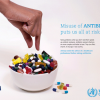
The World Is Running Out of Much Needed New Antibiotics
The world is running out of new antibiotics to combat the growing threat of antimicrobial resistance, a new specialised report warns ahead of this year's World Antibiotic Awareness Week, adding that most of the drugs currently in the clinical pipeline are modifications of existing classes of antibiotics and are only short-term solutions.
US Call for Suspending Arms Sales to Myanmar Faces Road Block in Security Council
When US Ambassador Nikki Haley called for a virtual arms embargo against the repressive and much-maligned military regime in Myanmar, she took a passing shot at two of her fellow veto-wielding, permanent members of the Security Council – namely China and Russia – who are primary arms suppliers to the increasingly politically-isolated nation.« Previous Page — Next Page »


One world, one humanity, now one court to defend its rights. Another step towards universal human rights, but not remotely a step far enough. The United Nations adopted the Universal Declaration of Human Rights more than half a century ago, but that has done little to stop violations the world over, just as the Geneva Convention has not protected prisoners of war enough. Democracy itself and the freedom it presupposes has not been protective enough. This is the century to move from politicisation of human rights towards humanising political ways. IPS keeps an eye on that difficult path.

The Week with IPS

NEXT STOP - SDGs
Tracking global progress towards a sustainable world
Tracking global progress towards a sustainable world
