Languages
Monday, October 26, 2026



News and Views from the Global South
Peace

Let’s Get Climate Action into Traction with Gender Equality
Climate change is already altering the face of our planet. Research shows that we need to put all our efforts over the coming decade to limit warming to 1.5°C and mitigate the catastrophic risks posed by increased droughts, floods, and extreme weather events.
Culture of Peace Takes Big Stride as UN Observes 20th Anniversary of Norm-Setting 1999 Decision
It has been a long, arduous journey – a journey ridden curiously with obstacles and indifference. Two decades have passed by since the UN General Assembly (UNGA) adopted, by consensus and without reservation, its landmark and norm-setting resolution 53/243 on the Declaration and Programme of Action on a Culture of Peace in 1999.
Kashmir: How Modi’s Aggressive ‘Hindutva’ Project has Brought India and Pakistan to the Brink – Again
August is immensely important in the history of the Asian subcontinent, marking the month that India and Pakistan gained independence from the British in 1947. Now, in 2019, it has once again proved momentous, when, ten days before India’s Independence day celebrations, prime minister Narendra Modi’s government revoked the autonomy of Indian-administered Kashmir – a status provided for under the Indian Constitution.
Is America Defeated in Afghanistan?
Following the 11 September 2001 terrorist attacks on American soil, the United States and their allies went to Afghanistan to “smoke out” Osama bin Laden and his Taliban protectors. The most fundamental primary mistake was to let all terrorists flee to Pakistan instead of sealing the border and capturing their main figures.
Exclusive: Winnie Byanyima Speaks about Inequality in Africa and Next Steps at UNAIDS
 While the 28th World Economic Forum (WEF) on Africa is being held in Cape Town, South Africa this week, the international aid and development charity Oxfam released its latest report: A tale of two continents: fighting inequality in Africa.
U.N. Criticised for Link-up with Saudi Prince MBS
The United Nations is under growing pressure to scrap an event it is co-hosting with the private foundation of Saudi Arabia’s crown prince Mohammad bin Salman, who has been linked to the killing of journalist Jamal Khashoggi.
UNICEF’s Goodwill Envoy a Messenger of ill-Will, Complain Critics
When two-time Wimbledon tennis champion Boris Becker, a UNICEF goodwill ambassador, refused to make a commitment not to play in South Africa, a country blacklisted for its apartheid policies, the UN children’s agency stripped him of the prestigious title, back in October 1987.
Close the Door on Nuclear Testing
Everybody knows that nuclear weapons have been used twice in wartime and with terrible consequences. Often overlooked, however, is the large-scale, postwar use of nuclear weapons:
Sudan Transition an “Opportunity” to End Darfur Crisis
Sudan’s transition to civilian rule offers a chance to end the ethnic violence that plagues the western province of Darfur and end a peacekeeping mission there, a top United Nations official said Monday.
Two Million Children in West and Central Africa Robbed of an Education Due to Conflict
Fourteen-year-old Fanta lives in a tent in a settlement in Zamaï, a village in the Far North Region of Cameroon with her mother and two brothers. They came here more than a year ago after her father and elder brother were murdered and her elder sister abducted by the extremist group Boko Haram.
Russia and Syria in the Spotlight for Latest Idlib Medic Deaths
Medical aid groups have again blasted Russian and Syrian government forces this week for an ever-growing death toll among doctors, paramedics and other health workers in military strikes in northwestern Syria.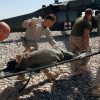
Rules of War Widely Flouted, 70 years on: Red Cross
World governments are not doing enough to stop armed groups from committing mass rape, torture and other war crimes, the head of the Red Cross aid group head Peter Maurer said on Tuesday.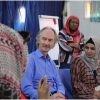
Mediating Peace in a Complex World
“It is all about orchestration”, was Martin Griffiths’, the UN Special Envoy for Yemen, response to the question of what mediation in Yemen looks like today.
Nuclear Weapons Must Go: Lessons of Hiroshima & Nagasaki
It has been 74 years since a nuclear devastation took place. But a clear message stands -- that nuclear weapons must go and peace and love must reign. “Because if we forget the horrific consequences of the use of these devices, the likelihood of repetition is increased.” Jonathan Granoff, President of the Global Security Institute told IPS, as the United Nations marked the tragedies of Hiroshima and Nagasaki.
Canada Effectively Addresses Children in Armed Conflict
More than 24,000 violations have been committed against children across the globe, including recruitment into armed forces, abduction, sexual violence, deprivation of basic needs, attacks on schools and hospitals-- and even murder.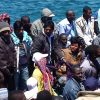
Migration and Human Solidarity
The migrant and refugee crisis has become a serious test for the unity of Europe as a political project. The inflow of destitute migrants and refugees has tested Europe’s political unity to an unprecedented extent. With a long-term solution to the migrant and refugee crisis nowhere in sight, the adverse impact of the current situation has the potential to unfold further and to give rise to a broader crisis with long-term implications, affecting Europe and the MENA region alike.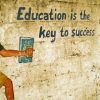
The Role of Education in Breaking down the Walls of Ignorance
Education constitutes an important building block to enhance inter-faith dialogue, cultural exchange between ethnic and linguistic groups, counter violent extremist narratives and promote peaceful and inclusive societies. The founder of Modern India, Mahatma Gandhi, once said:
Human Rights Watch Disappoints on Human Rights
On 22 July 2019, Kenneth Roth published an article in Publico, Lisbon, entitled: “UN Chief Guterres has disappointed on Human Rights”.
Crime Against Humanity and Individual Guilt
On 8 July, Bosco Ntaganda was by the International Criminal Court (ICC) found guilty of crimes against humanity. The 41-year-old rebel leader, nicknamed The Terminator, had ordered his fighters to "target and kill civilians", kidnap children to be brought up as soldiers and girls to become sex slaves, while personally partaking in the crimes. The Court had gathered evidence from 2,000 survivors from the rampage that Ntaganda and his army ran through the north-eastern Congolese region of Ituri, where beginning in 1999, 60,000 people have been murdered by warring rebel armies. Eighty witnesses testified directly during the court proceedings, thirteen were "experts" and the rest victims.
Pompeo’s New “Human Rights” Commission Is Up To No Good
The Trump administration appears to be trying to find moral footing for the president’s discriminatory policies. Last week, Secretary of State Mike Pompeo formally announced the creation of a “Commission on Unalienable Rights.”
Women Are Pivotal in the War on Terror
On 10 July 2019 I was honored to moderate a meeting with women’s groups for the UN Secretary General Mr. Antonio Guterres, whose aim was to better diagnose the role of women in the prevention or instigation of violent extremism.« Previous Page — Next Page »





The Week with IPS

NEXT STOP - SDGs
Tracking global progress towards a sustainable world
Tracking global progress towards a sustainable world
