
Monday, September 28, 2026



News and Views from the Global South
Press Freedom

On World Press Freedom Day, Let us Ask: #WhereIsAzory?
Speaking in parliament recently, Tanzania’s information minister, Harrison Mwakyembe, wondered why people were still concerned about the whereabouts of Azory Gwanda, a freelance journalist who went missing in November 2017 in the country’s Coast Region.

Under Abiy, Ethiopia’s media have more freedom but challenges remain
(CPJ) - During a trip to Addis Ababa in January, it was impossible to miss the signs that Ethiopian media are enjoying unprecedented freedom. A flurry of new publications were on the streets. At a public forum that CPJ attended, journalists spoke about positive reforms, but also openly criticized their lack of access to the government. At a press conference, journalists from state media and the Oromia Media Network, an outlet previously banned and accused of terrorism, sat side by side.
VIDEO: World Press Freedom Day 2019 – Media for Democracy: Journalism and Elections in Times of Disinformation
 Journalists and media outlets worldwide have recently been subject to a subtle wave of vilification. Populist rhetoric and public indifference have begun to threaten the very foundation of our freedom.
Bleak Outlook for Press Freedom in West Africa
When former footballer George Weah became president of Liberia in 2018, media practitioners felt they had in him a democrat who would champion media freedoms. “But we were mistaken,” journalist Henry Costa told IPS.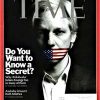
Lost in the Cyberworld? The Enigmatic Mr Assange
Trump´s electoral success was preceded by a rise of chauvinistic politics in most of Europe, paired with electoral triumphs of far-right candidates in several other countries. A development accompanied by revelations of corrupt leaders laundering and transferring illegally obtained money, aided by financial institutions finding the means to do so. The world seems to move away from a rule-based order to a state of affairs dominated by might and wealth. World leaders´ private business dealings thrive within a global environment where laws intended to protect human rights are becoming increasingly ineffective. Foreign policies appear to be adapted to private gains and personal vendettas. Global financial systems seem to be crafted to facilitate kleptocracy and money laundering, while repression and violence smite whistle-blowers and daring journalists. Endeavours supported by propaganda and smear campaigns orchestrated by political/financial consultants and private investigation firms. All this is made possible through complicated schemes using the internet.
Media Landscape Marked by “Climate of Fear”
Journalists around the world are increasingly seeing threats of violence, detention, and even death simply for doing their job, a new press index found.
‘You Cannot Muzzle the Media’: Nigerian Journalists on Press Freedom under Buhari
When Nigeria's incumbent president Muhammadu Buhari won re-election this year, he campaigned (as he did in 2015) on an image of good governance and anti-corruption. Billboards in the capital, Abuja, bore the smiling faces of the president--who first led Nigeria as military ruler from 1983-1985--and his vice-president Yemi Osinbajo, and called for voters to let them "continue" their work and take the country to the "Next Level."
Why the Prosecution of Julian Assange is Troubling for Press Freedom
After a seven-year standoff at the Ecuadorean embassy in London, British police last week arrested WikiLeaks founder Julian Assange--a development press freedom advocates had long feared.
Hard Battle Ahead for Independent Arab Media
Sometimes a peak into the future reminds us just how stuck we are in the past and present. It was the talk of the Middle East’s largest annual media industry gathering: a robot journalist – the region’s first – that wowed some 3,000 industry leaders and practitioners at the Arab Media Forum (AMF) in Dubai recently.
Civil Society, Press Freedom & Human Rights Under Attack in Africa
The civic space in several African countries, including Tanzania, Burundi, Zambia, Sudan, Mozambique, Somalia and Eritrea, is gradually shrinking – and mostly under authoritarian leaders and repressive regimes.
Shining a Spotlight on the Strengths & Challenges of Civil Society in the Balkans
It is an incredible privilege to welcome you all to the ‘International Civil Society Week’. I am going to remind us of the reasons that make it so important for us to be here in Belgrade this week.
Attacks on Media in the Balkans Sound Alarm Bells for Democracy
Anti-government protesters invading Serbia’s state-owned television station, demanding that their voices be heard. Journalism bodies writing to the Albanian prime minister over plans to censor online media outlets. A Belgrade corruption-busting reporter forced to flee his house that had been torched; a Montenegrin investigative journalist shot in the leg outside her home.
Rise in Cyberlaws Across Southeast Asia Spell Bad News for Human Rights & Democracy
Around the globe, cyberspace has become the new battleground in the fight for the heart and soul of democracy. And Southeast Asia is fast becoming one of the global hotspots where the screws are being tightened on freedom of expression online.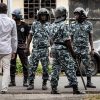
Two journalists held in pretrial detention since February in Comoros
(CPJ) – Authorities in the Comoros should immediately release journalists Abdallah Abdou Hassane and Oubeidillah Mchangama, who have been held in pretrial detention on an array of charges for over a month, the Committee to Protect Journalists said today.
Communication, a Key Tool for South-South Cooperation
Communication can be a key tool for the development of cooperation among the countries of the global South, but the ever closer relations between them do not receive the attention they deserve from the media.
Zambia suspends independent TV broadcaster for 30 days
(CPJ) – Zambia's minister of information and broadcasting should grant an appeal requested by the privately owned Prime TV broadcaster and allow the station back on air after the country's media regulator suspended its license for 30 days for alleged unprofessionalism, the Committee to Protect Journalists said today.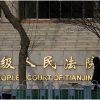
How Many Journalists are Jailed in China? Censorship Means We Don’t Know
Reporting on China's harassment of journalists has never been easy. Lately it's been getting much harder, which suggests that conditions for the press could be worsening.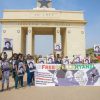
Free Stella Nyanzi, Demand Pan African Activists in Ghana
On Saturday 9th March, a small group of activists from Ghana, concerned by the continued incarceration of Ugandan feminist activist Dr Stella Nyanzi, rallied by the symbolic national independence Square to raise awareness on the dangers of remaining quiet to injustice.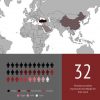
On International Women’s Day, CPJ highlights jailed female journalists
On International Women's Day, CPJ has highlighted the cases of female journalists jailed around the world in retaliation for their work. At least 33 of the 251 journalists in jail at the time of CPJ's prison census are women. At least one of those--Turkish reporter and artist Zehra Dogan--was released in February after serving a sentence on anti-state charges. The four female journalists jailed in Saudi Arabia were detained over their criticism of the kingdom's ban on women driving.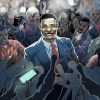
South Africa elections 2019: Journalist safety kit
South Africa, one of the media freedom beacons in sub-Saharan Africa, will hold national and provincial elections on May 8. As the country celebrates 25 years of democracy, the press in South Africa faces old and new challenges, including physical harassment and cyber bullying. The press freedom environment, including the safety of journalists, will be one of the key indicators for the health of the country's democracy and the freeness and fairness of its polls.
CPJ joins call for Nigeria to ensure internet and social media services remain connected during elections
(CPJ) – The Committee to Protect Journalists joined more than 15 rights organizations and the #KeepItOn Coalition to call for Nigerian authorities to ensure that internet and social media services remain connected during upcoming elections, and safeguard internet speeds of websites and messaging applications. In early February, Nigeria's federal government denied rumors of plans to shut down the internet during upcoming elections, according to the privately owned Guardian Nigeria and Quartz news outlets. Nigeria has two sets of elections scheduled in the coming weeks: federal elections on February 16 and state elections on March 2.« Previous Page — Next Page »


Journalism is dangerous work. Dozens of reporters and other media workers are killed in the line of duty each year. Hundreds more face threats, intimidation, and harassment as they risk their lives to let us know what is going on in war zones and as they root out corruption. In the Information Age, the Internet provides us with new ways to disseminate the news even as it poses new threats to press freedoms.


IPS Director General Farhana Haque Rahman was invited by UNESCO as a panelist at the World Press Freedom Day 2017 gathering in Jakarta, in the Plenary Session: Quality journalism: a public good for just, peaceful and inclusive societies.

The Week with IPS

Tracking global progress towards a sustainable world
