Languages
Friday, October 9, 2026



News and Views from the Global South
Regional Alliances

Africa Leading the New Patterns of Growth
The old theories governing the way that countries produce and trade are being replaced. The pattern of trade is being transformed by increasingly sophisticated technology and innovations in transportation; and the topography of actors is shifting to reflect new poles of growth.
U.S., China Woo Caribbean “Friends” Just Days Apart
First it was U.S. Vice President Joe Biden, who travelled to Trinidad and Tobago Tuesday to speak with "our friends” in the Caribbean.
OAS Chief Calls for “Long-Awaited” Debate on Drug Policy
Following the release of a major draft report on drug policy in the Americas, the secretary-general of the Organisation of American States (OAS), Jose Miguel Insulza, called for the beginning of debate aimed at reforming those policies throughout the region.
Neighbours View Sharif as Yoked to Personal, National History
Following on Nawaz Sharif’s victory in the May 11 national elections in Pakistan, many analysts are indicating cautious optimism on the prospect that the new prime minister can strengthen bilateral relations with the country’s neighbours, particularly India.
Can South Africa Help Nigeria to Industrialise?
The lack of economic diversification throughout sub-Saharan Africa means that despite South Africa’s pledges to help Nigeria make the automotive sector the West African nation’s flagship industrial target, it may be difficult to do so, experts say.
Has Caribbean Diplomacy Lost Its Mojo?
Whether by accident or coincidence, recent days have seen a variety of Caribbean leaders and journalists question whether the region is failing to pursue leadership roles within international organisations - and thus losing its voice in global issues like trade, climate change, and peace and security.
Developing Resilience to Financial Shocks
The global repercussions of the 2007-2008 financial crisis are a stark reminder of the economic interdependence in our globalising world. No country was spared from the shock waves that originated in the financial systems of developed economies.Institutional Tangles, Deindustrialisation Hurt Mercosur
July will mark the start of a new era for the Common Southern Market (Mercosur), when it will expand to five full members, if the South American bloc manages to overcome the commotion caused by the admission of Venezuela and the suspension of Paraguay.
Iranian Diplomat Confirmed Arrested in Tehran
More than seven weeks after the secretive arrest of prominent Iranian diplomat Bagher Asadi, an Iranian official confirmed his detention Thursday, although he declined to provide further details.
UNASUR Backs Venezuelan President-elect and Calls for Peace
Nicolás Maduro was recognised as president-elect of Venezuela by a Union of South American Nations (UNASUR) emergency summit held in Lima to discuss the situation in the highly polarised country, where a narrow electoral result triggered social and political tension.OP-ED: Azerbaijan and Iran: A Soft-Power Struggle?
There's a coffee shop in an out-of-the-way part of Baku where the walls are covered with illustrations from an early 20th century satirical magazine called Molla Nasreddin. The magazine represents a bygone era, when Azerbaijan was a font of new cultural trends in the Muslim world, pioneering such issues as female emancipation, anti-clericalism, anti-colonialism and labour rights.
Q&A: Moving Away from “Elite Multilateralism”
As the global South claims a greater share of the world's GDP, is it also progressing in terms of overall human development? How has this southward tipping of the scale affected the dynamics of international trade? What is the role of global governance in mediating this period of change?
Venezuela’s Elections Crucial to Latin American Left
The São Paulo Forum, which groups leftist political parties and organisations of Latin America and the Caribbean, sees a victory by Venezuela’s acting President Nicolás Maduro in the Apr. 14 elections as key to the future of the left in the region, and to “containing the right”.
Not Yet Banking on BRICS
Although leaders of the Brazil, Russia, India, China and South Africa group agreed to launch a new development funding institution, giving the club a major infrastructure boost, some here are sceptical about the potential impact of the new bank.
OP-ED: The BRICS and the Rising South
On Tuesday, leaders of five large emerging economies – Brazil, Russia, India, China, and South Africa, known as the BRICS – will gather in Durban, South Africa to discuss harnessing their formidable resources on behalf of faster development progress in Africa and elsewhere.Controversial Inter-American Reforms Process to Continue
The 35-member Organisation of American States (OAS) on Friday voted unanimously to approve a series of reforms to the Inter-American human rights system, but stepped back from proposals that had caused the greatest concern among civil society groups.
Q&A: Rise of South “Unprecedented in Speed and Scale”
The world's 132 developing nations, largely part of the global South, are ascending at a pace “unprecedented in its speed and scale", according to the latest Human Development Report (HDR) released Thursday by the U.N. Development Programme (UNDP).
Latin America and Caribbean Won’t Lose Oil Aid from Venezuela
Venezuela will keep in place the regional energy integration policies promoted by the late president Hugo Chávez if he is succeeded by acting president Nicolás Maduro, experts on regional relations told IPS.U.S. “Rebalancing” to Asia/Pacific Still a Priority
Amidst growing tensions with North Korea and, to a lesser extent, China, the White House Monday insisted that its “re-balancing” toward the Asia/Pacific remained on track and that Washington is fully committed to its allies there, especially Japan and South Korea.
Resentment as South Africa Speaks Business for Continent
There is growing resentment in Africa about the way in which South Africa professes to speak for the rest of the continent in its role as a member of key developing nation blocs, researchers and experts have warned.U.S. “Stalling” Could Force Acceptance of Onerous TPP
Civil society opposition here has strengthened against a U.S.-proposed free trade zone that would include some dozen countries around the Pacific Rim.« Previous Page — Next Page »





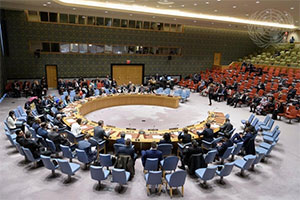 Security Council Considers Cooperation between UN and ASEAN. Credit: UN Photo/Manuel Elías
Regional alliances within the Global South have emerged as key international players in recent years, reshaping multilateral diplomacy and development governance. In 2023, the Group of 20 incorporated the African Union as a new parliamentary member, making the African Union the second regional bloc to become a member after the European Union. This action symbolized the ascent of the Global South’s international position. In 2025, the Association of Southeast Asian Nations also led a new collaborative climate effort with the creation of ASEAN Sparks, a program seeking to accelerate the growth of climate technology enterprises. Additionally, the African Continental Free Trade Area strengthened its intra-regional economic resilience. However, despite these advances, regional alliances and organizations continue to face mounting challenges. In 2025, the African Union, the Economic Community of West African States, and the Organization for Security and Co-operation in Europe all struggled with geopolitical deadlock and underfunding when it came to peace operations. This highlights how regional alliances are not yet capable of replacing UN-led multilateral frameworks. IPS gives timely reports on new developments within regional alliances in the Global South.

The Week with IPS

NEXT STOP - SDGs
Tracking global progress towards a sustainable world
Tracking global progress towards a sustainable world
