Languages
Wednesday, September 9, 2026



News and Views from the Global South
Religion
EGYPT: Islamist Parties to Abide by Camp David – For Now
The Islamist landslide in recently concluded parliamentary polls has led to fears in some quarters of an impending paradigm shift in Egyptian foreign policy. Most local analysts, however, dismiss the likelihood of any sea changes, especially when it comes to the sensitive issues of Palestine and the Camp David peace agreement between Egypt and Israel.THAILAND: Malay-Muslim Insurgency – Lessons Learnt
Teachers’ Day on Jan. 16 was a sombre affair in Thailand’s troubled southern provinces where memories are strong of 155 educators killed over the past eight years in an insurgency led by Malay-Muslim separatists.GUATEMALA: For the Maya, the World Isn’t Ending – the Environment Is
The end of the Maya long-count calendar does not predict a global catastrophe, let alone the end of the world, say native activists and elders who spoke to IPS in Guatemala. But what are coming to an end are the world's natural resources, as a result of human activity, they warn.A Touch of Spring for LGBT Arabs
With a yearning for human rights playing a vital role in the Arab revolts; putting an end to discriminatory LGBT laws may determine how the future democratic process unfolds.PAKISTAN: Girls Defuse This Taliban Bomb
Suicide bombing is down, bomb attacks are fewer, but the Taliban are keeping up attacks on girls’ schools. In retaliation, a growing number of girls are going for school education – without school buildings.CUBA: Pope to Visit a Country in Flux
On his upcoming visit to Cuba, Pope Benedict XVI will find a country immersed in dramatic changes, as it "modernises" its socialist system and continues to open up to religion, marking a difference from the society found by John Paul II when he visited almost 14 years ago.Nigeria on Edge Trying to Avert North-South Clashes
Africa’s top oil producer is on edge, poised to deter possible sectarian clashes between Muslims in the north and Christians in the south, while Christians are becoming more vulnerable to attacks from Islamist militants.EGYPT: Islamist Parliament Inevitable ‘But Not Worrying’
Following another Islamist landslide in the second round of legislative polling, Egypt's first post-Mubarak parliament will likely see Islamist parties - especially the Muslim Brotherhood's Freedom and Justice Party (FJP) - calling the shots. While high-profile secular figures warn of looming "theocracy", many local analysts believe an Islamist-led parliament won't make any radical legislative changes.AFGHANISTAN: Killing Heroin With Saffron
Weaning Afghanistan’s poppy farmers away from growing the raw material for the bulk of the world’s illicit heroin has never been easy, but Kashmir’s saffron cultivators may have the answer.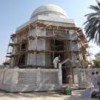
PAKISTAN: In Arms Against Saints
The Taliban have destroyed schools, bombed music shops and carried out gruesome executions in Pakistan’s territories bordering Afghanistan. But what they may never be forgiven for is the destruction of ancient shrines where revered Sufi mystics are interred.
INDIA: ‘Rape’ Stands in the Way of Love
A few days after his wedding in 2008, Imran* was thrown behind bars in Srinagar’s central jail for the alleged abduction and rape of his wife Shafeen. Shafeen denied the charge against her newlywed husband. It was her parents, furious that the couple married against their wishes, who ensured that the young bridegroom languished in prison for two years, until he was bailed out in 2010.
INDIA: Kashmir Clamours for Normalcy
As armed insurgency in India’s northern Jammu and Kashmir ebbs, the elected state government is keen to hasten a return to normalcy by easing draconian security laws and reopening movie theatres and liquor shops, banned by fundamentalist militant groups.
TUNISIA: Neo-Liberalism the Issue, Not Islam
On the verge of officially forming a coalition government to run the country and rewrite the nation's pre-revolution constitution, Tunisia's dominant, Islamist political party Ennahda has come under fire for its economic neo-liberalism, both from opponents and from coalition partners.EGYPT: Round One Goes to the Islamists
Islamists appear poised for a landslide victory in the first round of Egypt's parliamentary elections, putting them on track to secure a majority in the country's first parliament since the fall of president Hosni Mubarak.
NEPAL: Praying Against Climate Change
There are gasps from the audience as a series of shocking images flash across the screen: human hands eaten away by arsenic, the carcass of a cow so emaciated that it looks two-dimensional, a starved child with matchstick legs grasping at the udder of an animal for sustenance.BALKANS: Fearing the ‘White al-Qaeda’
Mevludin Jasarevic (23) is in police custody in Sarajevo, scarcely revealing how he came to the capital of Bosnia-Herzegovina and went on a shooting spree in front of the United States embassy last month.PAKISTAN: At the Butt of a Joke
The Butts of Punjab have become the butt of jokes after Pakistan’s telecom authorities moved to ban "obscene" content on short messaging service (SMS) texts over mobile phones.MOROCCO: Believe or Leave
When he decided to publicly express his views about Islam, Kacem El Ghazzali had no idea that he was going to be beaten up and his life threatened. In spite of this, he continues his fight from his country of asylum for the freedom of faith in the Islamic kingdom of Morocco.PAKISTAN: Persecution of Ahmadis Spreads
"Hatred against us has now spread to small towns and villages," Saleemuddin, spokesperson of the persecuted Ahmadiya community in Pakistan, told IPS.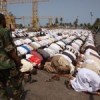
LIBYA: Headed for Some Sort of Sharia
The announced introduction of Islamic law in post-Gaddafi Libya has drawn strong opposition from women, the non-religious and the Amazigh minority.Indonesian Migrants Facing Death Get Legal Aid from Home
With 221 Indonesian migrant workers facing death sentences in China, Malaysia and Saudi Arabia, the government of Indonesia has approved a legal aid budget to assist these workers, who often do not have access to such assistance otherwise.« Previous Page — Next Page »


Religion plays a big and in some cases growing role in the socio-political dynamics within countries and often is a factor in civil and cross-border conflict, conflict resolution and peace building. From Burmese monks' marches to the role of religious fundamentalism, this dedicated site gathers IPS stories about how religion affects our world, from daily life to geo-politics.

The Week with IPS

NEXT STOP - SDGs
Tracking global progress towards a sustainable world
Tracking global progress towards a sustainable world
