Languages
Friday, September 25, 2026



News and Views from the Global South
South-South

OPINION: International Relations, the U.N. and Inter Press Service
In 1979, I had a debate at the United Nations with the late Stan Swinton, then the very powerful and brilliant director of Associated Press (AP). At one point, I furnished the following figures (which had been slow to change), as an example of Western bias in the media:
Cuba Sees Its Future in Mariel Port, Hand in Hand with Brazil
The Mariel special economic development zone, the biggest construction project undertaken in decades in Cuba, emerged thanks to financial support from Brazil, which was based on political goodwill, a strategy of integration, and business vision.
OPINION: Toward an Inclusive TPP Trade Pact
The Trans-Pacific Partnership (TPP) negotiations have been hitting headlines recently, but not for all the right reasons.India Stands Firm on Protecting Food Security of South at WTO
The failure of the two major players in global trade negotiations to bridge their differences has put paid to the adoption of the protocol of amendment for implementation of the contested Trade Facilitation Agreement (TFA) for the time being.
Nicaragua Pins Hopes for Progress on Grand Canal
Víctor Sánchez doesn’t want gold or the comfortable future income he was promised. He just wants to live the life he has always lived on his farm along the Banks of the Las Lajas river – but the river is slated to become part of the route followed by the Nicaragua Interoceanic Grand Canal.
Oil Alliance Between China and Costa Rica Comes to Life Again
China’s plan to become Costa Rica’s main energy ally through the joint reconstruction of an oil refinery has been revived after the presidents of the two countries agreed to review the conditions of the project during a meeting in the Brazilian capital.
As Winds of Change Blow, South America Builds Its House with BRICS
While this week's BRICS summit might have been off the radar of Western powers, the leaders of its five member countries launched a financial system to rival Bretton Woods institutions and held an unprecedented meeting with the governments of South America.
Public Stockholding Programmes for Food Security Face Uphill Struggle
Framing rules at the World Trade Organization for maintaining public stockholding programmes for food security in developing countries is not an easy task, and for Ambassador Jayant Dasgupta, former Indian trade envoy to the WTO, “this is even more so when countries refuse to acknowledge the real problem and hide behind legal texts and interpretations in a slanted way to suit their interests.”
International Reform Activists Dissatisfied by BRICS Bank
The creation of BRICS’ (Brazil, Russia, India, China and South Africa) own financial institutions was “a disappointment” for activists from the five countries, meeting in this northeastern Brazilian city after the group’s leaders concluded their sixth annual summit here.BRICS Forges Ahead With Two New Power Drivers – India and China
The Sixth BRICS Summit which ended Wednesday in Fortaleza, Brazil, attracted more attention than any other such gathering in the alliance’s short history, and not just from its own members – Brazil, Russia, India, China and South Africa.
BRICS Build New Architecture for Financial Democracy
The BRICS alliance (Brazil, Russia, India, China and South Africa) launched the New Development Bank (NDB) and Contingency Reserve Arrangement (CRA) during its sixth summit, institutionalising a new financial architecture for the emerging powers.Russia Hoping Cuba Can Help Spur Trade with Latin America
Amid deteriorating relations with the West, Russian President Vladimir Putin is looking to diversify a Russian economy that is tightly linked to European markets. Fittingly, an old Soviet-era satellite state seems eager to lend a helping hand.
Big Business Opportunities Seduce BRICS Entrepreneurs
The growing vitality of the group of countries made up of Brazil, Russia, India, China and South Africa (BRICS), which is beginning to formalise its institutions even as it tries to bridge very disparate realities, seems to be partly cemented by increasing links between its companies.
New BRICS Monetary Fund May Reproduce Inequalities
The first common institutions to be set up by Brazil, Russia, India, China and South Africa – the BRICS – are financial, and have arisen as a result of reforms to an international system that continues to largely ignore the growing influence of emerging countries.
Violence Casts Shadow Over ‘Himalayan Viagra’ Harvest in Nepal
Intense competition during harvest season for a fungus dubbed ‘Himalayan Viagra’ – coveted for its legendary aphrodisiac qualities – has sparked violence in Nepal’s remote western mountains, causing concern among security officials here about the safety of more than 100,000 harvesters.IMF Issues “Revolutionary” Warning on Corporate Tax Avoidance
The staff at the International Monetary Fund (IMF) has issued an unusually stark warning over the lack of harmonised global tax policies, pointing out that these gaps are allowing for widespread tax gaming by corporations with particularly negative impacts for developing countries.
Argentina Once More on the Map, Invited by BRICS
As Argentina starts to mend fences with the international financial markets, the emerging powers that make up the BRICS bloc invited it to their next summit. This could be a step towards this country’s reinsertion in the global map, after its ostracism from the credit markets since the late 2001 debt default.
Natural Gas – Both Crisis and Solution in Chile
In April 2004, Argentina began to steadily cut natural gas exports to neighbouring Chile, triggering a major energy crisis and revealing structural problems in this vital sector.
Q&A: “Some Individuals Are Now as Wealthy as Entire Countries”
As it turns 50, the United Nations Conference on Trade and Development (UNCTAD) finds itself engaged in an ongoing struggle to reduce economic and social inequalities in the world.
Asian Nations Bare Teeth Over South China Sea
China’s early-May decision to dispatch the state-of-the-art oil rig, HYSY981, into Vietnam’s 200-nautical-mile Exclusive Economic Zone (EEZ), has intensified ongoing territorial disputes in the South China Sea, raising fears of uncontrolled military escalation in one of the world’s most important waterways.« Previous Page — Next Page »


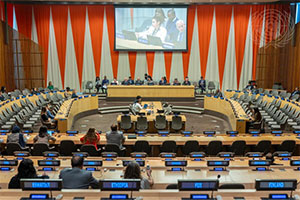 Panel Discussion on International Day for South-South Cooperation 2023. Credit: UN Photo/Cia Pak
South-South cooperation – collaboration between developing countries – is a growing and dynamic phenomenon, an important process that is vital in confronting shared challenges. Led by emerging giants, India, Brazil and South Africa (IBSA), the Global South is a tremendous source of tested solutions to development challenges, including the Millennium Development Goals (MDGs). China’s Belt and Road Initiative (BRI), launched in 2013, has further transformed South-South cooperation by enhancing infrastructure, trade, and investment linkages across Asia, Africa, and Latin America. Meanwhile, new platforms like the expansion of BRICS to include other countries such as Thailand, Nigeria, and Cuba are reshaping global economic governance and offering alternatives to traditional Western-led institutions. The Nairobi Outcome of the 2009 High-Level United Nations Conference on South-South Cooperation in Nairobi, Kenya highlights growing political and economic ties within the developing world, as countries from the Global South assume leading roles in decision-making on hot global issues ranging from economic recovery to food security, energy transitions, debt relief, and climate change. Today, the African Continental Free Trade Area and India’s “Voice of the Global South” summits have advanced frameworks for regional self-reliance, while G77 has reaffirmed commitments to resilient and inclusive economies ahead of the 16th UN Conference on Trade and Development.
Updated by Yilan Batista and Shuli Wong August 2026

The Week with IPS

NEXT STOP - SDGs
Tracking global progress towards a sustainable world
Tracking global progress towards a sustainable world
