Languages
Monday, October 12, 2026



News and Views from the Global South
Sustainability

Celebrating Vanuatu’s Path to Sustainable Development
The Pacific Island Developing State of Vanuatu has emerged as one of the region’s great success stories. Vanuatu has joined the ranks of Samoa and the Maldives as one of only six countries to graduate from being a least developed country, since the category was introduced by the United Nations in 1971.
Can Agricultural Apps Bring Indonesia’s Farmers Back to the Fields?
When his friends prodded him to use an agricultural app in July, rice farmer Mustafa reluctantly downloaded RiTx Bertani into his smart phone. Four months later, he feels happy to have given the technology a try.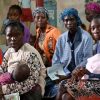
How the Rich Get Richer
Wealth begets wealth. This simple concept of privilege has added to growing discontent with inequality that has escalated under the shadow of the COVID-19 pandemic.
Q&A: Next Decade Sufficient Time for a Food Revolution
In March, after the World Health Organisation first declared COVID-19 a pandemic, the World Food Programme (WFP) of the United Nations activated a global corporate emergency mechanism for the first time. It had already written to all donor countries asking for $1.9 billion in front-loaded funding, and had begun emergency procurement. Its priority was to sustain life-saving assistance first.
Sustainable Measures Help Farmers Script a Positive Story Amid COVID-19 Uncertainty
 As India continues to grapple with the COVID-19 pandemic and a growing number of deaths, farmers here have been fighting a battle of their own against volatile pricing, uncertain demand and lack of access to the market. But in the midst of all this uncertainty, one farming couple in a village near Hyderabad are working towards a food-secure future for themselves using eco-friendly farming techniques.
Eswatini makes Progress on NDCs thanks to Crucial Partnership Support
Barry de Maine, the director of Green Cross Pharmacy, lost about $ 7,675 worth of stock when The Mall, the largest shopping centre in Mbabane, was flooded back in 2003. But when the flash floods hit again this year, he had already installed a flange to stop water from coming in. “This is the best I could do under the circumstances,” De Maine told IPS, adding: “Otherwise since we started experiencing floods at The Mall (17 years ago) nothing has been done.”
Our Development Priorities Have Shifted to the Immediate Task of Saving Lives & Livelihoods.
We have come to the point in the agenda where we must take a ‘deep-dive’ in reviewing the lessons learnt so far in our response to the COVID-19 pandemic, in order to chart a way for the future. But the future, by its very definition, must be relative. Flexibility and change will define policy making and the scope of action needed for development.
WFP – ‘Focus on Starvation, Destabilisation and Migration to Avert a COVID-19 Global Food Crisis’
Food security has become a priority in the Caribbean as COVID-19 pandemic travel restrictions have hit the tourism-dependent region hard.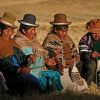
Global Summit of Development Banks Fails to Learn from Destructive Past
This week, 450 public development banks from around the world met for the Finance in Common Summit at the Paris Peace Forum. They gathered to discuss how they can direct their combined investments of over USD 2 trillion - 10% of total investments in the world - “to support the transformation or the global economy” and “build new forms of prosperity that take care of people and the planet.”
Q&A: How Desert Dust Storms Supply Vital Nutrients to the Oceans
When sand and dust storms (SDS) rage in the Sahara Desert, more than 10,000 km away in the Caribbean Sea the very same storms have a range of effects on the 1,360 species of shorefish that populate the waters there.

From Paraguay to Italy: Development at All Costs
I am speaking with Gladys and Raúl about civic space in Paraguay, when Raúl suddenly tells me about the fires. Thick smoke has reached the capital Asunción where he is based. In October, Paraguay became Dante’s Inferno.
UN Takes Preventive Measures Following 5,660 Lab-Confirmed COVID-19 Cases System-Wide
As we navigate the COVID-19 pandemic response, I would like to assure you once again that the health and safety of personnel and delegates continues to be our number one priority.
Driving Climate Change from the Top in the Dominican Republic
When President Luis Abinader arrived at his inauguration in an electrically driven car as a symbolic gesture of his Government’s intentions to make sustainable development one of its main objectives – he signalled the start of addressing climate change commitments in the country.
The United Nations, 75 Years Young: Engaging Youth Social Entrepreneurs to Accelerate the SDGs
This year, the United Nations is marking its 75th anniversary – a milestone of extraordinary economic and social progress in Asia and the Pacific. While the Organization enjoys a lifespan almost equal to the world’s improved average life expectancy, the future lies with those who have recently embarked on theirs: our young people.
Good data is the key to a sustainable post-COVID Pacific
Good data and statistics make essential contributions to building resilient and strong democratic societies. Decisions based on empirical data rather than anecdote or opinion are the foundation for good policy and planning. A focus on science and evidence-based data has been the cornerstone of SPC’s work for over 70 years. And as our understanding of the complexities and interconnected nature of our world increases, the need for good data has become ever more critical.
Questions Remain over Botswana’s Mass Elephant Deaths
When hundreds of elephants died in the space of a few months in Botswana earlier this year, conservationists were shocked. Wildlife experts said it was one of the largest elephant mortality events in history.
Is the IMF Encouraging World Financial Leaders to Walk Blindly Towards More Austerity?
This week the world’s Ministers of Finance and Central Bank Governors meet virtually at the 2020 Annual Meetings of the International Monetary Fund and the World Bank and decide on the fate of the world. This year’s gathering is particularly important, given that the world is confronting an unprecedented crisis. Governments are struggling to finance emergency care and urgent socioeconomic support to cope with the COVID19 pandemic.
Why We Need Trees to End to Poverty – Landmark Report
With extreme poverty (living on $1.90 a day) projected to rise for the first time in over 20 years, a new study has concluded that global poverty eradication efforts could be futile in the absence of forests and trees.
Global Poverty Soars– As Incomes of World’s Billionaires Hit New Highs
The phenomenal rise in extreme poverty -– for the first time in 20 years -- has been accompanied by an upsurge in the incomes of the world’s billionaires and the super-rich.
Indigenous Peoples & Local Communities Offer Best Hope for Our Planetary Emergency
Indigenous peoples and local communities offer the best hope for solutions to our planetary emergency. These solutions are grounded in traditional, time-tested practices and knowledge.
Forging Resilient Regional Supply Chains and Connectivity
Participation in global and regional supply chains has been one of the most reliable economic growth strategies, especially for developing countries in Asia and the Pacific. Smooth and efficient connectivity in both trade and transport has been indispensable to the region’s pursuit of the 2030 Agenda for Sustainable Development.« Previous Page — Next Page »





The Week with IPS

NEXT STOP - SDGs
Tracking global progress towards a sustainable world
Tracking global progress towards a sustainable world
