Languages
Sunday, November 22, 2026



News and Views from the Global South


Pacific Scientists Build a Regional Picture of a Changing Ocean
The Pacific Ocean connects thousands of islands, and understanding how ocean acidification is unfolding across the region requires more than individual research projects or monitoring stations.
Bad Zionist and Good Zionist? – The Arabs Should Choose the Devil They Know
As in previous elections, the latest Israeli national election offered people no real choice. They had to choose between bad Zionists and good Zionists. Thus, unsurprisingly, there is no clear winner – both major blocs are neck and neck as usual. The only difference this time is the Arab voting power. By uniting and turning out in record numbers, the Arab coalition secured 19 seats (nearly double the 10 it won in 2022), against the Netanyahu-led bloc’s 53 and the Gadi Eisenkot-led bloc’s 48. Neither bloc has a governable majority, so many are looking to the Arab bloc as a kingmaker, either joining formally or supporting one of the blocs on the no-confidence and supply bills. But they are on the horns of a dilemma, caught between a rock and a hard place.
Reviewing the UN Charter: Diplomatic Groundwork Should Begin
Article 109 of the UN Charter provides a mechanism for reviewing the Charter itself. It allows a General Conference of all UN members to be convened by a two-thirds vote of the General Assembly and a vote of any nine members of the Security Council. As the Article provides, “Each Member of the United Nations shall have one vote in the conference.”
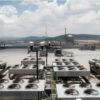
Data Centres Store Hazardous Chemicals in Mexico
At first glance, a data centre in Mexico draws little attention, as it is usually housed in an industrial park, out of public view. But, in addition to emitting greenhouse gases such as carbon dioxide (CO2) and nitrogen oxides, its cooling and fire suppression systems contain substances with strong environmental and health impacts: the so-called “forever chemicals”.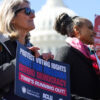
Midterms on a Tilted Field
In the run-up to the US midterms, armed federal agents have been knocking on the doors of voters suspected of being non-citizens. Republican-led states have redrawn electoral districts in their party’s favour, removing power from Black voters. Federal agencies have invaded people’s privacy, combing voter rolls for non-citizens while finding hardly any.
When the Young Stop Waiting: Europe’s Gen Z Is Sending Us All a Message
This autumn I have found myself watching the evening news from Europe with a growing sense of recognition. Not of the tear gas or the burning barricades, which I deplore, but of the faces. Teenagers holding hand-painted signs. University students sleeping in tents in city squares. Young people who look, more than anything, tired of waiting.
Is Gender Bias at the UN Coming to an Inglorious End?
In a bygone era, gender parity was never heard of at the United Nations—UN female staffers were mostly hired as secretaries and stenographers in a male-dominated Secretariat.
I Accuse
Émile Zola, the well-known French journalist, novelist, playwright, and key figure in theatrical naturalism, who played a significant role in France’s “political liberalization,” inspired me to speak out.
New Biodiversity Funding Brings Hope for Armenia’s Lake Sevan
The midday sun shines brightly over Lake Sevan. In the still waters, a flock of cormorants drifts silently, their black feathers glistening in the autumn light.
The Commonwealth Has 2.7 Billion Reasons to Act
Ours is not a new realisation. The Commonwealth is responding to what world leaders have acknowledged for many years: ‘business as usual’ cannot reverse the unsustainable course the world finds itself, from economic to climate crises and the growing lack of trust in governance institutions, both national and multilateral.
WFP Warnings Become a Reality as Food Insecurity in Haiti on Track to Reach Record Highs
Warnings by the United Nations World Food Programme (WFP) that Haiti’s fragile food security gains could quickly unravel are becoming a reality. New analysis indicates acute hunger in the country is continuing its upward trajectory and is set to reach record levels. Violence, economic instability, poor agricultural performance and displacement, along with the growing impact of El Niño, are driving this bleak outlook.
The UN Human Rights Council at 20: Credibility in Question
On 13 October, Burundi won a second consecutive term on the UN Human Rights Council, the UN’s main human rights body. The CIVICUS Monitor rates civic space in Burundi as closed, the worst category. Its government has spent years silencing civil society, critics and opposition parties, including through extrajudicial killings, forced disappearances and torture.
Green Cities Can Make Room for New Homes and the Farms That Feed Them
A field at the edge of a growing city may be worth far more than its market price suggests. It may produce vegetables sold in nearby markets, support local livelihoods and provide green space in an increasingly built-up environment. It can also help cities manage water, adapt to climate shocks and strengthen local food supplies. As municipal authorities decide where new homes and infrastructure should go, understanding what their land already contributes can help them plan for housing and food together.
African Athletes Should Be Free to Be Themselves
Senegal is welcoming athletes and visitors from across the globe as part of the 4th Summer Youth Olympic Games, the first-ever Olympics in Africa. Lesbian, gay, bisexual and transgender (LGBT) African athletes, including from Senegal, have repeatedly participated in and won competitions--while advocating their rights to compete and speaking out against discrimination.
New Biodiversity Pledges Emerge at COP17, But Funding Gap Persists
The second week of COP17 was dominated by discussions on biodiversity finance, with new pledges announced and donor outreach intensifying. Yet as the summit approached its close, the financing gap for implementing the Kunming-Montreal Global Biodiversity Framework (KMGBF) remains largely unchanged.
UAE’s UN Chief Candidate Faces Mounting Opposition Over Country’s Role in Sudan War
As the race for the next UN Secretary-General moves forward, the campaign of the United Arab Emirates (UAE) Assistant Minister for Political Affairs, Lana Nusseibeh, has faced significant pushback over the country’s involvement in the ongoing Sudanese Civil War.
Women and Girls’ Death Toll in Armed Conflict Doubles since 2021
More than 37,000 civilians were killed in conflict last year. Women and girls accounted for one in four of these deaths – double their proportion in 2021 – according to the 2026 UN Secretary-General’s report on Women, Peace, and Security, released today.
Why Dowry Still Dictating Women’s Fate?
Dowry is still persisting in society in one form or another. This deeply entrenched social practice continues deepen household poverty and cause violence against women. The question is no longer whether Bangladesh has a law against dowry. It does. The more uncomfortable question is why the law has failed to make dowry socially unacceptable and practically difficult to demand. The Dowry Prohibition Act 2018 makes the demand for dowry a criminal offence. Direct or indirect demands can result in one to five years' imprisonment, a fine of up to Tk 50,000, or both. Giving, taking or assisting in the giving or taking of dowry is also punishable. The law even makes dowry-related agreements void. Yet, the existence of legislation has not eliminated the practice. Instead, dowry has increasingly adapted itself to modern economic and social realities.
COP17 Celebrates Indigenous Leaders Amid Demand for Greater Inclusion in Biodiversity Decisions
At the Convention on Biological Diversity (CBD) COP17, the presence of Indigenous Peoples and Local Communities (IPLCs) is impossible to miss. Indigenous representatives speak at side events, participate in contact groups, advise negotiators and engage across multiple forums shaping the future of global biodiversity policy.
USA: ‘Rights Can Be Hollowed out One Procedure at a Time until They Survive in Name Only’
CIVICUS discusses voter suppression ahead of the USA’s 2026 midterm elections with Aklima Khondoker, an Atlanta-based civil and voting rights attorney, civil society organisation executive and founder and principal of Atabey Strategies, a consultancy firm that advises civil society organisations on democracy and electoral participation.
Flooding and Food Security: The Urgent Need for Research
Recently, countries around the world, including the United States of America, celebrated the United Nations 2026 World Food Day. This year’s theme, “Innovate Today. Nourish Tomorrow,” highlighted how efforts to foster innovation and forward-thinking solutions can help to ensure that everyone in our world has access to sufficient, diverse, safe, and nutritious foods while safeguarding the planet for future generations.« Previous Page — Next Page »


Want to keep up with the latest news and views from the Global South? Sign up for IPS Daily News Report for daily emails with our top stories about international development, climate change, gender and more. (Formerly IPS TerraViva since 1993).

The Week with IPS

NEXT STOP - SDGs
Tracking global progress towards a sustainable world
Tracking global progress towards a sustainable world
