Languages
Wednesday, August 19, 2026



News and Views from the Global South


Photo Essay: Kashmir’s Ingenious Climate-Responsive Architecture.
India's average temperature has risen by 0.7°C since 1901, bringing more frequent and intense heat waves, erratic rainfall patterns, and a marked decline in monsoon consistency since the 1950s.
Africa & Europe Must Join Forces to Protect Our Ocean by Pressing Pause on Deep Sea Mining
Deep-sea mining may not be on the official agenda next week at the World Economic Forum in Davos (January 20-24), but restoring public trust in international cooperation is.
Journalists Behind Bars: China, Israel & Myanmar the Worst Offenders in 2024
The year 2024 has been one of the most devastating for journalists covering conflicts worldwide-- with 361 behind bars, the second highest since the global record of 370 imprisoned back in 2023.
Trillions in Dirty Money: How Hidden Loopholes Fuel Corruption and Inequality
It is no longer a secret that at major global summits there are more lobbyists than official delegates. There, they participate as ‘guests,’ and most of them work for big business corporations. Their goal? To deter the adoption of policies that conflict with their employers’ interests.
The Reckless and Dangerous Misogyny of Zuckerberg and Musk
In anticipation of Donald Trump’s inauguration his gold-studded Florida estate, Mar-a-Lago, is at the heart of political power games, where influential businessmen like Mark Zuckerberg and Elon Musk are positioning themselves as key players in his orbit. Apparently unfazed by legal controversies and scandals, Trump is preparing for his return in collusion with already powerful men, who in their pursuit of personal gain and political influence reflect a disturbing trend of billionaire oligarchy merging with politics. A worrying development that might have significant consequences for the future of free speech and women’s rights.
Israel and Palestine Secure Ceasefire Agreement After 15 Months of Conflict
A ceasefire agreement between the states of Israel and Palestine was reached on 15 January, 2025 , effectively putting an end to hostilities in the Gaza Strip. This comes after nearly 15 months of conflict, which has caused immense damage to Palestinian infrastructure, development, and civilian life. The three-phase plan proposed for the ceasefire agreement consists of the return of Israeli hostages, Palestinian refugees returning home, and the reconstruction of Gaza. Additionally, the ceasefire is expected to essentially put an end to the Israel-Hamas War and significantly mitigate the humanitarian crisis occurring in the Gaza Strip.
Farmer’s Bill: A Reprieve for U.S. Farmers Affected By PFAS
The use of fertilizers has been introduced in society to enrich soil and supply high-grade harvests for centuries. As time went on, humans have managed to develop new ways to reform this operation, and as such, have formed a lessened health risk fertilizer called “biosolids”.
Ghana a Contender for BRICS+ Alliance
With heightening geopolitical interest in building a new Global South architecture, Ghana's administration is considering joining the 'partner states category' of BRICS+, an association of five major emerging economies (Brazil, Russia, India, China and South Africa).
UN Claims to Strengthen Battle Against Racism in Workplace—Amid Reservations
As the United Nations plans to commemorate its 80th anniversary later this year, it is “reflecting on the steps taken to advance implementation of the Secretary-General’s Strategic Action Plan for addressing racism in the UN Secretariat. The UN’s Anti-Racism Office, which was created in 2023, has hosted several online events that reached over 13,500 participants and generated 2,000 comments, and welcomed 2,700 visitors to its iSeek page (accessible only by staffers)—possibly a reflection of the rising complaints and concerns of UN staffers.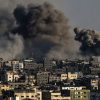
Israel’s Genocide in Gaza
Despite the denials by the Israeli government and some of its supporters, Israel’s genocide against the Palestinians in Gaza is evident.
The Davos Disconnect
"It was the best of times; it was the worst of times." Charles Dickens is more relevant today than ever. The wealthy and powerful are meeting again this year in glamorous Davos, at an invitation-only event. They arrive in chartered aircraft and private jets to speak about our warming climate, among other global concerns.
African Countries Urged to Plug Wealth Loss, Stop Illicit Financial Flows
Africa loses billions of dollars annually through illicit financial flows, resulting in the continent failing to improve the lives of millions of people despite vast mineral wealth, according to experts. Agencies say more needs to be done to turn the continent's natural resources into prosperity at a time governments are struggling to address challenging economic conditions that have spawned high poverty levels.
Remittances Vs Philanthropy – a Development Practitioner’s Perspective
Across Africa, economic transformation and development are being fuelled by two significant streams of funding: remittances and philanthropy. Both play vital roles, but as the situations evolve in many African countries, one truth becomes increasingly clear – remittances are emerging as a more sustainable, dignifying force compared to traditional philanthropy.
The Fall of Assad is a Cautionary Tale of Blowback
A regime built on terror, ruled by fear and sustained by foreign proxy forces crumbled in less than a fortnight. In the end, the foundations of the House of Assad (1970–2024) rested on the shifting sands of time. In the good ol’ days, despots could retire with their plundered loot into comfortable lifestyles in Europe’s pleasure haunts. No longer. The reverse damascene expulsion has seen the Assads scurry to safety to Moscow.
2024 Marked An Escalation in Brutality for Haiti’s Gang War
2024 was a transitional period in Haiti’s history, marked by rampant political instability, brutal gang violence, and widespread civilian displacement. Since the eruption of hostilities in March 2024, the Caribbean nation has been in a state of emergency. In response, the United Nations (UN) Security Council approved The Multinational Security Support (MSS) Mission in Haiti to assist the Haitian government in deposing gang activity and restoring order. However, the support mission has been largely ineffective as gangs continue to seize more areas in Haiti.
Armed Drone Attacks on Humanitarian Aid Efforts Put Future at Risk
Humanitarian aid operations in some places may become impossible in the future, experts have warned, as a new report shows a dramatic rise in the use of armed drones in conflict zones.
Laureates Call For Moonshot Innovation Effort to Avert Hunger Catastrophe
Neglected indigenous crops, rich in nutrition and resilient to climate change, are key to tackling global hunger only if governments invest in research and development (R&D) to tap the potential of such innovations. More than 150 Nobel and World Food Prize Laureates are calling for investment in moonshot technologies to realize the potential of innovative solutions such as these hardy crops, warning that without swift action, there is a "food insecure, unstable world.”
How US Media Hide Truths About the Gaza War
A few days before the end of 2024, the independent magazine +972 reported that “Israeli army forces stormed the Kamal Adwan Hospital compound in Beit Lahiya, culminating a nearly week-long siege of the last functioning hospital in northern Gaza.”
Violence Flows in Parts into Mexico from the United States
The case of a man arrested in Texas, in the south of the United States, for shipping arms parts to Mexico immediately caught the attention of authorities in both countries. But it was only one thread in a web that continues to become more and more tangled.
The Year 2024: Hopes & Despairs
Thank God, we have survived another year of genocide, war, destruction and climate crisis. The passing year of 2024 has been a mixture of hope and despair. It began with some hope as the International Court of Justice (ICJ) ruled in favour of South Africa’s case against Israel for committing genocide and ordered Israel to take all measures within its power to prevent the commission of all acts within the scope of Article II of the Genocide Convention, and to take immediate and effective measures to enable the provision of urgently needed basic services and humanitarian assistance to address the adverse conditions of life faced by Palestinians in the Gaza Strip.
Nature Goes to Court
Nature is taking the stand as courtrooms worldwide become battlegrounds for Earth’s rights. The rise in climate litigation shows how the environment can take centre stage as a plaintiff, demanding justice and accountability, benefiting us all.« Previous Page — Next Page »


Want to keep up with the latest news and views from the Global South? Sign up for IPS Daily News Report for daily emails with our top stories about international development, climate change, gender and more. (Formerly IPS TerraViva since 1993).

The Week with IPS

NEXT STOP - SDGs
Tracking global progress towards a sustainable world
Tracking global progress towards a sustainable world
