
Friday, October 2, 2026



News and Views from the Global South
Farming Crisis: Filling An Empty Plate

BOLIVIA: Amazon Nuts at Exploitative Prices
Bolivia is the world's leading exporter of the shelled Brazil nut, a nutritious food source that grows abundantly in the country's Amazon rainforest region. But in this tropical paradise, many of the nut-gatherers live in hellish conditions.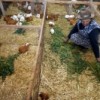
PERU: Guinea Pigs Spell Independence for Women
In a rural village in the Peruvian Andes, very near yet so far from the popular tourist destination of Cuzco, the guinea pig, a rodent native to the region, has become "woman’s best friend" – an important means for women to earn money to support their families, as well as to learn how to defend their rights.LATIN AMERICA: Desertification – an Invisible Cancer
"Desertification is the cancer of the earth," Argentine geographer Elena Abraham told IPS. "It is a process of degradation that does not manifest itself in spectacular ways but furtively advances, and by the time it is visible there is nothing to be done, and people have to move away, in search of an alternative."GUATEMALA: Malnutrition Killing Children Again
The deaths of 25 children from severe malnutrition this year in Guatemala, mainly in the eastern province of Jalapa, shows that the specter of hunger is still haunting the country, aggravated by the global economic crisis and drought.
PERU: Rural Highlands Communities Coming Online
Little by little, rural communities in southern Peru are beginning to take advantage of the internet to acquire new knowledge and increase their income. But the use of computers in rural areas faces numerous challenges, from illiteracy to fear of the unknown or questions about the sustainability of these new communications initiatives once they are left in local hands.
Q&A: Recipes for Food Sovereignty
In 1975, Brazilian nutritionist and paediatrician Clara Brandão introduced "multimixture" in the diet of 13 preschools in Santarém, in the northern state of Pará, and noted how the malnourished children gained weight and completed their schooling. Some even went on to university.
AGRICULTURE: Cultivating Rural Prosperity in Cameroon
Emilie Nyate has a two million CFA smile on her face these days. She's one of the beneficiaries of the Roots and Tubers Market- Oriented Programme, known better by its French acronym of PNDRT, which is transforming the lives of small-scale farmers in Cameroon.
PARAGUAY: Indigenous Squatter Communities Organise Self-Help
Indigenous families living in a squatter settlement on the outskirts of the Paraguayan capital are organising themselves, and now have a community soup kitchen and are producing and selling handicrafts. They don't want to return to panhandling on the streets of Asunción, so far from their home villages.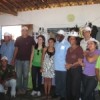
Q&A: Brazil’s Lesson to the World: Invest in Family Farming
Kanayo F. Nwanze chose Brazil for his first official visit as the recently elected president of the International Fund for Agricultural Development (IFAD), and was pleased to personally attest to President Luiz Inácio Lula da Silva’s commitment to family farming.
Q&A: Agriculture Can Lead Poverty Reduction
Agriculture is vital to the economies of West and Central African countries, but poverty remains a reality in the region's rural areas.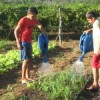
BRAZIL: Agricultural School Cultivates Pride in Family Farming
"Here you get an education for the country and not for the city, which is not where I live, and that’s why I can relate to this school," says Israel Santos, 16, currently enrolled in the second year of secondary school studies at an agricultural school in the municipality of Independencia, in northeastern Brazil.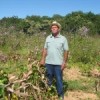
BRAZIL: When the Arid Northeast Turns Green
The rain - usually much desired because it is so scarce - has come in excess this year, destroying many crops. But in this farming district in far north-eastern Brazil, the impact of the heavy rainfall was less marked than in the past, thanks to the diversification of crops and productive activities.Q&A: Burkina Faso Moving Towards Food Security
Burkina Faso was one of several countries that where a rapid rise in food prices led to rioting in the streets in 2008. Policy-makers had sensed a crisis developing, but the country was not able to build up sufficient reserves of imported commodities such as rice, wheat and oil to avoid it. There is now an emphasis on achieving food security.
ZAMBIA: Conservation Agriculture Gaining Ground
Not even the least alert of drivers can miss the sign along the busy road 30 kilometres south of Lusaka: "Look, Conservation Farming Pays!"
Q&A: ‘Farmers Can Gain From Crisis’
The financial crisis could actually boost agriculture in Latin America, Josefina Stubbs, director of the International Fund for Agricultural Development (IFAD) division for Latin America and the Caribbean tells IPS in an interview.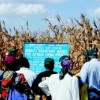
AGRICULTURE: Biotechnology: Africa Must Not Be Left Behind
Africa must embrace agricultural biotechnology or risk being excluded from a major technological revolution that has had increased food production in the Europe, North America and Asia.
AFRICA: Civil Society to AU: Investment Must Address Marginalisation
No gathering hosted by Libyan leader Moammar Gaddafi is ever dull, and the Thirteenth Ordinary Session of the African Union, concluding in Sirte, Libya today has not disappointed.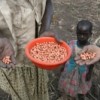
AGRICULTURE-AFRICA: Seeking Diversity, Resilience and Farmer Control
The Alliance for a Green Revolution in Africa (AGRA) claims that its "stress breeding", high-yield seed program and its emphasis on grassroots farmer input will boost agricultural production among poor, small scale farmers. But NGOs and environmentalists say AGRA’s Programme for Africa’s Seed System (PASS) is essentially a top-down, corporate driven approach that further threatens food security on the continent.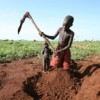
AGRICULTURE-AFRICA: Questioning Old Traditions
Inefficient production, bad infrastructure, poor access to markets, a lack of capital investment: the challenges facing smallholder farmers across Africa are many. A 'green revolution' which appears to be gaining ground in Africa seeks to change all this.AGRICULTURE-AFRICA: Knowledge Is Power for Farmers
Following training by the Alliance for a Green Revolution in Africa, a hundred farmers in central Kenya, armed with an improved understanding of their local markets are commanding higher prices for their bananas.
LIBERIA: Rural Women Confront Hunger Gap, Their Own Way
Three brightly-clothed women walk slowly around the fallen, charred trees strewn haphazardly across the blackened clearing, each carrying snail shells filled with indigenous rice seed to bury in the rich soil.« Previous Page — Next Page »


Today, one in six people on the planet go hungry, according to United Nations statistics. The food crisis and now the global economic crisis, together, have increased the number of undernourished people in the world to more that one billion for the first time since the 1970’s. Much of southern Africa continues to face severe food shortages, largely the result of one of the worst droughts in a decade followed by erratic rains. While the Latin American and Caribbean region as a whole is a net food exporter, food price inflation is still having a detrimental impact on the income, nutrition, and health of poor consumers. Solutions must be carefully crafted in each region, country and community taking into account local priorities. The complex web of issues surrounding food security and rural development include farmers access to markets, the adoption of international trade rules, technology transfer, the sustainable use of limited resources, and the application of traditional knowledge, among others. Establishing a prosperous, sustainable economic future for the world means placing a spotlight on agriculture - and giving a voice to farmers. IPS News is covering the food crisis, its causes and its effects, from both a local and a global perspective.

This website is funded through the support of the International Fund for Agricultural Development (IFAD).
