Languages
Thursday, October 8, 2026



News and Views from the Global South
Nuclear Energy - Nuclear Weapons

Deploying Morals Against Weapons of Mass Destruction
With legislation, legality and policy at the forefront of governmental decisions on nuclear weapons, what seemingly gets neglected are our morals.
Zarif Reveals Iran’s Proposal for Ensuring Against “Breakout”*
Iranian Foreign Minister Javad Zarif has revealed for the first time that Iran has made a detailed proposal to the P5+1 group of states aimed at ensuring that no stockpile of low-enriched uranium would be available for “breakout” through enrichment to weapons grade levels.Russian Manipulation of Reactor Fuel Belies U.S. Iran Argument
In the stalemated talks between the six powers and Iran over the future of the latter’s nuclear programme, the central issue is not so much the technical aspects of the problem but the history of the Middle Eastern country’s relations with foreign suppliers – and especially with the Russians.U.S. “Political” Breakout Demand Could Derail Nuclear Talks
As diplomats began drafting a comprehensive agreement on the Iranian nuclear programme and Western sanctions in Vienna Tuesday, U.S. officials were poised to demand a drastic cut in Iran’s enrichment capabilities that is widely expected to deadlock the negotiations.
Breaking the Rules
Small underdeveloped countries, unless they suddenly discover oil or gold, are at a distinct disadvantage in the global arena. If they play by the rules, they will remain underdeveloped. Over the last half-century, very few countries have managed to jump from the Third World to the club of richest nations.
Tough Road in Vienna to Iran Nuclear Deal
Iran and world powers will resume negotiating a final deal on Tehran's nuclear programme Tuesday in Vienna while experts warn the hardest work is about to begin.
Eyewitness to Nuke Explosion Challenges World Powers
When the Foreign Minister of Marshall Islands Tony de Brum addressed a nuclear review Preparatory Committee (PrepCom) meeting at the United Nations last month, he asked whether anyone in the room had witnessed a nuclear explosion.
Gaps Remain in U.N. WMD Resolution
The United Nations claims that a key Security Council resolution adopted unanimously back in 2004 has been instrumental in keeping weapons of mass destruction (WMDs) from the hands of terrorists and insurgent groups worldwide.
U.S.-Dependent Pacific Island Defies Nuke Powers
The tiny Pacific nation state of Marshall Islands - which depends heavily on the United States for its economic survival, uses the U.S. dollar as its currency and predictably votes with Washington on all controversial political issues at the United Nations - is challenging the world's nuclear powers before the International Court of Justice (ICJ) in The Hague.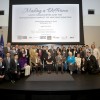
Interfaith Leaders Jointly Call to Abolish Nuclear Arms
On the eve of next week’s meeting at the U.N. headquarters in New York on the Nuclear Non-Proliferation Treaty (NPT), more than 100 representatives of 11 faith groups from around the world have pledged to step up their efforts to seek the global abolition of nuclear weapons.
U.S.-Russia Sabre Rattling May Undermine Nuke Meeting
The growing tension between the United States and Russia over Ukraine has threatened to unravel one of the primary peace initiatives of the United Nations: nuclear disarmament.
Yakama Nation Tells DOE to Clean Up Nuclear Waste
The Department of Energy (DOE), politicians and CEOs were discussing how to warn generations 125,000 years in the future about the radioactive waste at Hanford Nuclear Reservation, considered the most polluted site in the U.S., when Native American anti-nuclear activist Russell Jim interrupted their musings: “We’ll tell them.”The Iranian Nuclear Weapons Programme That Wasn’t
When U.S. Attorney for Massachusetts Carmen M. Ortiz unsealed the indictment of a Chinese citizen in the UK for violating the embargo against Iran, she made what appeared to be a new U.S. accusation of an Iran nuclear weapons programme.
U.S. Rejected Israeli Demand for Iran Nuclear Confession
The Barack Obama administration appears to have rejected a deal-breaking demand by Israel for an Iranian confession to having had a covert nuclear weapons programme as a condition for completing the comprehensive nuclear agreement.
Exploring the Path Towards a Nuclear-free World
This past February, the Second Conference on the Humanitarian Impact of Nuclear Weapons was held in Nayarit, Mexico, as a follow-up to the first such conference held last year in Oslo, Norway. The conclusion reached by this conference, on the basis of scientific research, was that “no State or international organisation has the capacity to address or provide the short and long term humanitarian assistance and protection needed in case of a nuclear weapon explosion.”
Non-Nuclear Ukraine Haunts Security Summit in The Hague
The two-day, much-ballyhooed Nuclear Security Summit (NSS) in the Netherlands, which concluded Tuesday, was politically haunted by the upheaval in Ukraine - the former Soviet republic that renounced some 1,800 of its nuclear weapons in one of the world's most successful disarmament exercises back in 1994.
Russians Stand Strong Against Sanctions
As the West imposes what have been called the most comprehensive sanctions on Russia since the end of the Cold War, many ordinary Russians say they have no fear of any economic measures the United States or the European Union may take against their country.
U.S.-Russia Bickering May Trigger Nuclear Fallout
The U.S.-Russian confrontation over Ukraine, which is threatening to undermine current bilateral talks on North Korea, Iran, Syria and Palestine, is also in danger of triggering a nuclear fallout.OP-ED: Toward a Final-Phase Deal with Iran
Last month, negotiators from the United States, its P5+1 partners (China, France, Germany, Russia, and the United Kingdom), and Iran agreed to a framework for talks on a “comprehensive solution that would ensure Iran’s nuclear programme will be exclusively peaceful.”
Resolving Nuclear Arms Claims Hinges on Iran’s Demand for Documents
The Barack Obama administration has demanded that Iran resolve “past and present concerns” about the “possible military dimensions” of its nuclear programme as a condition for signing a comprehensive nuclear agreement with Tehran.CORRECTION/OP-ED: Nuclear Disarmament, the State of Play
If psychosis is a loss of contact with reality, the current status of nuclear disarmament can best be described as psychotic.« Previous Page — Next Page »





At first it was the United States. Then came Russia, China, Britain and France. Everyone wanted their own atomic bombs and atomic energy. While Israel quietly nurtured its nuclear programme, in Asia, rivals India and Pakistan, and most recently North Korea, joined the global nuclear club. Are nuclear weapons stockpiles adequately safeguarded? Is nuclear energy worth the risk? Read IPS.

The Week with IPS

NEXT STOP - SDGs
Tracking global progress towards a sustainable world
Tracking global progress towards a sustainable world
