Languages
Sunday, November 8, 2026



News and Views from the Global South
Projects

Dry Fields Breed Hunger in Jamaica
 Caribbean countries already grappling with a finite amount of space for food production now face the added challenges of extreme rainfall events or droughts due to climate change.

Lessons from Jamaica’s Billion-Dollar Drought
As Jamaica struggles under the burden of an ongoing drought, experts say ensuring food security for the most vulnerable groups in society is becoming one of the leading challenges posed by climate change.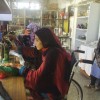
Pakistan’s Paraplegics Learning to Stand on their Own Feet
When a stray bullet fired by Taliban militants became lodged in her spine last August, 22-year-old Shakira Bibi gave up all hopes of ever leading a normal life.
OPINION: A Plea for Banning Nuke Tests and Nuclear Weapons
December 1938 was a decisive month in human history: In Germany, the scientists Otto Hahn and Fritz Strassmann discovered that when bombarded with neutrons, the atomic nucleus of uranium would split.
Down With Sustainable Development! Long Live Convivial Degrowth!
For anyone who recently attended the Fourth International Conference on Degrowth in Leipzig, Germany, listening in on conference talk, surrounded by the ecologically savvy, one quickly noticed that no one was singing the praises of sustainable development.
OPINION: Humanitarian Impact of Nukes Calls For Concerted Action
As we approach the 70th anniversary next year of the atomic bombings of Hiroshima and Nagasaki, there are growing calls to place the humanitarian consequences of their use at the heart of deliberations about nuclear weapons.
OPINION: Why Nuclear Disarmament Could Still Be the Most Important Thing There Is
At the height of the Cold War the world’s total arsenal of nuclear weapons, counted as explosive potential, may have amounted to three million Hiroshima bombs. The United States alone possessed 1.6 million Hiroshimas’ worth of destructive capacity.
Refugees Between a Legal Rock and a Hard Place in Lebanon
Staring at the floor, Hassan, a 21-year-old Syrian refugee from Idlib in northwestern Syria, holds a set of identification papers in his hands. He picks out a small pink piece of paper with a few words on it stating that he must obtain a work contract, otherwise his residency visa will not be renewed.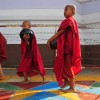
Will Myanmar’s ‘Triple Transition’ Help Eradicate Crushing Poverty?
Myanmar is never out of the news for long. This has been the case since a popular uprising challenged military rule in 1988. For over two decades, the country was featured in mainstream media primarily as one unable to cope with its own internal contradictions, a nation crippled by violence.
To Fight Inequality, Latin America Needs Transparency…and More
As public policy, political transparency and open data need an active ingredient to bring about social change that would reduce inequality in Latin America: citizen participation, said regional experts consulted by IPS.
AIDS Is No. 1 Killer of African Teenagers
Two years ago, Shola* was kicked out of the family house in Abeokuta, in southwestern Nigeria, after testing HIV-positive at age 13. He was living with his father, his stepmother and their seven children.
OPINION: Israel’s Arabs – Marginalised, Angry and Defiant
The recent killing of an Arab youth by the police in the Israeli Arab village of Kufr Kanna, outside Nazareth, the ongoing bloody violence in Jerusalem, and the growing tensions between the Israeli security services and the Arab community in Israel could be a dangerous omen for Israeli domestic stability and for the region.
Pakistani Sikhs Back in the ‘Dark Ages’ of Religious Persecution
Balwan Singh, an 84-year-old shopkeeper living in Pakistan’s northern Khyber Pakhtunkhwa province, is well past retirement age, but any illusions he may have had about living out his golden years in peace and security have long since been dashed.
True Gender Equality for Both Women and Men
Numerous international and national efforts have focused on gender equality and the empowerment of women. The United Nations, for example, has convened four world conferences on women - Beijing in 1995, Nairobi in 1985, Copenhagen in 1980 and Mexico City in 1975 - and Member States have adopted various international agreements, such as the Beijing Declaration and Platform for Action and the Convention on the Elimination of All Forms of Discrimination against Women (CEDAW).
IPS Honours Crusader for Nuclear Abolition
Jayantha Dhanapala was awarded the IPS International Achievement Award for Nuclear Disarmament Monday at the United Nations in New York.
OPINION: The Clock Is Ticking for Nuclear Disarmament
A nuclear weapon-free world can and must happen in my lifetime. This may seem a bold and wildly Pollyannaish statement for me to make after a lifetime of work in peace and disarmament.
Depression Casts Cloak of Infertility Over Kashmir Valley
It was almost midnight when Mushtaq Margoob woke up to the incessant ringing of his phone. It was his patient, a young woman whom Margoob, a renowned Kashmiri psychiatrist and head of the department of psychiatry at the only psychiatric hospital in Kashmir, had been treating for depression for many years.
Shale Oil Fuels Indigenous Conflict in Argentina
The boom in unconventional fossil fuels has revived indigenous conflicts in southwest Argentina. Twenty-two Mapuche communities who live on top of Vaca Muerta, the geological formation where the reserves are located, complain that they were not consulted about the use of their ancestral lands, both “above and below ground.”
Iranians Keep Hope Alive for Final Nuclear Deal
In the United States, the negotiations aimed at a final deal between world powers and Iran over its nuclear programme—in a crucial phase this week—are far from the minds of average people. But for many Iranians, the talks hold the promise of a better future.
OPINION: Why Israel Opposes a Final Nuclear Deal with Iran and What to Do About It
Nov. 24 is the deadline for six world powers and Iran to reach a final deal over its nuclear programme. If there is no deal, then the talks are likely to be extended, not abandoned.
G20 Seeks to Streamline Private Investment in Infrastructure
Industrialised countries have agreed to collaborate on a new programme aimed at funnelling significant private-sector investment into global infrastructure projects, particularly in developing countries.« Previous Page — Next Page »





The Week with IPS

NEXT STOP - SDGs
Tracking global progress towards a sustainable world
Tracking global progress towards a sustainable world
