Languages
Saturday, November 7, 2026



News and Views from the Global South
Projects

Africa Should Trade its Carbon Credits to Fund Renewable Energy – UNECA
Africa needs to trade in carbon credits to reduce greenhouse gas emissions, finance the transition to renewable energy, and boost economic development, the United Nations Economic Commission for Africa (UNECA) says.
Mental Health as a Human Right Left Behind for Children in Fragile and Humanitarian Settings
Hiding in basements during bombings, fleeing their homes, going hungry, and facing the devastating and life-transformative traumas of losing their loved ones as their childhoods go up in flames of war. These are the lived experiences of crisis-impacted children and adolescents.
Argentina Seeks Elusive Investment to Fully Exploit Shale Gas
Argentina, which has one of the largest unconventional hydrocarbon deposits in the world, has been forced to import gas for 6.6 billion dollars so far this year.
There’s no Stopping Renewable Power in Chile, but Community Energy Is Not Taking Off
Renewable energies, especially solar and wind power, are growing inexorably in Chile, driven by large companies. But community generation of alternative energy is not taking off, despite a law promoting it.
A Stress Test for Nuclear Deterrence
This month, the Tenth Review Conference of the Non-Proliferation Treaty (NPT) is taking place in New York (and scheduled to conclude August 26). The meeting of states parties, postponed four times because of the Covid-19 pandemic, had originally been scheduled for April 2020.
Funding Urgently Needed for Children’s Education in Conflict Areas—ECW Director
Yasmine Sherif, Director of Education Cannot Wait (ECW) issued a wake-up call for the global community to support efforts on facilitating education in crisis areas. She was speaking at the United Nations at the launch of the global fund's annual report titled We Have Promises to Keep.
Keeping the Promise of Education for Crisis-Impacted Children and Adolescents
Syrian refugee children are among the most disadvantaged in Iraq. Even before the COVID-19 pandemic, only 53 percent of school-aged Syrian refugee children in the country were enrolled.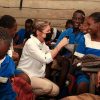
It Takes a Village to Raise and Support a Child in a Humanitarian Crisis
As we come together to celebrate people helping people on this year’s World Humanitarian Day, we honor the courageous and remarkable humanitarians delivering on the frontlines to help us achieve our goals for peace, universal human rights, and education for all.
Biofuels Slow Down Electric Vehicles in Brazil
Brazil celebrated 100,000 electric vehicles in circulation in late July, but this is a drop in the ocean compared to the 46 million combustion vehicles registered in the country and in contrast with the pace of the phasing out of oil in the world's automotive industry.
Rural Systems Mitigate Impact of Overuse of Water in Chile
Local leaders of the Rural Sanitation Services (RSS) warn that the digging of illegal wells by large agro-export companies in Chile is aggravating the effects of drought and threatening drinking water supplies and social peace.
Education Cannot Wait Proud to Participate in Global Citizen Festival 2022: Calling on World Leaders and Donors to Empower Girls and End Extreme Poverty Now
Education Cannot Wait (ECW) - the United Nations global fund for education in emergencies and protracted crises - is proud to support and participate in the 2022 Global Citizen Festival. Participants will call on world leaders at the UN General Assembly - and ahead of the G20 and COP27 in November - to step up and invest $600 million into the future of women and girls, close the annual $10 billion climate financing shortfall, deliver $500 million to help African farmers respond to the global food crisis, and provide relief from crushing debts to End Extreme Poverty Now.
ECW Interviews Three Inspiring #Youth4EiE Advocates on International Youth Day
On this International Youth Day, ECW interviewed three inspiring #Youth4EiE Advocates – Nataly Rivas, Angela Abizera, and Jean-Paul Saif. Nataly, Angela, and Jean-Paul are three Global Youth for Education in Emergencies panel members.
‘Aid Organizations Must Include the Youth Voice’ August 12, 2022—International Youth Day
Today marks International Youth Day, a global celebration of the transformative power of young people. Introduced by the United Nations General Assembly in 1999, the event was inaugurated not only to observe the power of the youth voice, but to serve as a promise from those in power to activate the power of youth across the development sector.
Managing sea cucumber fisheries in the Pacific region: a one-day training to educate key stakeholders in New Caledonia
Holothurians, also known as sea cucumbers, are an important source of income for coastal communities in the Pacific. Their exploitation has grown over the past decades, targeting international markets. In some parts of the world, they are considered a delicacy where they can fetch very high prices consequently, they are being overfished in some areas of the Pacific region.
Infrastructure Growth Threatens Brazilian Amazon with Further Deforestation
The mandatory initial permit granted by Brazil's environmental authority for the repaving of the BR-319 highway, in the heart of the Amazon jungle, intensified the alarm over the possible irreversible destruction of the rainforest.
‘Positive Sei’ Bringing Hope to Homes on the Airwaves
Tonga was still picking up the pieces after the Hunga volcanic eruption and tsunami waves when the pandemic reached its shores.
UN Chief Urges Governments to Tax “Immoral” & Excessive” Oil and Gas Profits
The war in Ukraine continues to have a devastating impact on the people of that country. Civilians are dying in the most tragic circumstances every day. Millions of lives have been destroyed or put on hold.
Slow food, Accelerating Biodiversity in the Field and On Our Plates
Edward Mukiibi was forced to do agriculture at school as punishment for misbehaviour. Instead of hating the punishment, he loved it, especially when he realised farming was the future of good food, health and wealth.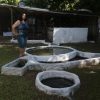
Biogas Production Awaits Greater Incentives in Cuba
Standing in front of a blue flame on her stove, getting ready to brew coffee, Mayra Rojas says the biodigester built in the backyard of her home in western Cuba has become a key part of her daily life and a pillar of her family's well-being.
Bangladesh Plans to Launch Toll-free SMS Flood Warning
Ziaur Rahman, a farmer of Pakuar Char under Sariakandi Upazila in Bogura, cultivated jute on a newly emerged river island (char) in the Brahmaputra River, but this year’s flood washed away his crop.
Sidestepping Hunger & Boosting Food Security
Until Russia went to war on Ukraine in February, Ukraine was known as the “breadbasket of Europe”. One of the largest grain exporters in the world, it provided about 10 per cent of globally traded wheat and corn and 37 per cent of sunflower oil, United Nations figures show. The yellow and blue of its flag mimic its rolling golden fields under blue summer skies.« Previous Page — Next Page »





The Week with IPS

NEXT STOP - SDGs
Tracking global progress towards a sustainable world
Tracking global progress towards a sustainable world
