Languages
Tuesday, October 6, 2026



News and Views from the Global South
Projects

Debt Distress in Africa: Problems and Ways Forward
The COVID pandemic has had a profoundly negative impact on Africa’s sovereign debt situation. Currently, 22 countries are either in debt distress or at high risk of debt distress.
Oil Business Burns Enough Gas to Power the Whole Sub-Sahara or Two Thirds of Europe
While the attention of mostly Western media and politicians is quasi exclusively hoarded up by the proxy war in Ukraine and its consequences on the energy sector, the world’s big oil business continues to burn Planet Earth with its underreported though highly polluting, wasteful practice of gas flaring.
Floods Drive Urban Solutions in Brazilian Metropolis
"We do everything through parties, we don't want power, we don't want to take over the role of the State, but we don't just protest and complain," said Itamar de Paula Santos, a member of the United Community Council for Ribeiro de Abreu (Comupra), in this southeastern Brazilian city.
Russian Invasion Blamed for 44 Million People Marching Towards Hunger & Starvation
The Russian invasion of Ukraine last February has triggered multiple crises in several fronts: the deaths of thousands of civilians, the destruction of heavily populated cities, the rise in military spending in Europe, a projected decline in development assistance to the world’s poorer nations; the demolition of schools and health-care facilities — and now the threat of hunger and starvation.
Opacity Surrounds Fossil Fuels in Mexico
In the northern Mexican state of Coahuila the current situation of coal, used mainly to generate electricity, is opaque.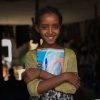
Education Cannot Wait Expands First Emergency Response in Northern Ethiopia with Additional US$2 Million Grant, Bringing ECW Ongoing Investments in Ethiopia to over $30 Million
Conflicts in Northern Ethiopia’s regions of Afar, Amhara and Tigray, have pushed children and adolescents out of school and are fueling humanitarian needs in the region. In response to this crisis, Education Cannot Wait (ECW) announced today a US$2 million First Emergency Response Grant that will reach more than 20,000 refugee and displaced, as well as host community children and adolescents. This brings ECW ongoing investments in Ethiopia to over $30 million.
Today is the Time for Transformation
“I first think about my children. They are why we were forced to leave - because our children are always our first concern.” These are the moving words of Victoria, who fled the brutal war in Ukraine with her two daughters. Her eyes welling up with tears, she recalled their dangerous journey from Ukraine. She and her two school-aged daughters were forced to leave behind everything they have ever known.
A New Strategy Is Needed to Address Iran’s Nuclear Program
A revised Iran nuclear deal based on the 2015 JCPOA could provide the basis for a new Biden administration strategy that would limit Iran’s nuclear program to peaceful purposes and ensure that Tehran’s public pronouncement that it is not seeking to acquire nuclear weapons becomes a de facto reality.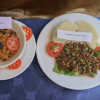
Give Edible Insects a Chance as an Alternative High-Quality Protein Source, say Scientists
Growing up in Samoya Village of Bungoma County in the Western part of Kenya, Elvis Wanjala has fond childhood memories of the rainy season, chasing and catching black-bellied winged termites in the rain.
The Sun Illuminates the Nights of Rural Families in El Salvador
After working on the family farm, Carlos Salama comes home and plugs his cell phone into a socket via a solar-powered electrical system, a rarity in this rural village in southern El Salvador.
Education Cannot Wait Interviews Leonardo Garnier, Special Adviser of the UN Secretary-General for the Transforming Education Summit
ECW: Congratulations on your appointment by United Nations Secretary-General António Guterres as the Special Adviser for the Transforming Education Summit. What do you hope to achieve through the Summit and why is it so critical that the world comes together to address the global education crisis around this September’s UN General Assembly?

Breaking Menstruation Taboos and Leaving No Girl Behind
Fourteen-year-old Hadiza smiles as she clutches a purple bag in her hands. Inside the cloth bag is a Menstrual Hygiene Management kit, an essential item that gives her dignity and enables her to continue with school even when menstruating.
Pacific Community-Led Health Missions Arrive with Critical Support to Tonga and Kiribati Grappling with COVID-19 Surges
Before the pandemic emerged in 2020, health services in many Pacific Island countries were under-resourced, under-funded and under-staffed. Now following recent outbreaks of COVID-19, advancing the capacity and development of health and medical services in vulnerable nations, such as Tonga and Kiribati, is increasingly urgent.
Bringing Seeds of Hope to Farmers
Amidst a backdrop of rising food insecurity worldwide and a global food supply chain crisis, many countries are attempting to increase the level of food self-production. One improved input for farming which is receiving renewed attention is improved seed. The two most populous countries in the world, China and India, have recently made ground-breaking moves to improve their competitive position by developing new seeds which will improve their food production and increase resilience to climate change. So far, in 2022, new regulations on using biotechnology (genetic modification and gene editing) have been put in place by both countries to ultimately allow smallholder farmers to benefit from these new seeds.
New Tactical Nuclear Weapons? Just Say No
Russian President Vladimir Putin’s brutal war on Ukraine, along with his implied threats of nuclear weapons use against any who would interfere, has raised the specter of nuclear conflict.
Boosting Food Security and Education in Schools in Brazil
"I like lettuce, but not tomatoes and cucumbers," said nine-year-old Paulo Henrique da Silva de Jesus, a third grader at the João Baptista Caffaro Municipal School in the southeastern Brazilian city of Itaboraí.
Poor Water Distribution Infrastructure Gives Jamaica a ‘Water Scarce’ Label
It will take billions of dollars and many years to fix a growing problem that has placed Jamaica into the unlikely bracket of being among the world's most water-scarce countries due to the unavailability of potable water.
Mexico Embraces Gas, Scorns Renewable Energy
At home, Isabel Bracamontes uses gas only for cooking. "We try to prepare food that doesn't need cooking, like salads," she says in the southeastern Mexican city of Mérida.
ECW, Strategic Partners Bring Relief to Child Refugees Fleeing Ukrainian Conflict
A brutal war now engulfs the young lives of an estimated 7.5 million children in Ukraine. Caught in the crossfire of bullets and missiles as the conflict escalates, children and young people have been plunged into a humanitarian crisis.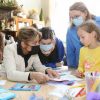
Education Cannot Wait in Moldova with Strategic Partners Scaling-up its Ukraine Crisis Regional Education Response to US$6.5 Million for Crisis-affected Children and Youth
Expanding on Education Cannot Wait’s (ECW) US$5 million Ukraine First Emergency Response grant announced in March, ECW today announced a new, initial US$1.5 million allocation to support the education in emergencies response for the Ukraine refugee crisis in Moldova while on mission with strategic partners USAID, FCDO/UK and Theirworld. This new allocation brings ECW’s total Ukraine crisis education response to US$6.5 million to date. The new grant will be delivered in partnership with the Government of Moldova to ensure refugee children and youth can access safe and protective learning opportunities. Investments will also benefit children in the host communities. The development of the grant will be facilitated through the coordination mechanism established for the education response.
Oil Crisis Offers Opportunities to the South and for the Green Energy Transition
The oil and gas supply crisis unleashed by the Russian invasion of Ukraine represents new business opportunities for the oil-producing countries of the developing South, both traditional and emerging, and also for accelerating the global transition to green forms of energy.« Previous Page — Next Page »





The Week with IPS

NEXT STOP - SDGs
Tracking global progress towards a sustainable world
Tracking global progress towards a sustainable world
