Languages
Saturday, November 7, 2026



News and Views from the Global South
Projects

The Sun Illuminates the Nights of Rural Families in El Salvador
After working on the family farm, Carlos Salama comes home and plugs his cell phone into a socket via a solar-powered electrical system, a rarity in this rural village in southern El Salvador.
Education Cannot Wait Interviews Leonardo Garnier, Special Adviser of the UN Secretary-General for the Transforming Education Summit
ECW: Congratulations on your appointment by United Nations Secretary-General António Guterres as the Special Adviser for the Transforming Education Summit. What do you hope to achieve through the Summit and why is it so critical that the world comes together to address the global education crisis around this September’s UN General Assembly?

Breaking Menstruation Taboos and Leaving No Girl Behind
Fourteen-year-old Hadiza smiles as she clutches a purple bag in her hands. Inside the cloth bag is a Menstrual Hygiene Management kit, an essential item that gives her dignity and enables her to continue with school even when menstruating.
Pacific Community-Led Health Missions Arrive with Critical Support to Tonga and Kiribati Grappling with COVID-19 Surges
Before the pandemic emerged in 2020, health services in many Pacific Island countries were under-resourced, under-funded and under-staffed. Now following recent outbreaks of COVID-19, advancing the capacity and development of health and medical services in vulnerable nations, such as Tonga and Kiribati, is increasingly urgent.
Bringing Seeds of Hope to Farmers
Amidst a backdrop of rising food insecurity worldwide and a global food supply chain crisis, many countries are attempting to increase the level of food self-production. One improved input for farming which is receiving renewed attention is improved seed. The two most populous countries in the world, China and India, have recently made ground-breaking moves to improve their competitive position by developing new seeds which will improve their food production and increase resilience to climate change. So far, in 2022, new regulations on using biotechnology (genetic modification and gene editing) have been put in place by both countries to ultimately allow smallholder farmers to benefit from these new seeds.
New Tactical Nuclear Weapons? Just Say No
Russian President Vladimir Putin’s brutal war on Ukraine, along with his implied threats of nuclear weapons use against any who would interfere, has raised the specter of nuclear conflict.
Boosting Food Security and Education in Schools in Brazil
"I like lettuce, but not tomatoes and cucumbers," said nine-year-old Paulo Henrique da Silva de Jesus, a third grader at the João Baptista Caffaro Municipal School in the southeastern Brazilian city of Itaboraí.
Poor Water Distribution Infrastructure Gives Jamaica a ‘Water Scarce’ Label
It will take billions of dollars and many years to fix a growing problem that has placed Jamaica into the unlikely bracket of being among the world's most water-scarce countries due to the unavailability of potable water.
Mexico Embraces Gas, Scorns Renewable Energy
At home, Isabel Bracamontes uses gas only for cooking. "We try to prepare food that doesn't need cooking, like salads," she says in the southeastern Mexican city of Mérida.
ECW, Strategic Partners Bring Relief to Child Refugees Fleeing Ukrainian Conflict
A brutal war now engulfs the young lives of an estimated 7.5 million children in Ukraine. Caught in the crossfire of bullets and missiles as the conflict escalates, children and young people have been plunged into a humanitarian crisis.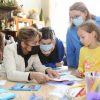
Education Cannot Wait in Moldova with Strategic Partners Scaling-up its Ukraine Crisis Regional Education Response to US$6.5 Million for Crisis-affected Children and Youth
Expanding on Education Cannot Wait’s (ECW) US$5 million Ukraine First Emergency Response grant announced in March, ECW today announced a new, initial US$1.5 million allocation to support the education in emergencies response for the Ukraine refugee crisis in Moldova while on mission with strategic partners USAID, FCDO/UK and Theirworld. This new allocation brings ECW’s total Ukraine crisis education response to US$6.5 million to date. The new grant will be delivered in partnership with the Government of Moldova to ensure refugee children and youth can access safe and protective learning opportunities. Investments will also benefit children in the host communities. The development of the grant will be facilitated through the coordination mechanism established for the education response.
Oil Crisis Offers Opportunities to the South and for the Green Energy Transition
The oil and gas supply crisis unleashed by the Russian invasion of Ukraine represents new business opportunities for the oil-producing countries of the developing South, both traditional and emerging, and also for accelerating the global transition to green forms of energy.
Connecting the Dots for the Transforming Education Summit
Look around the world at this very moment. Whether we look at it in stark numbers and statistics, whether we look at it as a generational loss of basic human rights, including the right to an education, or whether we look inwardly and feel the unspeakable human suffering and devastation taking place, we all agree: we are at a historically low point in our collective humanity.
The Mayan Train and the Fight for Mexico’s Ancient Jungle
Along the wide slash of white earth in southwestern Mexico there are no longer trees or animals. In their place, orange signs with white stripes warn visitors: "Heavy machinery in motion," "No unauthorized personnel allowed".
ECW Interviews Norway’s Minister of International Development Anne Beathe Tvinnereim
ECW: The International Disability Alliance (IDA), Government of Norway and Government of Ghana hosted the second Global Disability Summit in February. At the summit you called on partners to commit to ensuring children with disabilities can access their inherent human rights, including the right to education. How can we transform the delivery of education in emergencies to ensure no child is left behind?
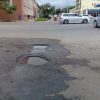
Zimbabwe Unsafe Roads Could Drive the Economy Around the Bend
When driving at night in Zimbabwe, watch out for a pair of eyes on the road and slow down. You may hit a giraffe inside a pothole. So goes an often-told joke.
Perils of Hunger, Food Insecurity in Southern Africa- Challenges & Opportunities
Food systems are under severe stress around the world now. The thresholds of tolerance are already exceeding limits with millions facing acute food and water scarcity throughout all continents. Over a quarter of Africa’s population are facing hunger and food insecurity. Conflict, droughts, flooding, rising unemployment, inequality, economic crises, and the impacts of Covid-19 pandemic have been ravaging the Continent on an unprecedented scale.
Indian Agriculture Towards 2030
India began its journey as an independent nation in 1947 with fresh memory of the Bengal Famine of 1943 which claimed 1.5 to 3 million lives. Against this backdrop, the First Five Year Plan (1951-56) prioritized agriculture which, however, shifted to heavily industrialization in the second Plan.
Turning Agro-industrial Waste into Energy in Argentina
Three giant concrete cylinders with inflated membrane roofs are a strange sight in the industrial park of Zárate, a world of factories 90 kilometers from Buenos Aires that heavy trucks drive in and out of all day long. They are the heart of a plant that is about to start producing energy from agro-industrial waste, for the first time in Argentina.
The Middle East’s Food Crisis Spells Disaster
In a short period, the war in Ukraine has already had a major effect on the world economy. The United States and the European Union have levied sanctions on an unprecedented scale against Russia, energy prices have skyrocketed, and with the Black Sea closed, the world’s most fertile region is no longer linked to its markets. This will cause an appreciation of food prices that could wreak havoc in the European periphery.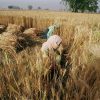
Why Russia’s War on Ukraine Poses a Risk to Global Food Security
The situation in Ukraine is first and foremost a humanitarian crisis, and the food security and wellbeing of the people of Ukraine should be our immediate concern. However, because of the dominant roles of Russia and Ukraine in global food, fuel and fertiliser markets, there are also massive knock-on effects for people around the world. This is particularly true for the supply and cost of food. Here are three ways that the invasion of Ukraine leads to potential risks to food security in other countries.« Previous Page — Next Page »





The Week with IPS

NEXT STOP - SDGs
Tracking global progress towards a sustainable world
Tracking global progress towards a sustainable world
