Languages
Friday, November 20, 2026



News and Views from the Global South
Asia-Pacific
Tajik NGOs Feeling Heat in Winter
As the leader of a civil rights-related non-governmental organisation, Dilrabo Samadova said she was used to getting hassled by authorities about her group’s activities. But recent government actions to put the clamps on civil society groups like hers in Tajikistan took her by surprise.IAEA Data on Sensitive Iranian Stockpile Mislead News Media
News stories on the latest International Atomic Energy Agency (IAEA) report suggested new reasons to fear that Iran is closer to a “breakout” capability than ever before, citing a nearly 50-percent increase in its stockpile of 20-percent enriched uranium and the installation of hundreds of additional centrifuges at the Fordow enrichment installation.
First Burning Homes, Now Border Patrols
In late August, Mohammad Saifuddin (not his real name), together with his wife, three daughters and son, fled the carnage of communal violence in western Myanmar’s Rakhine province and headed for the border of neighbouring Bangladesh.Can Facebook Become Substitute for Live Azeri Opposition Protests?
They’ve battled police in the streets and they’ve challenged authority the courts. Now, faced with staggering increases in fines for unauthorised demonstrations, Azerbaijani opposition activists are turning to Facebook to get their messages out.ASEAN Runs Into Rocks in the South China Sea
The Association of Southeast Asian Nations (ASEAN) summit in Cambodia, bringing together top leaders of all ten member nations represents a critical juncture to ensure regional security and in shaping the fate of the organisation itself, as divergent strategic positions among member countries threaten the very fabric of the regional body.‘Lifestyle Diseases’ Plague Indian Women
Sreelakshmi, an office executive in a major diagnostic laboratory in Thiruvananthapuram, the capital city of the southern Indian state of Kerala, ends her 11-hour working day to return home at night to a mountain of domestic chores.
Bangladesh Eyes Drug Export Market
Bangladesh has begun to shed its image as one of the world’s poorest nations and make a reputation for itself as a major exporter of cheap generic drugs to over 85 countries.
U.S. Escalation Against Iran Would Carry High Cost for Global Economy
The world economy would bear substantial costs if the United States took steps to significantly escalate the conflict with Iran over its controversial nuclear programme, according to the findings of a Federation of American Scientists’ (FAS) special report released here Friday.
Obama to Highlight “Pivot”, Burma Progress in Visit to SE Asia
Highlighting his much-ballyhooed “pivot” from the Greater Middle East to the Asia- Pacific region, Barack Obama leaves Friday for a four-day tour to Southeast Asia, including the first-ever visit by a U.S. president to Myanmar.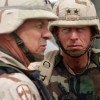
Broadwell Defended Petraeus’ Village Destruction Policy
Paula Broadwell, whose affair with Gen. David Petraeus brought his career to a sudden end last week, had sought to help defend his decision in 2010 to allow village destruction in Afghanistan that not only violated his own previous guidance but the international laws of war.China’s New Leadership Led by Xi Jinping*
State media report that Xi Jinping is to take the reins of China's all-powerful Communist Party in a leadership transition that will put him in charge of the world's number-two economy for the next decade.
Family Planning Skips Millions in Pakistan
Thirty-year-old Shahida Saleem, who was not educated past the tenth grade, is a mother of two, living with her family in Karachi. Six months ago she suffered a miscarriage and her doctor, concerned about her anaemic condition, advised her to space out her next pregnancy by taking contraceptives.Kazakhstan Restricts Faith in the Name of Tackling Extremism
Religious life in Kazakhstan features a glaring dichotomy these days. Officials in Astana tout the country as a bastion of toleration, yet they are making it harder for those practicing what are deemed non-traditional faiths to worship openly.Distrust in Kyrgyz Police Means Privatisation of Law and Order
One morning last year in Bishkek, Kyrgyzstan, Dilnoza awoke to find her brand-new Toyota Corolla missing. She knew immediately whom to call, and it wasn’t her local police precinct.
Q&A: “They Demanded I Behave. I Decided Not To”
Khadija Ismayilova has been threatened with blackmail by her own government. She has been branded an "enemy of the state", mainly for her exposés of official corruption.
Missing Themes in the U.S. Election
The media did their best to make the U.S. presidential election look important, the altar on which democracy is built. But there has been a problem ever since the Supreme Court legalised unlimited campaign spending (six billion dollars this year), thereby authorising one more freedom of expression, called "commercial speech" even though much of this speech is libellous, often neither true nor relevant.
Will Social Media Sway Malaysia’s Elections?
Malaysia is gearing up for a general election in six months and as the campaigns enter the crucial voter-courting phase many observers are wondering if the political ‘tsunami’, which severely weakened the ruling National Front coalition (BN) at the 2008 polls, might be repeated.
Pakistan Moves to Safeguard Witnesses
Violence and crime are on the rise in Pakistan and none are more at risk than those who witness murders, robberies, abuse or kidnapping first-hand.
War’s End Threatens Water Supply in Northern Sri Lanka
War is seldom good for anything, especially protracted conflicts like the one in Sri Lanka, which dragged on for over three decades and claimed between 80,000 to 100,000 lives.
No Social Protection for India’s Elderly
At midnight on Oct. 12, 91-year-old George Puthenveettil, a widower living in Kalanjur village in the Pathanamthita district of the southern Indian state of Kerala, was brutally tortured and ousted from his own house by his only son for “not earning any money”.China Opens Communist Party Congress*
China's ruling Communist Party has launched its national congress, a pivotal event that ushers in a new set of top leaders for the next decade.« Previous Page — Next Page »


The Week with IPS

NEXT STOP - SDGs
Tracking global progress towards a sustainable world
Tracking global progress towards a sustainable world
