Languages
Saturday, November 21, 2026



News and Views from the Global South
Global

OPINION: Put People Power Back at Centre of Citizen Action
A few weeks ago, I co-signed perhaps the most important open letter of my career. It was an open provocation to my fellow activists and colleagues, to the members of our organisation, and to all those who, like me, earn their living in the civil society sector.
U.S. Investigation into Illegal Timber Imports a “Sea Change”
A year after a U.S. company was accused of engaging in the systematic importing of flooring made from illegally harvested timber, pressure is mounting on federal agencies currently investigating the allegations.
OPINION: Planet Racing Towards Catastrophe and Politics Just Looking On
If ever there was a need to prove that we are faced with a total lack of global governance, the U.N. Climate Summit, extraordinarily called by U.N. Secretary-General Ban Ki-moon on Sep. 23, makes a very good case.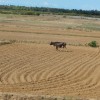
Humanity Failing the Earth’s Ecosystems
In pure numbers, the past few decades have been marked by destruction: over the last 40 years, Earth has lost 52 percent of its wild animals; nearly 17 percent of the world’s forests have been felled in the last half-century; freshwater ecosystems have witnessed a 75-percent decline in animal populations since 1970; and nearly 95 percent of coral reefs are today threatened by pollution, coastal development and overfishing.
Sustaining the Future Through Culture
International experts working in the creative sector are calling for governments to recognise the integral role that culture plays in development and to ensure that culture is a part of the post-2015 United Nations development goals, to be discussed next year.Azerbaijan Pursues Drones, New Security Options
Heightened tensions with longtime foe Armenia over breakaway Nagorno Karabakh and mediator Russia’s Ukrainian adventure appear to be pushing Caspian-Sea energy power Azerbaijan ever more strongly toward a military strategy of self-reliance.
Q&A: “The Battle Continues”
The Programme of Action adopted at the landmark 1994 International Conference on Population and Development (ICPD) included chapters that defined concrete actions covering some 44 dimensions of population and development, including the need to provide for women and girls during times of conflict, the urgency of investments in young people’s capabilities, and the importance of women’s political participation and representation.
OPINION: Less Hunger in the World and the Challenge for the Media
It is common belief that good news is less interesting for the general public than bad news; this is why media coverage tends to focus on catastrophic events and disasters, both natural and man-made.
New Global Declaration “Insufficient” to Tackle Deforestation
Heads of state, civil society groups and the leaders of some of the world’s largest companies this week urged their peers to sign on to a landmark new global agreement aimed at halting deforestation by 2030, even as others are warning the accord is too lax.
OPINION: On Reproductive Rights, Progress with Concerns
For most of human history, reproductive rights essentially meant men and women accepting the number, timing and spacing of their children, as well as possible childlessness. All this changed radically in the second half of the 20th century with the introduction of new medical technologies aimed at both preventing and assisting human reproduction.
OPINION: A Roadmap to Living – and Thriving – in Harmony with Nature
In Nagoya, Japan, in 2010, the international community made a commitment to future generations by adopting the Strategic Plan for Biodiversity 2011–2020 and 20 Aichi Biodiversity Targets.U.S. to Create National Plan on Responsible Business Practices
The United States will begin developing a national action plan on responsible business practices, following on several years of related advocacy from civil society.
Outgunned by Rich Polluters, Africa to Bring United Front to Climate Talks
As climate change interest groups raise their voices across Africa to call for action at the COP20 climate meeting in December and the crucial COP21 in Paris in 2015, many worry that the continent may never have fair representation at the talks.
OPINION: Tackling the Proliferation of Patents to Avoid Limitations to Competition
The steady increase in patent applications and grants that is taking place in developed and some developing countries (notably in China) is sometimes hailed as evidence of the strength of global innovation and of the role of the patent system in encouraging it.
Arms Trade Treaty Gains Momentum with 50th Ratification
With state support moving at an unprecedented pace, the Arms Trade Treaty will enter into force on Dec. 24, 2014, only 18 months after it was opened for signature.Zero Nuclear Weapons: A Never-Ending Journey Ahead
When the United Nations commemorated its first ever "international day for the total elimination of nuclear weapons," the lingering question in the minds of most anti-nuclear activists was: are we anywhere closer to abolishing the deadly weapons or are we moving further and further away from their complete destruction?OPINION: How Obama Should Counter ISIS
President Obama’s speech at the United Nations on Sep. 23 offered a rhetorically eloquent roadmap on how to fight the Islamic State in Iraq and Syria (ISIS).
Obama Blasts Brutality and Bullying, but Not by Israel
When U.S. President Barack Obama addressed the U.N. General Assembly Wednesday, he was outspoken in his criticism of Russia for bullying Ukraine, Syria for its brutality towards its own people, and terrorists of all political stripes for the death and destruction plaguing Iraq, Syria, Yemen and Somalia.
OPINION: ISIS Appeals to a Longing for the Caliphate
When, all of a sudden, ISIS (Islamic State in Iraq and Syria) emerged on the scene and in a matter of days occupied large swathes of mainly Sunni-inhabited parts of Iraq and Syria, including Iraq’s second city Mosul and Tikrit, birthplace of Saddam Hussein, and called itself the Islamic State, many people, not least Western politicians and intelligence services, were taken by surprise.
Climate Summit: Much Talk, A Bit of Walk
Speaking to more than 120 heads of state at the U.N. Climate Summit, actor and newly appointed U.N. Messenger of Peace Leonardo DiCaprio made clear the long-ranging impact of the attendees’ decisions.
The Time Has Come for Agroecology
"It is time for a new agricultural model that ensures that enough quality food is produced where it is most needed, that preserves nature and that delivers ecosystem services of local and global relevance" – in a word, it is time for agroecology.« Previous Page — Next Page »


The Week with IPS

NEXT STOP - SDGs
Tracking global progress towards a sustainable world
Tracking global progress towards a sustainable world
