Languages
Sunday, November 22, 2026



News and Views from the Global South
Global
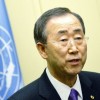
U.N. Chief in the Hot Seat over Non-Aligned Summit in Iran
When Cuba chaired the Non-Aligned Movement (NAM) back in 1979, Western nations dismissed the world's largest single political coalition as lacking legitimacy since Havana was considered a close ally of the then-Soviet Union.Rebels Claim Responsibility for Syria Blast
The main Syrian rebel group has claimed responsibilty for a series of explosions in central Damascus near the hotel used by the U.N. observer mission in Syria.
Civil Society Squeezed on All Sides
A year and a half after the international wake-up call of the Arab Spring uprisings, the room for civil society organisations is being increasingly constricted across the globe, experts in Washington warned on Tuesday.
Reining in Private Security Faces Regulatory Thicket
Alleged human rights violations and other challenges involving the use of Private Military Security Contractors (PMSCs) have sparked a series of international efforts to create systems of accountability for an increasingly complex transnational industry.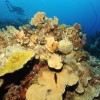
U.N. Launches New Oceans Compact Following Expo 2012
As the three-month-long international exhibition Expo 2012 came to a close in the South Korean coastal town of Yeosu last week, the United Nations announced the launch of an "Oceans Compact" aimed at the preservation of marine resources worldwide.
Jeju Island Base Divides Korean, International Green Groups
As construction of a hotly contested naval base on South Korea’s Jeju Island advances, there’s a showdown underway.
Amid Rise in Piracy, U.N. Backs Summit on Maritime Security
When the United Nations advocates the protection of the world's oceans, its political agenda transcends the battle against marine pollution, global warming, overfishing, greenhouse gases and sea-level rise.
Is the Staggering Rise of the South Sustainable?
Growth in developing economies (DEs) has accelerated significantly in the new millennium.Humanity Should Not Live Under Nuclear Threat
Now that the war in Iraq is considered ‘over’, another major goal of Israel has come into view: attacking Iran on the pretext that it may possibly be working on a nuclear weapon - though Pakistan, China, and India definitely already have them.
Q&A: Sustainability Now a Matter of Life and Death
Humanity is living beyond its means with the growing demand for food, medicines and other nature-based products, making sustainable consumption and conservation a matter of life and death. This is according to the world’s oldest and largest global environmental network, the International Union for Conservation of Nature.Corporate Lobbyists Threaten Democracy
Over a month has passed since the United Nations summit on sustainable development concluded in Rio de Janeiro, Brazil, but the world still appears to be unaware of one of the most important statements made during the conference that drew some 50,000 delegates from all over the world.
Native Peoples Take on Threadbare Stereotypes
With the International Day of the World’s Indigenous Peoples coming up on Thursday, native communities are increasingly using media to challenge a legacy of stereotypes.
OP-ED: Weapons into Ploughshares, and Crises into Opportunity
The crisis that started a few years ago with the collapse of major financial institutions in the United States is now centred in Europe and threatens other parts of the world. Many emerging countries in Asia and Latin America that had thus far avoided contamination because of their sound economic and fiscal policies and their timely adoption of domestic consumption stimulus packages are now beginning to experience secondary effects.OP-ED: U.S. Adrift on Law of the Sea
A little overshadowed by the Olympics, the Yeosu 2012 Expo is, in its own way, doing more than the London Games to promote global harmony - and without stirring up the waters the way the British did when they posted the ROK flag for the DPRK women’s soccer team.
Climate-Battered South Asia Looks to Rio+20 Formula
Far-flung South Asian communities, from the high Himalayan slopes to the Indian Ocean coasts, united in the face of extreme and uncertain weather, continue to hold on to the hope that the Rio+20 focus on disaster risk reduction (DRR) will positively influence national policies.
Q&A: U.N. Spotlights Pirates in the Malacca Strait at Expo 2012
At the Yeosu World Expo 2012, the U.N. commemorated the thirtieth anniversary of the U.N. Convention of the Law of the Sea (UNCLOS), highlighting efforts to quell the global scourge of piracy.
As Fighting Escalates in Syria, a Frustrated Mediator Resigns
After five months of intense shuttle diplomacy aimed at resolving the growing 17-month old political crisis in Syria, a visibly frustrated Joint Special Envoy Kofi Annan called it quits.
Treaty That Saved the Ozone May Worsen Climate Change
The Montreal Protocol, a climate treaty that gathers all U.N. member countries behind the goal of protecting the ozone layer, may not be the "most successful international agreement" anymore, as former U.N. secretary general Kofi Annan used to put it.South Korea Showcases Role as Donor at Expo 2012
When South Korea took the initiative to integrate a development cooperation programme into this year’s World Expo, it stepped up its efforts to gain credibility as a donor on the international stage.
Human Right to Water and Sanitation Remains a Political Mirage
When the 193-member General Assembly, the U.N.'s highest policy-making body, declared water and sanitation a basic human right back in July 2010, the adoption of that divisive resolution was hailed by many as a "historic" achievement.Mainstream Rhetoric on Nuclear Power Far From Reality
The catastrophe following the meltdown of the Fukushima Daiichi nuclear power reactor in March 2011 has turned the old debate on nuclear power into a war of words between international agencies and independent experts with diametrically opposed views.« Previous Page — Next Page »


The Week with IPS

NEXT STOP - SDGs
Tracking global progress towards a sustainable world
Tracking global progress towards a sustainable world
