Languages
Monday, November 23, 2026



News and Views from the Global South
Global

Long Overlooked, Cooperatives Get Their Due at United Nations
Hailed as economically viable and socially responsible, cooperatives have over one billion members worldwide and can be found in sectors ranging from agriculture to finance to health.Sri Lankan Rights Abuses Obstruct Trade Efforts with Canada
Despite the crossfire of Canadian accusations of human rights violations by Sri Lanka at the end of its civil war and Colombo's corresponding counter-claims, the economically battered South Asian country aims to bolster its trading relationship with Canada and increase foreign direct investment.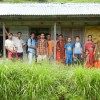
Q&A: Cooperatives a “Compelling Model of Economic Enterprise”
With 800 million members in over 100 countries, the cooperative sector is a globally important group of collective organisations. On Oct. 31, the United Nations (U.N.) will begin a year of recognising their importance by launching the International Year of Cooperatives (IYC) in New York.
Q&A: Doha Summit to Boost Education on World’s Political Agenda
As digital technology begins to spread across classrooms the world over, the United Nations says the next generation of children will be educated far differently from their counterparts in the past.Anti-G20 Summit Prepares Its Case
Anti-globalisation and anti-capitalist groups are gathering ahead of the G20 meeting in Cannes in the south of France next week.
Seven Billion People, Seven Billion Possibilities, Says UNFPA
When Adnan Nevic was born in Bosnia-Herzegovina back in October 1999, he was hailed as the world's six billionth person, triggering a visit to Sarajevo by then Secretary- General Kofi Annan.
Attacks on Human Rights Defenders Cast Wide Shadow
A chair stood empty at the launch here Monday of a report on the repression of human rights defenders, a physical reminder that its would-be occupant - Ales Bialiatski, president of Human Rights Centre Viasna in Belarus – has been languishing in prison since August.
Citizens of Nowhere
When Mona Kareem, a member of the Bidoun population of Kuwait, was 11 years old, a neighbour Kuwaiti woman asked her where she was from. When Kareem answered, "I am from Bidoun," the woman laughed at her. "There is no country called Bidoun. There is no Bidoun."
Hard Targets Needed to Halt Land Degradation Crisis
Every six seconds, a child dies of hunger-related causes. That disturbing reality seems as remote as the moon here in the ultra-modern Changwon Convention Centre, where delegates struggled to create effective ways to stem the ongoing decline of food-producing lands.
UNESCO Study Reveals Widening Secondary Education Gap
Arguing that an educated population is a country's greatest wealth, the U.N. Educational, Scientific and Cultural Organisation (UNESCO) says there is no escape from poverty without a vast expansion of secondary education worldwide.
U.N. Tally Excluded Most Afghan Civilian Deaths in Night Raids
A July United Nations report asserting that only 30 civilians died in targeted raids in Afghanistan during the first six months of 2011 reflected only a very small fraction of night raids in which civilians were killed, according to officials of the independent Afghan commission which had co-produced the 2010 report on civilian casualties with the U.N. Mission.Calling Out Corrupt Practices
Opaque shell companies, foundations and trusts are the modus operandi of corrupt organisations looking to hide significant sums of money, often just by using existing loopholes in the current financial system, experts say.PAKISTAN: Diplomatic Tensions over U.S. Talks with Militant Groups
Assurances by visiting U.S. Secretary of State Hillary Clinton here late last week that Pakistan has a major role to play in future peace talks in Afghanistan have helped ease growing tensions between Islamabad and Washington.
Cape Verde Recognised for Political, Economic Leadership
When the former president of Cape Verde, Pedro de Verona Rodrigues Pires, was recently awarded the five-million-dollar African Leadership prize, the ex-Portuguese colony that he headed for nearly 10 years was singled out as one of the key African success stories for "good governance", including multi-party democracy, rule of law and respect for human rights.
U.S.: Not Just a Protest, But a Little Utopia
The Occupy Wall Street (OWS) movement has withstood political pressure, bad weather, police violence, and over a thousand arrests, and is continuing to grow in New York City a month in.
Durban May Be Last Chance to Stabilise Climate Under Two Degrees
The window to limit global warming to less than two degrees C is closing so fast it can be measured in months, a new scientific analysis revealed Sunday.DEVELOPMENT: Disgruntled Activists Meet in Seoul Ahead of Summit
As extreme weather conditions, rising carbon emissions, unprecedented global economic crises and widening social inequalities throw the planet increasingly off balance, the world is gearing up for another earth summit.
Reduce Inequalities to Boost Health, WHO Says
Economic status, education, access to clean water and sanitation, nutrition and the environment determine the level of health of persons, communities or countries, and so does the extent to which rights are enjoyed or denied.
AFRICA: Gov’ts Fail to Invest in Hungriest, Poorest Regions
For millennia, people have coped with drought in the Horn of Africa, comprised mainly of drylands. Yet today, more than 13 million people there are starving because of political instability, poor government policies and failure to invest in the world's poorest people, say experts here in Changwon.
Malaria Elimination Possible Within Decades
Dr. Rick Steketee, science director at the Malaria Control Partnership at PATH, a leading nonprofit organisation dedicated to public health in the Pacific northwest city of Seattle, isn't alone when he says that elimination of the infectious disease is a possibility.
Q&A: ‘Soil is Key to Global Warming, Food Security’
Luc Gnacadja, in his second three-year term as executive secretary, United Nations Convention to Combat Desertification (UNCCD), is widely seen as delivering on his commitment to manage the world's drylands.« Previous Page — Next Page »


The Week with IPS

NEXT STOP - SDGs
Tracking global progress towards a sustainable world
