Languages
Friday, October 23, 2026



News and Views from the Global South
Latin America & the Caribbean

A Future Horror and the Hope of the Present
This is an alert message: if nothing stops the wave of violence in Mexico, by the end of 2024 the country could exceed the figure of 150,000 missing persons.
Migrant Workers from Mexico, Caught Up in Trafficking, Forced Labor and Exploitation
Eduardo Reyes, originally from Puebla in central Mexico, was offered a 40-hour workweek contract by his recruiter and his employer in the United States, but ended up performing hundreds of hours of unpaid work that was not authorized because his visa had expired, unbeknownst to him.
Sanctions Are a Boomerang
Economic sanctions against countries whose behavior is reproached by the West operate as punishment although they fail in their declared political objectives, and in cases such as Venezuela the contrast is clearly on display in the windows of high-end stores that sell imported goods.
Recovering Edible Food from Waste Provides Environmental and Social Solutions in Argentina
For 30 years, Tomasa Chávez visited the Central Market of Buenos Aires and rummaged through the tons of fruits and vegetables that the stallholders discarded, in search of food. Today she continues to do so, but there is a difference: since 2021 she has been one of the workers hired to recover food as part of a formal program launched by the Central Market.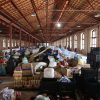
Mobilizing Against Hunger in Brazil, Where It Affects 33.1 Million People
A campaign against hunger, a problem that affects 15.5 percent of the Brazilian population, seeks to mobilize society once again in search of urgent solutions, inspired by a mass movement that took off in the country in 1993.
Smelter Finally Closes Due to Extreme Pollution in Chilean Bay
A health crisis that in 20 days left 500 children poisoned in the adjacent municipalities of Quintero and Puchuncaví triggered the decision to close the Ventanas Smelter, in a first concrete step towards putting an end to a so-called "sacrifice zone" in Chile.
The Digital Divide, a Pending Issue in Chile’s Educational System
A Chilean government plan seeks to ensure connectivity in remote areas, in a first step to address a deep digital divide among the country's inhabitants that includes a lack of access to technology and digital education deficits, exposed by the COVID-19 pandemic.
Mexico Makes Risky Bet on Liquefied Gas in New Global Scenario
Liquefied gas does not occupy a prominent position in Mexico's energy mix, but the government wants to change that scenario, to take advantage of the crisis unleashed by Russia's invasion of Ukraine and the need for new sources of the fuel due to the sanctions against Russia.
Transgender People Gain Their Place in Argentine Society
"At the age of 35, with a document that says who I really am, I went back to school and finished my studies, which I had left at 14 because I could no longer bear the bullying and mistreatment," said Florencia Guimaraes, a transgender woman whose life was changed by Argentina's Gender Identity Law.
Missing Women in Peru – Pain that Never Ends
"They mustn’t stop looking for her," said Patricia Acosta, mother of Estéfhanny Díaz, who went missing on Apr. 24, 2016, along with her five-year-old and eight-month-old daughters, after attending a children's birthday party in Mi Perú, a town in the coastal province of Callao, next to the Peruvian capital.
Colombia Votes for Social Justice
On Sunday, 19 June 2022, the hopes of millions of Colombians working for a more democratic, safer, ecological, and socially just country came true.
Expensive Energy from Cheap Sources Hampers Brazil’s Economy
Brazil has abundant low-cost energy, but by the time it reaches the consumer it is one of the most expensive in the world. This contradiction hinders the country's human and economic development and the “solutions” found have actually aggravated the problem.
War in Ukraine Triggers New International Non-Alignment Trend
Numerous countries of the developing South are distancing themselves from the contenders in the war in Ukraine, using the debate on the conflict to underscore their independence and pave the way for a kind of new de facto non-alignment with regard to the main axes of world power.
Countering Hate Speech Through Media: A Young Caribbean Woman’s Perspective
Hate speech is a phenomenon that can be defined as threatening speech or writing expressing prejudice towards a specific group, primarily based on race, religion, or sexual orientation.
Small-Scale Fishers in Central America Demand Social Security Policies
At the pier, Salvadoran fisherman Nicolás Ayala checked the pocket of his pants to make sure he was carrying the hypertension pills he must take when he is at sea on a 24-hour shift. He smiled because he hadn’t forgotten them.
Bilingual Intercultural Education, an Endangered Indigenous Right in Peru
"I always express myself in Quechua and I don't feel I’m less of a person," said Elías Ccollatupa, 47, who has been a bilingual intercultural teacher for more than two decades in the Chinchaypujio district, one of the nine that make up the province of Anta, in the department of Cuzco, in the southern Andean region of Peru.
Brazil: Inequality Sharpened, Social Policies Dismantled, More Millions Pushed into Hunger
Right now, out of a total of 211.7 million Brazilians, 116.7 million are experiencing some level of food insecurity, 43.4 million do not have enough food, and 19 million were facing hunger, reveals a June 2022 report by the Brazilian Research Network of Food and Nutrition Sovereignty and Security (Rede PENSSAN).
Southern Winds in Magallanes Fuel Green Hydrogen in Chile
Patagonia’s strong winds are driving projects that will place Magallanes, in the extreme south of Chile, in a privileged position to produce and export green hydrogen and help the country move towards carbon neutrality.
Cities in Brazil Reap Floods after Hiding Their Rivers Underground
Acaba Mundo has fallen into oblivion, despite its apocalyptic name – which roughly translates as World’s End - and historical importance as an urban waterway. It is a typical victim of Brazil’s metropolises, which were turned into cemeteries of streams, with their flooded neighborhoods and filthy rivers.
Poor Families Clash over Water with Real Estate Consortium in El Salvador
Alex Leiva woke up at 4:00 a.m. to perform a key task for his family’s survival in the Salvadoran village where he lives: filling several barrels with the water that falls from the tap only at that early hour every other day.
Over Two Decades of Impunity for Environmental and Health Disaster in Peruvian Village
"We are not asking for money, but for our health, for a dignified life," is the cry of the people of Choropampa, which lawyer Milagros Pérez continually hears 22 years after the environmental disaster that occurred in this town in the department of Cajamarca, in Peru´s northern Andes highlands, on the afternoon of Jun. 2, 2000.« Previous Page — Next Page » *#*

The Week with IPS

NEXT STOP - SDGs
Tracking global progress towards a sustainable world
Tracking global progress towards a sustainable world

