Languages
Monday, September 21, 2026



News and Views from the Global South
Latin America & the Caribbean

Barbados Steps Up Plans for Renewables, Energy Efficiency
With wind, solar and other renewable energy sources steadily increasing their share in energy consumption across the Caribbean, Barbados is taking steps to further reduce the need for CO2-emitting fossil fuel energy.
China Seeks to Export Its Green Finance Model to the World
Hand in hand with UN Environment and the Inter-American Development Bank (IDB), the People’s Bank of China (PBoC) disembarked in the Argentine capital to prompt this country to adopt and promote the agenda of so-called green finance, which supports clean or sustainable development projects and combats climate change.
Tobago Gears Up to Fight Sargassum Invasion
As Tobago's tourism industry struggles to repel the sargassum invasions that have smothered its beaches with massive layers of seaweed as far as the eye can see - in some places half a metre thick - and left residents retching from the stench, the island's government is working to establish an early warning system that will alert islanders to imminent invasions so they can take defensive action.
Costa Rica’s Caribbean Coast Pools Efforts Against Climate Change
Jonathan Barrantes walks between the rows of shoots, naming one by one each species in the tree nursery that he manages, in the south of Costa Rica’s Caribbean coastal region. There are fruit trees, ceibas that will take decades to grow to full size. and timber species for forestry plantations.
Local Farmers and Consumers Create Short Food Supply Chains in Mexican Cities
Víctor Rodríguez arranges lettuce, broccoli, potatoes and herbs on a shelf with care, as he does every Sunday, preparing to serve the customers who are about to arrive at the Alternative Market of Bosque de Tlalpan, in the south of the Mexican capital.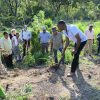
Farming Beyond Drought
The Caribbean accounts for seven of the world’s top 36 water-stressed countries and Barbados is in the top ten. The Food and Agriculture Organisation (FAO) defines countries like Barbados, Antigua and Barbuda, and St. Kitts and Nevis as water-scarce with less than 1000 m3 freshwater resources per capita.
Brazil’s Shipyards – Victims of a Failed Reindustrialisation Process
“I have lived through three good periods and two bad ones,” prior to the present crisis in the Brazilian shipping industry, said Edson Rocha, a direct witness since the 1970s of the ups and downs of a sector where nationalist feelings run high.
Extreme Weather Wiping Out Hard-Won GDP Gains in Hours
With Antigua and Barbuda joining St. Kitts and Nevis as the two eastern Caribbean nations to attain middle-income country status, a senior diplomat has identified climate change as a major factor preventing other nations in the grouping from taking the same step forward.
Communities Step Up to Help Save Jamaica’s Forests
According to the United Nations Food and Agriculture Organization (FAO), 31.1 percent or about 337,000 hectares of Jamaica is forested. Of this, 26.1 percent or 88,000 is classified as primary forest, the most biodiverse and carbon-dense form of forest.
Argentina Plans Billions of Dollars in Railway Projects
Development in Argentina in the second half of the 19th century and the first half of the 20th century was closely tied to that of the railway. The eighth largest country in the world, Argentina’s economy grew through exporting agricultural and livestock products, and the railways were key to founding centres of population and transporting goods to the ports.
Mexico’s Methane Emissions Threaten the Environment
Mexico is in transition towards commercial exploitation of its shale gas, which is being included in two auctions of 24 hydrocarbon blocks, at a time when the country is having difficulty preventing and reducing industrial methane emissions.
Funding Climate Resilience Benefits All Nations – Yes, the U.S. Too
A leading climate change mitigation and adaptation activist and former climate negotiator in the Caribbean says that the United States could protect its economic and political interest by helping the region to go green.
Governments Support Trump’s Aim to Block Central American Migrants
Trying to make it into the United States as an undocumented migrant is not such an attractive option anymore for Moris Peña, a Salvadoran who was deported from that country in 2014.
The Greater Caribbean Raises Funds to Protect its Sandy Coasts
Almost no Caribbean beach escapes erosion, a problem that scientific sources describe as extensive and irreversible in these ecosystems of high economic interest, that work as protective barriers for life inland.
Caribbean Seeks to Climate-Proof Tourism Industry
The tourism industry is the key economic driver and largest provider of jobs in the Caribbean after the public sector. Caribbean tourism broke new ground in 2016, surpassing 29 million arrivals for the first time and once again growing faster than the global average.
Chilean President’s Apology to the Mapuche People Considered “Insufficient”
Chilean President Michelle Bachelet’s formal apology to the country’s Mapuche Indians, for the “mistakes and atrocities” committed against them by the Chilean state, is seen by indigenous and social activists in the central region of Araucanía – the heartland of the Mapuche people - as falling short.
China Drives Nuclear Expansion in Argentina, but with Strings Attached
Two new nuclear power plants, to cost 14 billion dollars, will give a new impetus to Argentina’s relation with atomic energy, which began over 60 years ago. President Mauricio Macri made the announcement from China, the country that is to finance 85 per cent of the works.
Europe Stands by Caribbean on Climate Funding
A senior European Union (EU) official in the Caribbean said Europe is ready to continue the global leadership on the fight against climate change, including helping the poor and vulnerable countries in the region.
Global Devaluation of Work Drives Up Unemployment in Brazil
In addition to driving up the number of unemployed people to 14.2 million, the severe recession of the last two years led Brazil to join the global trend of flexibilisation of labour laws in order to further reduce labour costs.
Latin America’s Rural Exodus Undermines Food Security
In Latin America and the Caribbean, which account for 12 per cent of the planet’s arable land, and one-third of its fresh water reserves, a number of factors contribute to soil degradation and to a rural exodus that compromises food security in a not-so-unlikely future.
Men Who Commit Femicide Lose Rights Over Their Children in Argentina
In January 2008, Rosana Galliano was shot to death in Exaltación de la Cruz, a rural municipality 80 km from Argentina’s capital, Buenos Aires. Her ex-husband, José Arce, who was sentenced to life in prison, had hired hitmen to kill her.« Previous Page — Next Page » *#*


The Week with IPS

NEXT STOP - SDGs
Tracking global progress towards a sustainable world
Tracking global progress towards a sustainable world

