Languages
Friday, June 26, 2026



News and Views from the Global South
Middle East & North Africa
Russia May Seek to Emphasise Peace Broker Role in Mideast
As the Palestinian unity government announced June 2 receives a cautious welcome from many world leaders, Russia’s support for the new body is providing the Kremlin with an opportune platform to pursue its foreign policy ambitions and strengthen its domestic ideology.Palestinian Unity Causing Political Ripples in Washington
The announcement this week of a new Palestinian unity government was greeted with cautious optimism by most of the world, outside of Israel. In the United States, however, it set off political rumblings that threaten to swell into a storm.
The Train of Palestinian Reconciliation Reaches One More Station
The formation of a new Palestinian government between Fatah and Hamas announced on Monday is an important station on the path to reconciliation, “but there still many stations to be reached before achieving real unity based on partnership among all Palestinians.”
Israel in Political Isolation Over New Palestinian Government
The United States' decision to "work with" the new Palestinian government has virtually isolated Israel: the only country so far to have publicly rejected the political alliance between Fatah and Hamas.Arab Publics Prefer Light U.S. Footprint, Even in Syria
In contrast to some of their leaders, people across the Arab world prefer President Barack Obama’s efforts to reduce Washington’s military footprint in the Middle East to the approach favoured by neo-conservatives and other U.S. hawks, according to the latest in a series of surveys of Arab public opinion released here Tuesday.
More Than Generals and Troglodytes in Egypt
Unconsciously or not, most mainstream media and foreign correspondents here have been echoing Muslim Brotherhood voices by depicting Egypt's new president, Abdel Fattah Al Sisi, as the general who led the July 2013 “military coup” against the “legitimately elected” Islamist leader Mohamed Morsi.
Syrians Flock to Vote in Lebanon… But Not in The West
Roughly three kilometres north of Beirut's Syrian embassy in Baabda, Syrians crammed in one of an endless stream of buses, exited and continued on foot. The masses opted to walk the remaining few kilometres rather than sit in a traffic jam generated by the tens of thousands flocking to vote.
Low Turnout and Disenchanted Youth Blot Sisi’s Victory in Egyptian Elections
With a result already known before the race started, many did not even bother heading to the polling stations and the streets in Cairo were unusually empty during the election process that ended Wednesday, just like the ballot boxes.

Women Journalists Seize Initiative in Gaza
“We let the men participate in the workshop discussions, but the training sessions are only for women journalists,” says Mona Khadir, who coordinates the activities of the Filastiniyat Women Journalists’ Club in Gaza.Obama Announces Final Afghanistan Withdrawal by End-2016
U.S. President Barack Obama announced Tuesday his intention to withdraw all U.S. troops from Afghanistan by the end of 2016.
Arrest of “Happy” Iranians Highlights Rouhani’s Domestic Battles
It was a perfect headline for the satirical online news site, ‘The Onion.’
Syrian Rebel-held Mountain Villages Preparing for Bigger Battles
In the mountains east of the coastal port of government-held Latakia, three years of regime bombardment has left swaths of blackened stumps in the mountain forests and crumbling concrete structures in Sunni villages, most of whose inhabitants support opposition forces.
The Biggest Mideast Crisis You Probably Don’t Know Enough About
The Middle East’s seemingly endless conflicts are diverting attention and resources from a graver long-term threat that looms over the whole region: the growing scarcity of water. And the situation will get worse before it gets better — if it ever does get better.Russian Manipulation of Reactor Fuel Belies U.S. Iran Argument
In the stalemated talks between the six powers and Iran over the future of the latter’s nuclear programme, the central issue is not so much the technical aspects of the problem but the history of the Middle Eastern country’s relations with foreign suppliers – and especially with the Russians.
U.N. Decries Water as Weapon of War in Military Conflicts
The United Nations, which is trying to help resolve the widespread shortage of water in the developing world, is faced with a growing new problem: the use of water as a weapon of war in ongoing conflicts.
Syrian Doctors Grapple With Medical Emergency and Ethics
As once-eliminated diseases resurface and barrel bombs and alleged chlorine attacks target civilians, doctors in rebel-held areas and across the border struggle with issues of how best to serve their profession.
Syrian Kurds Ache For A Lifeline
“We all know that Ankara and Erbil have a joint plan to evacuate the entire region," Abdurrahman Hemo, head of the Kurdish Humanitarian Aid Committee tells IPS. "They want to choke the people here until they flee en masse."
Bulgaria, No Country For Syrian Refugees
Since November last year, Bulgaria has virtually closed its borders to an inflow of Syrian asylum seekers and other migrants trying to enter the country from Turkey, while EU institutions concerned appear to have acquiesced to this.
In Syria, Life Goes On Despite Everything
On a weekday afternoon, the Old City of Damascus heaves with people, cars, motorcycles, bikes. Markets are crowded with locals bartering with merchants for the heaps of spices, flowery perfumes, clothing, and most things one needs, abundant in the Hamidiyah market.
New Gestures to Opposition Unlikely to Change U.S. Syria Policy
Despite new gestures of support for the Syrian opposition, the administration of President Barack Obama is unlikely to change its longstanding policy of restraining U.S. involvement in the country’s more than three-year-old civil war, according to experts here.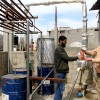
Desperate Gazans Turn Plastic Into Fuel
On the roof of a modest house amidst the alleys of Nusseirat refugee camp in central Gaza Strip, Ibrahim Sobeh and his sons spent more than 200 days working on a primitive device that converts waste plastic into fuel.« Previous Page — Next Page »


The Week with IPS

NEXT STOP - SDGs
Tracking global progress towards a sustainable world
Tracking global progress towards a sustainable world
