Languages
Saturday, November 21, 2026



News and Views from the Global South
Regional Categories

Shortages Reveal Low Priority of Women’s Health in Nepal
One year after Nepal’s Ministry of Health (MoH) appealed to international organisations in the country to urgently supply a drug used to stop excessive bleeding after childbirth, a UN agency has delivered $1 million worth of contraceptives to prevent another shortage.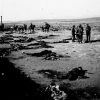
The Centenary of the Disaster of Annual
It would seem that those responsible for the recent immigration crisis in Ceuta and Melilla have coordinated their strategy to commemorate the centenary of one of the most serious defeats that Spain has suffered in its foreign relations. One hundred years ago, the Spanish armies suffered one of the most painful losses in its history.
Myanmar Struggles in the Grip of Coup and Covid
The third wave of Covid-19 is sweeping through Myanmar, from the high narrow buildings of the commercial capital Yangon to bamboo houses in rural areas.
Conceptual Advances for United Nations 2.0
The UN Secretary-General’s forthcoming “Our Common Agenda” report, to be released before this year’s UN General Assembly High-Level Week, is expected to offer ambitious recommendations to accelerate the realization of the UN75 Declaration as the world comes to grips with the COVID-19 pandemic.
European Duplicity Undermines Anti-Pandemic Efforts
Despite facing the world’s worst pandemic of the last century, rich countries in the World Trade Organization (WTO) have blocked efforts to enable more affordable access to the means to fight the pandemic.
The Fight for the “Lost Souls.”
In June, the Department of Homeland Security made a critical announcement. For the first time in U.S. history, more than 15 national and local agencies and civilian organizations conducted a simultaneous major binational operation to find missing children inside and outside the United States.
Why is the UK Government Turning off the Tap During a Global Pandemic?
The UK government’s decision to reduce its Official Development Assistance (ODA) budget from 0.7% of gross national income (GNI) to 0.5% -- a cut of around £4 billion this year -- was confirmed last week by a majority of 35 votes in a House of Commons vote.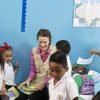
US Holds UNICEF Monopoly for 74 Years – in a World Body Where Money Talks
With Henrietta Fore's decision last week to step down as UNICEF Executive Director, her successor is most likely to be another American since that post has been held-- uninterruptedly -- by US nationals for almost 74 years, an unprecedented all-time record for a high-ranking job in the UN system.
El Salvador’s Bitcoin Mining Proposal Faces Many Hurdles
That a country like El Salvador, poor and with many social needs, would embark on an effort to attract so-called bitcoin mining, which demands a huge amount of energy and does not generate large numbers of jobs, is an extravagance that many find hard to digest.
‘Sulli Deals’: Muslim Women in India Being Put Up for Sale
Ongoing online sexual harassment of Muslim women through ‘Sulli Deals’, an auctioning app hosted by GitHub, has been reported to the authorities – but not before it called untold trauma to the targeted women.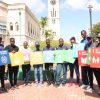
Cleantech Entrepreneurs Driving a Green Recovery in Barbados
Prior to the COVID-19 pandemic, the Eastern Caribbean island nation, famed for its beautiful landscapes, pristine white-sand beaches and temperate climate, attracted around a million tourists each year.
The Future of Food is in Our Hands
With its political and economic clout, the G20 should lead in delivering sustainable food systems as the world grapples with rising hunger, malnutrition and inequality.
Striving for Sustainability in Global Food Systems
As the global community gears up for the 2021 UN Food Systems Summit in September, it is significant that preparations are also underway by Global Reporting Initiative to deliver a new sector reporting standard for agriculture, aquaculture, and fishing.
Caribbean aims to Turn Foul-smelling, Enviro Problem Sargassum Seaweed into High-Value Products
 A regular visitor to the islands of the Caribbean has become a dreaded nuisance over the past ten years. The sargassum seaweed that typically washes ashore now arrives each year in overwhelming, extraordinary amounts for reasons that are not entirely clear.

Can We Make the Planet Earth a Utopia? Yes: Why Not?
The only Planet in the Universe with living beings, including animal and plant life is the Planet Earth. Can we transform it to a Utopia, more or less, a Paradise. Yes, we can. Why not? If all Nations of the Planet have a genuine desire to have eternal peace and harmony, without recourse to a course that will lead to the destruction of the Planet to smithereens.
At the UN, Climate Change & Security Must Be Tackled Together
Could the next wars be triggered by climate change? Until recently, the question might have seemed like science fiction, but now it is very real. Ethiopia and Egypt are locked in an upward spiral of tensions over the Nile, as a combination of dams and shifting weather patterns pose existential risks to both countries.
Papua New Guinea Battles COVID-19 and Health Workers’ Vaccine Scepticism
Papua New Guinea (PNG), like many other Pacific Island countries, successfully held COVID-19 at bay last year, aided by early shutting of national borders. However, by March this year, the pandemic was surging in the most populous Pacific Island nation, and by July, it had reported 17,282 cases of the virus and 175 fatalities.
“If Only the Fighting Would Stop “ A Sudanese Woman’s Wish
With her bare hands, Roda clears debris and forages scraps from her wrecked teashop after attackers scorched Gumuruk, a town in the Greater Jonglei region where conflict frequently disrupts daily life and stifles progress.
Rich Country Hypocrisy Exposed by Vaccine Inequities
‘No one is protected from the global pandemic until everyone is’ has become a popular mantra. But vaccine apartheid worldwide, due to rich countries’ policies, has made COVID-19 a developing country pandemic, delaying its end and global economic recovery.
Pacific Islands Making the Move to Electronic Data Collection
Between 2010 and 2020, many Pacific Islands and Territories have updated their traditional data collection processes, embracing new technologies. The island nations Kiribati and Vanuatu, among others, successfully switched to computer-assisted personal interviewing (CAPI), a new data management system and a survey monitoring dashboard. The innovations implemented with support from the Pacific Community helped to weather the impact of the pandemic on census activities and to become fit for the purpose of tracking the Sustainable Development Goals (SDGs).
Combating COVID-19 and Ensuring No One is Left Behind
If the world wants to beat back the COVID-19 pandemic and ensure no one is left behind in the recovery, two issues thrown into sharp relief by the pandemic need attention: digitalization and regional cooperation.« Previous Page — Next Page »


The Week with IPS

NEXT STOP - SDGs
Tracking global progress towards a sustainable world
Tracking global progress towards a sustainable world
