Languages
Saturday, November 21, 2026



News and Views from the Global South
Regional Categories

America has a Chequered Past in International Environmental Diplomacy
When it comes to international environmental diplomacy, America has a chequered past. It stood at the forefront of the international battle to fix the ozone hole and has shaped many key international agreements. Sadly, US positions are not always built on solid political ground at home. Twice, in the climate change process, this has led to the United States forging an agreement, only to then walk away. This happened with the 1997 Kyoto Protocol which then Vice-President Gore flew to Japan to sign in the full knowledge that a Republican dominated Senate would never ratify the deal. It happened again five years ago, with former President Obama closing that landmark deal (and John Kerry signing at the UN), only for President Trump to tear it up a few weeks later.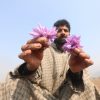
Kashmir’s New Land Laws Could Impact Biodiversity
Walking in the middle of fields of delicately-scented purple saffron crocus flowers, 36-year-old Mubeen Yasin, a saffron farmer from the southern region of Indian Kashmir, is not optimistic that in a few years time the scenery will remain as beautiful as it is today.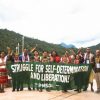
Reclaim Your Rights: Defend Indigenous People’s Lands
Rights are earned through hard-fought struggles. And for Indigenous Peoples (IP), its fulfillment comes from the collective and continuous defense of ancestral land and territory, and assertion of their ways of life and the right to self-determination.
Energy Efficiency for Developing Countries: Pivoting from Fewer Inputs to More Outputs
Energy efficiency (EE) is often marketed as a tool to save energy and money. The oft-repeated mantra is doing “more with less”, namely producing more goods with less energy. But, as set out in a recent World Bank report (which I co-authored), EE can do something that is often much more important for developing countries: it can produce the additional goods and services needed to raise standards of living.
Lockdown in Chains
Long before the Covid-19 pandemic grounded much of the world, lockdown, confinement, violence, and isolation was the daily reality for hundreds of thousands of people with disabilities around the world. Many are locked in sheds, cages, or tethered to trees and are forced to eat, sleep, urinate, and defecate in the same tiny area, sometimes for years. Why? Simply because they have a mental health condition—a psychosocial disability.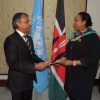
Sid Chatterjee Epitomizes the New Leadership Model of UN Resident Coordinators Worldwide
Siddharth Chatterjee, who has served with the United Nations for over 20 years, has been appointed as the new Resident Coordinator in China, the world’s second largest economy after the United States.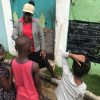
Pandemic Puts Jamaican Children at Heightened Risk of Abuse
In Jamaica, school playgrounds are deserted, filled only with phantom shrieks of delight. Blackboards remain devoid of arithmetic and uniforms hang wrinkle-free in closets. When the first case of Covid hit Jamaican shores in early March, the government closed primary and secondary schools and over 500,000 children transitioned to remote learning. The majority of schools have yet to resume face-to-face classes since the March 13 closure.
Getting Children in Lebanon Back to School Amongst Multiple Crises
Education and health care were high on the agenda when the United Nations vowed to work toward a better future by setting 17 Sustainable Development Goals (SDGs) to be met by 2030.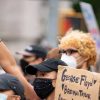
USA Downgraded as Civil Liberties Deteriorate Across the Americas
Few images better illustrate the recent decline in civil liberties in the United States than that of peaceful protesters near the White House being violently dispersed so Donald Trump could stage a photo-op.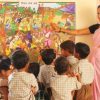
India: National Education Policy 2020 Could Transform Early Childhood Education If Implemented Effectively
It is after almost 34 years that the central government approved the new National Education Policy 2020 on July 29, 2020. This document contains comments on the entire education system and its various recommendations are being heavily debated.
Can Conservation and Development Be Balanced in Sri Lanka?
The Sri Lankan government recently cancelled three circulars that protected 700,000 hectares of forests, labelled Other State Forests (OSFs), which are not classified as protected areas but account for five percent of the island nation’s remaining 16.5 percent of forest cover.
Intellectual Property Monopolies Block Vaccine Access
Just before the World Health Assembly (WHA), an 18 May open letter by world leaders and experts urged governments to ensure that all COVID-19 vaccines, treatments and tests are patent-free, fairly distributed and available to all, free of charge.
Helping Women to Step out of the ‘Shadow Pandemic’ of Women Abuse
The United Nations Secretary-General’s UNiTE by 2030 to End Violence against Women campaign marked the 16 Days of Activism against Gender-based Violence (25 November to 10 December 2020) at a time when COVID-19 exacerbated the conditions women operate under.
Discriminatory Laws Still Holding Women Back in the Middle East
Decades of aggressive efforts to create equal opportunities for women, shatter the glass ceiling and build a more inclusive society only ends up in failure, when the key stake holders refuse to acknowledge discriminatory laws, socio-cultural and religious set ups that continue to threaten progress made by the female work force.
Safe Drinking Water Should Mean Safe Collection Too: How to Reduce the Risks
Globally, millions of people don’t have access to water in their home. They collect water from shared water supply points or surface water sources and physically carry water containers back home for household use.
R & D Expenditure: How to Raise It and Why
Economic growth is the time-tested method of raising living standards and, if not accompanied by large increases in inequality, lowering poverty. Since World War II, economic growth has lifted hundreds of millions of people out of poverty, including in South Asia.
Africa Readying for Free Trade, Come January 2021
One day in February 2020, Accra-based coffee and cocoa trader Meron Dagnew visited the Secretariat of the African Continental Free Trade Area (AfCFTA) to introduce herself, even before the Secretariat was fully operational.
The First Global Event in the History of Humankind
The current pandemic is probably the first global event in the history of the human race. By ‘global’ I mean it has affected almost everybody, regardless of country of residence or social class.
Women’s Bodies, COVID-19 and Male Chauvinism
COVID-19 has in some nations been converted into a noxious, political issue. One of many worrying examples is the rhetoric of Brazil´s president. On 10 November, when Brazil´s COVID-19 death toll surpassed 162,000 victims – the numbers have continued to raise and are now 179,032 second only to USA´s 296,745 – Jair Bolsonaro minimized the effects of COVID-19 by stating: ”All of us are going to die one day. There is no point in escaping from that, in escaping from reality. We have to cease being a country of sissies.” Bolsonaro actually said maricas, which like sissies is slang for gay people. Both expressions originally indicated ”small girls” – marica is a diminutive of Maria and sissy of “kid sister”. Bolsonaro thus defined homosexuality as effeminacy by associating gay men with affectation and cowardice. By connecting disease, fear, and femininity the Brazilian president not only ignored the strength and courage women throughout history have demonstrated by enduring childbirths and caring for others, it also shows a strong disregard for gender equality and the rights of women and gay people.
A Vaccine That Was Hijacked by the Rich
There is a longstanding belief that virtually everything in this world is stacked up against the poor and the downtrodden. The Covid-19 vaccine is no exception because some of world’s richest nations, including the US, Canada and UK, seem to have cornered most of the supplies -- whilst marginalizing the world’s poorer nations.
Celebrating Vanuatu’s Path to Sustainable Development
The Pacific Island Developing State of Vanuatu has emerged as one of the region’s great success stories. Vanuatu has joined the ranks of Samoa and the Maldives as one of only six countries to graduate from being a least developed country, since the category was introduced by the United Nations in 1971.« Previous Page — Next Page »


The Week with IPS

NEXT STOP - SDGs
Tracking global progress towards a sustainable world
Tracking global progress towards a sustainable world
