Languages
Saturday, November 21, 2026



News and Views from the Global South
Regional Categories

Solar Power from Argentina’s Puna Highlands Reaches Entire Country
The unprecedented growth of renewable energies in Argentina over the last three years has borne its greatest fruit: the Cauchari solar park, with nearly one million photovoltaic panels and 300 MW of installed power, which was connected to the national power grid on Sept. 26.
Can Agricultural Apps Bring Indonesia’s Farmers Back to the Fields?
When his friends prodded him to use an agricultural app in July, rice farmer Mustafa reluctantly downloaded RiTx Bertani into his smart phone. Four months later, he feels happy to have given the technology a try.
If Your Civic Space is Closed, your Human Rights Dissolve
On Human Rights Day, civil society calls for the protection of civic space as a fundamental freedom, as more than 80% of the world’s population live in countries where civic space is closed, repressed or obstructed.
Reduce Military Spending – the Much-Needed Response to Violence Against Women
The COVID-19 pandemic is NOT the biggest pandemic the world confronts at the moment, despite over 69 million cases and 1.5 million deaths worldwide.1 If it’s not COVID, what is it then? It is violence against women!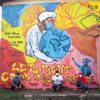
Human Rights Must Be at the Heart of the COVID-19 Recovery
On 10 December every year, we celebrate Human Rights Day, marking the anniversary of the adoption of the Universal Declaration of Human Rights. The Universal Declaration guarantees a spectrum of human rights that belong to each of us equally, and unite us as a global community and upholds our humanity.
Escazú: Historic Step Towards Protecting Human Rights Defenders in Latin America and the Caribbean
The global health crisis that has marked 2020 did not put an end to another pandemic that has been plaguing Latin America and the Caribbean: murders and attacks against environmental defenders.
Education Is a Fundamental Human Right and the Priority of the 21st Century
Education is not a privilege. It is a fundamental human right. Yet, education is undervalued even at the best of times. We often fail to connect the dots between the right to education and the realization of all human rights. As noted by the Nobel-winning economist Amartya Sen, we have failed to give ‘this massive potential in transforming human lives’ the attention it deserves.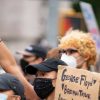
US Presidential Election Part 4: The Legacy of Slavery and Racism
In a powerful address at the Hungry Club Forum on 10 May 1967, Martin Luther King Jr. spoke about US’s so-called “three original sins”, the evils of slavery, poverty and war or, more generally, racism, materialism and militarism.
Drop in Remittances – a Financial Lifeline for 800 Million People – Could Impact Financial Stability of Numerous Countries
On Dec. 2 Gabriel Arias, 42, left a Washington Heights, New York, money transfer agency after sending money home to the Dominican Republic. For the past eight years, every fortnight he would come to this branch at 171st street after getting paid from his construction job. But things are different this year and he worries about his family back home. Arias lost his job in May, amid heightened COVID-19 restrictions in the state. He told IPS he has tried to work some odd jobs, but has barely earned enough for his monthly apartment rental. This early December visit to send money home was only his second since June.
Climate Action for Human Rights
Climate change and human rights are two key issues in international development and their interaction is increasingly in need of focus at national, regional and international levels. In the Pacific, where the 22 Pacific Island countries and territories are on the front line of both climate ambition and the ongoing effects of the climate crisis, climate change is recognised as the region’s single greatest threat. Urgent climate action is consistently called upon to protect the interests of youth and the most vulnerable populations, together with preserving the ‘shared needs and interests, potential and survival of our Blue Pacific and this great Blue Planet’.
What Indonesia’s Local Elections Mean for National Politics
In just over a day, on 9 December, Indonesia holds 270 simultaneous local elections for executive office. This involves nine of the republic’s 34 governors, 224 of 416 bupati (district chiefs) and 37 of 98 mayors. The polling was initially scheduled for 23 September but the independent KPU (General Elections Commission) put the date back to 9 December due to the Covid-19 pandemic.
La Niña Weather Phenomenon Could Endanger Colombia’s Food Security
After ten years without a strong La Niña weather phenomenon in Colombia, the climate pattern, coupled with the COVID-19 pandemic, could create a vacuum in food production and supply. Multilateral organizations, along with the Colombian government, are trying to implement measures to reduce malnutrition risk. Still, the population is already overwhelmed by a year of struggles that have deepened socio-economic differences.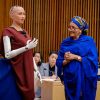
How Artificial Intelligence Could Widen Gap Between Rich & Poor Nations
New technologies like artificial intelligence (AI), machine learning, robotics, big data, and networks are expected to revolutionize production processes, but they could also have a major impact on developing economies.
Urgently Needed Deficit Financing No Excuse for More Fiscal Abuse
Fiscal and monetary measures needed to fight the economic downturn, largely due to COVID-19 policy responses, require more government accountability and discipline to minimise abuse. Such measures should ensure relief for the vulnerable, prevent recessions from becoming depressions, and restore progress.
A UN Power Monopoly That Cries Out for a Break
Will four strong contenders for permanent seats in the UN Security Council (UNSC)-- Germany, India, Japan and Brazil—help break the monopoly now being held by the big five, namely the US, UK, France, China and Russia?
Choice and Opportunity for African Farmers Will Transform Africa
’A hungry man is not a free man. He cannot focus on anything else but securing his next meal.’ So proclaimed the late Kofi Annan.
Mexico Sticks to Natural Gas, Despite Socioenvironmental Impacts
In his community of small farmers and ranchers in northern Mexico, Aristeo Benavides has witnessed the damage caused by the natural gas industry, which has penetrated collectively owned landholdings, altering local communities' way of life and forms of production.
Biden’s Opportunity To End Israeli-Palestinian Conflict
Recently I had an opportunity to brief a group of European diplomats and journalists on a variety of conflicts, with a focus on the Middle East. During the Q&A I was asked which of the region’s conflicts Biden should tackle first.
When Big Powers Clash, the UN’s Most Powerful Body Disappears
At the height of the Cold War back in the 1960s, a Peruvian diplomat, Dr. Victor Andres Belaunde, characterized the United Nations as a politically wobbly institution that survives only at the will-- and pleasure-- of the five big powers.
Misinformation on Social Media Fuels Vaccine Hesitancy: a Global Study Shows the Link
Vaccine hesitancy is a severe threat to global health, according to the World Health Organisation (WHO). The term refers to the delay in acceptance or the refusal of vaccines, despite the availability of vaccination services. It’s a serious risk to the people who aren’t getting vaccinated as well as the wider community.
Persons With Disabilities Among Worst Affected by Coronavirus
The 13th session of the Conference of States Parties (COSP) that was initially supposed to be held in New York back in June recently wrapped up with the final session coinciding with the International Day of People with Disabilities, whose theme, this year was on the issue of building back better inclusively.« Previous Page — Next Page »


The Week with IPS

NEXT STOP - SDGs
Tracking global progress towards a sustainable world
Tracking global progress towards a sustainable world
