Languages
Sunday, November 29, 2026



News and Views from the Global South
Regional Categories
Coat Linings
Is nothing sacred anymore? Has privacy lost its sanctity? Why cannot our prime minister go to London for an urgent medical check-up, drop in on his tailors Scabal in Savile Row for a fitting, and then treat himself and his acolyte ministers to a lunch at Churchill Hotel, without also being photographed by amateur paparazzi on their ubiguitous mobiles? Now that Swiss bank counters and Panamanian desktops have been converted into unscreened confessionals, is nothing secret or sacrosanct? One`s sympathies reach out to our nouveau-riche rulers. They thought they had buried their money long enough for it to acquire the patina of `old money`. (`Old money` is what a ruler makes in his/her first administration.) As aspiring arrivistas, they felt that they had finally `arrived`. However, our elected Noriegas have found themselves sharing the predicament of the wife of the general-industrialist whose automotive companies were nationalised by Mr Zulfikar Ali Bhutto in January 1972. `Life is so unfair, she moaned. `Just when we thought we had made it into the 22 families, Bhutto goes and does this to us.
Healthcare solutions that are smart
Every hour, tuberculosis kills nine Bangladeshis. Another seven die each hour from arsenic in drinking water. Simple and cheap solutions are available to avoid almost all these deaths.
Soil and Pulses: Symbiosis for Life
The Food and Agriculture Organization of the United Nations (FAO) in partnership with Biodiversity International and the Permanent Mission of Italy to the UN (Rome based UN agencies) jointly organized a seminar on “Soils and pulses: symbiosis for life”, providing a platform to stakeholders, including governments, research organizations, civil society and the private sector, to deliberate increased pulses production and consumption and its relation to higher productivity and fertility of soils. 2016 is the International Year of Pulses as declared by the United General Assembly.
Climate: Africa’s Human Existence Is at Severe Risk
“Africa’s human existence and development is under threat from the adverse impacts of climate change – its population, ecosystems and unique biodiversity will all be the major victims of global climate change.”Laws Criminalizing Drug Possession Can Cause More Harm
In many countries, a criminal record, even for a minor offense can have serious implications. Being convicted of a criminal offence renders one ineligible for certain jobs, social grants or benefits or from even being able to exercise one’s right to vote. It can also severely limit the ability to travel to certain countries and can result in the loss of custody of minor children. As prison conditions are often poor and health care services limited, a custodial sentence can have implications on the health outcomes of individuals.
Opinion: Unnoticed, We Are Close to Destruction of Our Planet
On the 17th of April, Italians were called to vote in a national referendum, on the extension of licenses to extract petrol and gas from the seas. The government, the media and those in the economic circles, all took a position against the referendum, claiming that 2000 jobs were at a stake. The proponents of the referendum (among them five regions), lost. Italy is following a consistent trend, after the Summit on Climate Change (Paris December 2015), in which all countries (Italy included) took a solemn engagement to reduce emissions.
HIV Time Bomb Ticks On
Radhika Banarjee, a 24 year-old CSW, listened carefully at an advocacy gathering in the heart of Dhaka, Bangladesh’s capital.
Latin America to Redouble Its Climate Efforts in New York
The countries of Latin America will flock to sign the Paris Agreement, in what will be a simple act of protocol with huge political implications: it is the spark that will ignite actions to curb global warming.Fighting the Chotoo Gang
A group of notorious gangsters has apparently brought the Punjab police toitsknees.A2,200-strong police force has retreated after losing several men since the operation against the Chotoo gang in the southern Punjab district of Rajanpur began earlier this month. The army is now being dragged into yet another law and order issue that the civilian agencies should have been able to deal with.
OPINION: Breaking the Grip of Rimbunan Hijau over Papua New Guinea
James Sze Yuan Lau and Ivan Su Chiu Lu must be extremely busy men. Together, they are listed as directors of some 30 companies involved in various activities and services related to logging or agribusiness in Papua New Guinea (PNG). The former is the managing director of Rimbunan Hijau (RH) PNG and son-in-law of RH’s founder Tiong Hiew King; the latter is executive director of RH PNG Ltd.. All but two of these 30 companies have the same registered address at 479 Kennedy Road, in the national capital, Port Moresby–the headquarter of the RH group in the country.
When Only Men Make the News
On the onset, it seems women are everywhere in the media. You switch on the TV, there is inevitably an attractive woman luring you into buying a product. On the radio, there is the 'young new thing' vivaciously flirting with her male co-host while shuffling through songs; and in print, the entertainment pages would simply not sell without a titillating image of a female celebrity and a scoop on her latest rendezvous. But take a closer look, beyond the objectified and stereotypical images of women, being manufactured and mass consumed ad nauseam, and where are the women, really? Take a look at the news media, for instance. Where are the women in the newsrooms, in the bylines on the front and back pages, in the column spaces of our opinion pages, in the talk shows, not simply as hosts, but as commentators on so-called hard issues such as politics and foreign affairs? Where are the women in our news (discounting the PM and her alter-ego), except as wailing victims of violence, natural disasters and such and as muses of our male photographers during cultural festivals?
Arsenic Threat Looms Large in India: Well Switching Provides the Way Forward
An Indian Govt. Parliamentary Committee on Estimates on “Occurrence of High Arsenic (As) content in Groundwater” in December, 2014 stated that more than 70 million people in 96 districts in India is under threat due to As occurrence in groundwater.
Champions of Hygiene
Lydia Abuya, a tenant living in the Kaptembwa informal settlement west of Nakuru town, leaves one of the six on-plot toilets. She returns with a pail of water to splash away the waste.
Opinion: The Empire’s New Clothes? Conjuring Growth from the TPP
While the main US motivation for the Trans Pacific Partnership (TPP) has been to counter China’s influence in the region, it has also been used to undermine the Doha ‘Development’ Round of trade negotiations to better advance politically influential US corporate interests. Hence, it has become all the more necessary to legitimize the TPP in terms of its ostensible benefits. Touted as a ‘gold standard’ 21st century trade deal, it is nonetheless necessary to ascertain what gains can really be expected and whether these exceed its costs.
No Easy Outcomes in Brazil’s Political Crisis
Brazilian President Dilma Rousseff would appear to be, as she herself recently said, “a card out of the deck” of those in power, after the crushing defeat she suffered Sunday Apr. 17 in the lower house of Congress, which voted to impeach her. But Brazil’s political crisis is so complex that the final outcome is not a given.A Cash-Strapped Nation on a Splurging Spree
In our student days there was a commonly used Sinhala phrase – “clean suit empty pocket”. That succinctly conveyed the image of a well-clad individual without a cent on his person.
Climate Change and the Middle East (II)
No Water in the Kingdom of the Two Seas—Nor Elsewhere
There is an oil producing country situated in the Gulf region, made of a cluster of islands. It is small, surface and population wise. But it holds the dubious privilege of ranking top of the list out of the 33 countries most likely to be water-stressed in the year 2040.

Matrix of Biometrics
Biometrics is the science of using physical (and behavioural) features for identification purposes. The most ubiquitous biometrics we encounter is 'the face'. Every individual has a distinct face, which is used by others to identify/ recognise him or her. Human beings also start recognising voices from the age of three months. Handwriting recognition is part of behavioural biometrics. The most versatile and reliable biometric data possibly comes from human genes.
A World Drowning in Oil
Thanks to tensions between Saudi Arabia and Iran, major oil producers couldn’t come to an agreement in Doha to freeze their output to January levels to raise oil prices. The current low oil prices have a lot to do with the grim outlook for global economic growth while supply is growing. China, the second largest economy in the world, is slowing down. Not surprisingly, global oil demand is much lower at 94.8 million barrels a day vis-à-vis supply of 96.3 million barrels a day in the first quarter of 2016 according to the International Energy Agency.
Climate Change (I)
Will the Middle East Become ‘Uninhabitable’?
This is not about any alarming header—it is the dramatic conclusion of several scientific studies about the on-going climate change impact on the Middle East region, particularly in the Gulf area. The examples are stark.
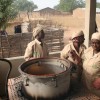
Innovations Boost Income for Women Rice Farmers
Salabanya Tabaitou no longer squints from the irritating wood smoke each time she has to parboil her rice paddy. Now Tabaitou feeds logs into a chute of a specially designed brick stove with a chimney that draws away the smoke. The stove with a stainless steel parboiling vessel cooks her rice in 20 minutes - something she would have spent two hours doing using the traditional method.« Previous Page — Next Page »


The Week with IPS

NEXT STOP - SDGs
Tracking global progress towards a sustainable world
