Languages
Monday, October 5, 2026



News and Views from the Global South
South-South

Are Developing Countries Waving or Drowning?
More than five years since the outbreak of the global financial crisis, the world economy has shown few signs of stabilising and moving towards strong and sustained growth.
Mexican Climate Fund Short of Cash, Slow Off the Mark
The Climate Change Fund set up in November in Mexico faces enormous challenges such as the enforcement of anti-corruption standards, which make it unlikely that concrete actions will begin this year, according to civil society organisations.Shift in Latin America’s Approach to Drugs – from Security to Health Issue
The drug problem should be tackled not as a security issue but as a public health question, with policies for "prevention, treatment and rehabilitation," delegations from the 34 countries participating in the 43rd General Assembly of the Organisation of American States agreed.
Quantitative Easing: Impact on Emerging and Developing Economies
The global economy is awash with successive waves of liquidity generated over the past few years by the four most advanced economies, viz., the United States, the European Union, (EU), Japan and the United Kingdom, known as the G4. This liquidity has taken the form of “quantitative easing” (QE).
Africa Leading the New Patterns of Growth
The old theories governing the way that countries produce and trade are being replaced. The pattern of trade is being transformed by increasingly sophisticated technology and innovations in transportation; and the topography of actors is shifting to reflect new poles of growth.
Q&A: “The State Does Not Lose Sovereignty If It Respects Indigenous Rights”
"There is a belief that consent is about saying yes or no, about who wins," observed James Anaya, the United Nations special rapporteur on indigenous rights. But consultation with indigenous peoples is a matter of “creating open processes where they can voice their opinions and influence decisions, and where there is the necessary will to seek consensus.”
Q&A: Weather Forecasts to Prevent Strokes and Asthma Attacks in Cuba
A biometeorological forecast model developed in Cuba to sound the alert on weather conditions that exacerbate chronic diseases like asthma, hypertension and vascular disorders could also help predict the impacts of climate change on health.
Native People More Than Just Park Rangers
Some good-byes can actually mean the start of a long road working together. That was how it felt at the end of the World Indigenous Network (WIN) conference in this northern Australian city.
U.S., China Woo Caribbean “Friends” Just Days Apart
First it was U.S. Vice President Joe Biden, who travelled to Trinidad and Tobago Tuesday to speak with "our friends” in the Caribbean.
Sharing Indigenous Knowledge from All Ends of the Globe
This city in northern Australia brought them together to share their experiences this week. They are indigenous Shipiba people fighting indiscriminate logging in Peru’s Amazon jungle region and delegates from the Ando-Kpomey community in Togo, which created and protects a 100-hectare forest.
Guardians of the Land and Sea Meet in Darwin
“Are you a park ranger?” IPS asked. “No, I am one of the owners of the territory,” Ángel Durán responded in a firm voice. The Bolivian indigenous leader is in this northern Australian city along with 1,200 other native delegates from over 50 countries for the World Indigenous Network (WIN) conference.
Forestry Programmes Bogged Down in Latin America
Issues related to the ownership of forest carbon and to prior consultation mechanisms threaten to derail plans for the Reduction of Emissions from Deforestation and Degradation of Forests (REDD+) in some countries of Latin America, according to experts.
OAS Chief Calls for “Long-Awaited” Debate on Drug Policy
Following the release of a major draft report on drug policy in the Americas, the secretary-general of the Organisation of American States (OAS), Jose Miguel Insulza, called for the beginning of debate aimed at reforming those policies throughout the region.
Remittances Buoy Up Myanmar’s Economy
Nangnyi Foung reaches into the dryer, pulls out another pair of pants and places it on the ironing board. "I still have several more loads to go," she says as the clock strikes nine p.m., marking the start of her 14th hour on the shift.
Insects, from Delicacy to Tool against Hunger
The Food and Agriculture Organisation's recommendation to consider using edible insects as a food source to combat hunger may have particular repercussions in Colombia and Mexico, two Latin American countries that have a tradition of eating insects and a high degree of biodiversity.
Neighbours View Sharif as Yoked to Personal, National History
Following on Nawaz Sharif’s victory in the May 11 national elections in Pakistan, many analysts are indicating cautious optimism on the prospect that the new prime minister can strengthen bilateral relations with the country’s neighbours, particularly India.
Can South Africa Help Nigeria to Industrialise?
The lack of economic diversification throughout sub-Saharan Africa means that despite South Africa’s pledges to help Nigeria make the automotive sector the West African nation’s flagship industrial target, it may be difficult to do so, experts say.
Seeking Justice for Dictatorship Victims – Two Continents Apart
As news of the death of former Argentine dictator Jorge Rafael Videla in a prison cell spread around the world, Julia Parodi, who was in this South Korean city to receive the Gwangju Prize for Human Rights on behalf of HIJOS, said he died in the right place.
Has Caribbean Diplomacy Lost Its Mojo?
Whether by accident or coincidence, recent days have seen a variety of Caribbean leaders and journalists question whether the region is failing to pursue leadership roles within international organisations - and thus losing its voice in global issues like trade, climate change, and peace and security.Film on Sexual Abuse Wins at Colombia-Venezuela Festival
A Venezuelan movie about a young deaf woman who is sexually abused by her stepfather, “Brecha en el silencio” (Breach in the Silence), took top prize at the second Colombia-Venezuela film festival.
Migratory “Flyways” Decimated by Human Expansion
Migratory birds, which play an important role in the complex web of life known as ecosystem services, are under threat as never before, with some species facing extinction within the next decade.« Previous Page — Next Page »


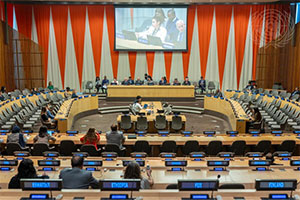 Panel Discussion on International Day for South-South Cooperation 2023. Credit: UN Photo/Cia Pak
South-South cooperation – collaboration between developing countries – is a growing and dynamic phenomenon, an important process that is vital in confronting shared challenges. Led by emerging giants, India, Brazil and South Africa (IBSA), the Global South is a tremendous source of tested solutions to development challenges, including the Millennium Development Goals (MDGs). China’s Belt and Road Initiative (BRI), launched in 2013, has further transformed South-South cooperation by enhancing infrastructure, trade, and investment linkages across Asia, Africa, and Latin America. Meanwhile, new platforms like the expansion of BRICS to include other countries such as Thailand, Nigeria, and Cuba are reshaping global economic governance and offering alternatives to traditional Western-led institutions. The Nairobi Outcome of the 2009 High-Level United Nations Conference on South-South Cooperation in Nairobi, Kenya highlights growing political and economic ties within the developing world, as countries from the Global South assume leading roles in decision-making on hot global issues ranging from economic recovery to food security, energy transitions, debt relief, and climate change. Today, the African Continental Free Trade Area and India’s “Voice of the Global South” summits have advanced frameworks for regional self-reliance, while G77 has reaffirmed commitments to resilient and inclusive economies ahead of the 16th UN Conference on Trade and Development.
Updated by Yilan Batista and Shuli Wong August 2026

The Week with IPS

NEXT STOP - SDGs
Tracking global progress towards a sustainable world
Tracking global progress towards a sustainable world
