Languages
Wednesday, November 18, 2026



News and Views from the Global South


Anti-Microbial Resistance Strategies Need Urgent Attention to Prevent Unnecessary Deaths in Africa
African countries must find a way of fighting Anti-Microbial Resistance in the healthcare system to avoid unnecessary deaths.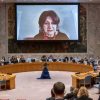
Solidarity and Negotiations to End the Ukraine War
On November 1, a statement of solidarity with Russians opposed to the Ukraine War was published. It was signed by more than 1,000 U.S. men and women who had opposed the U.S. invasions of Vietnam, Afghanistan and Iraq.
Counting the Massive Financial Costs of Illegal Fishing
As a new report lays bare the massive financial costs to developing states of illegal fishing, campaigners are hoping that drawing attention to the practice’s devastating economic effects will help push governments to greater action against the illicit trade.
Early Coal Retirement: How about a Global Auction
Report after report highlights that we can only achieve the greenhouse gas (GHG) emission reductions required by the climate goals of the Paris Agreement if much of the existing coal power generation capacity is retired early. To this end, one concept that deserves greater consideration is conducting an auction for early retirement of coal power plants worldwide: a global coal retirement auction. This article sets out the broad outlines of how this global auction might operate.
A Beacon of Light in Dark Times: the Dublin Platform for Human Rights Defenders
Before she was murdered in Honduras in 2016, the Lenca Indigenous woman and human rights defender Berta Cáceres poignantly said: “They are afraid of us because we are not afraid of them.”
Tackling Recurring Hunger Crises at the Horn of Africa – Beginning with Somalia
The statistics are stark. The crisis is unprecedented. Yet again, according to the United Nations, famine looms in Somalia, with hundreds of thousands already facing starvation. In addition, droughts, and catastrophic hunger levels have left over 500,000 children malnourished and at risk of dying. This is already nearly 200,000 more than the 2011 famine. Urgent immediate actions must be taken now, both to address the crisis in the short-term and long-term.
Mexican Environmental Prosecutor’s Office Dodges Charges against Mayan Train
A beige line slashes its way through the Mayan jungle near the municipality of Izamal in the southeastern Mexican state of Yucatán. It is section 3, 172 kilometers long, of the Mayan Train (TM), the most important megaproject of President Andrés Manuel López Obrador's administration.
Land Ownership Model Is Restoring Biodiversity, Empowering Communities in Kenya
When Mara Siana Conservancy came into operation in 2016, there was a single zebra and a topi (antelope) in the valley just outside the Maasai Mara National Reserve in Kenya. The valley was also host to fewer than 150 elephants and 200 buffalos.
Oil Exporters Make Markets, Not War
The decision to cut oil production by the Organization of Petroleum Exporting Countries (OPEC) and its allies as of Nov. 1 comes in response to the need to face a shrinking market, although it also forms part of the current clash between Russia and the West.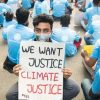
COP27 Climate Summit is an Opportunity to Promote Peace
Peace is precious. The past few months have offered daily reminders of this simple fact. War in Ukraine. Russian and North Korean nuclear threats. Growing tensions over Taiwan. Huge population displacements. Energy crisis. Economic turmoil. Rising global hunger and inequality.
Developing Countries Need Monetary Financing
Developing countries have long been told to avoid borrowing from central banks (CBs) to finance government spending. Many have even legislated against CB financing of fiscal expenditure. Central bank fiscal financing Such laws are supposedly needed to curb inflation – below 5%, if not 2% – to accelerate growth. These arrangements have also constrained a potential CB developmental role and government ability to respond better to crises.
Education Cannot Wait Director Calls on Donors to Expand Support for Successful Programme Bringing Girls and Boys Back to Learning in Post-Conflict Areas of the Democratic Republic of the Congo
The Director of Education Cannot Wait (ECW), Yasmine Sherif, launched a strong call for public and private donors to step up funding, asking them to “show the same courage” she saw in the children she met during her week-long visit to the Democratic Republic of the Congo (DRC).
Farm-Kids-Turned-Scientists Give Back on the Climate-Crisis Front Line
Dr Alice Karanja knows from personal experience the tough choices the climate crisis is putting people before in the Global South. Choices such as whether to have a healthy diet or give your children an education. Choices such as whether to go hungry or allow your children to have any schooling at all.
A New Digitalisation Effort in Bangladesh Could Change Community Health Globally
The digital transformation of thousands of community health workers in Bangladesh has dramatically enhanced their work, while enabling the creation and tracking of a healthcare database covering 64 million people. The resulting model holds remarkable promise for the health of the world, especially in the context of evolving pandemics.
A Tale of Cities
For decades, urban practitioners have failed to consider the needs of women in city decision-making and planning. Imagine being a young girl in a bustling metropolis.
Russian Dispute Over Drones Threaten to Escalate World Food Crisis
A war of words between Russia on the one hand, and the US, Britain, France and Germany on the other—specifically on the deployment of drones in Ukraine -- has triggered an unintended consequence: a new world food crisis. The Western powers last week asked the UN to verify whether Iranian drones were being used “illegally” in violation of the 2015 Security Council resolution 2231 which endorsed the Joint Comprehensive Plan of Action (JCPOA) on Iran’s disputed nuclear programme.
Artisanal Miners Ruining Already Diminishing Forests in Zimbabwe
With homemade tents scattered about, hordes of artisanal gold miners throng parts of Mazowe village in Zimbabwe’s Mashonaland Central Province, where they have cut down thousands of trees to process gold ore.
Migration for Many Venezuelans Turns from Hope to Nightmare
Thousands of Venezuelans who have crossed the treacherous Darien jungle between Colombia and Panama, or who have made the perilous journey through Central America and Mexico to reach the United States, have found themselves stranded in countries that do not want them, unable to continue their journey or to afford to return to their country.
Cambodia More Than Ever Squeezed Between Russia and the West
Cambodian Prime Minister Hun Sen walks into a diplomatic minefield these days. He supports UN resolutions against Putin but does not want to jeopardize the long-standing friendship with Russia. At the same time, he tries to be less dependent on the West, both economically and politically.
What Does it take to Build a Culture of Equality & Inclusion at the UN? Reflections from Inside a Change Process
The organisational is personal. Every day since the two of us were asked back in 2020 to co-lead the process of culture transformation at UNAIDS, the United Nations organisation which drives global efforts to end AIDS, we have both felt at our very core how crucial it has been to get it right.
Will The Lettuce Outlast All This?
No. No lettuce, no matter how British it may be, could outlast such a steady depletion of the very foundation of life.« Previous Page — Next Page »


Want to keep up with the latest news and views from the Global South? Sign up for IPS Daily News Report for daily emails with our top stories about international development, climate change, gender and more. (Formerly IPS TerraViva since 1993).

The Week with IPS

NEXT STOP - SDGs
Tracking global progress towards a sustainable world
Tracking global progress towards a sustainable world
