Languages
Sunday, November 8, 2026



News and Views from the Global South

Ecobreves – HONDURAS: Government Sets Sights on Wind Energy
The Honduran government plans to sign a contract at year end with a U.S. company to generate the first 100 megawatts of wind energy in this Central American country, in the southern region of Cerro de Hula.Ecobreves – MERCOSUR: How to Adapt to Climate Change
The vulnerabilities of the Southern Cone Common Market (Mercosur) to climate change were the subject of debate by meteorologists and environmentalists gathered in the Argentine capital.
Profit in Watching — Not Hunting — Whales
More than one million tourists will go whale watching this year in Latin American waters, an activity that is exciting for the public and profitable for tour operators.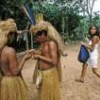
Mining Companies Venture into the Peruvian Amazon
The violent tensions arising from the mining boom in Peru could move from the mountains to the Amazon jungles, warn officials, activists and indigenous leaders.
Fighting Climate Change Demands Cooperation Now and Beyond 2012
Nobody is negotiating or making concessions ahead of deadline, says Raúl Estrada Oyuela, one of the authors of the Kyoto Protocol on Climate Change, in this exclusive column for Tierramérica.
The Global Food Crisis and the Latin American Paradox
As world leaders left the Rome Summit with plans to aid the world’s poor struggling with record food prices, it is important to consider some unique characteristics of Latin American and Caribbean countries. High commodity prices present an opportunity for the region to increase food supply while confronting the urgent challenge to help those most in need during this crisis.Ecobreves – BRAZIL: New Rules for Oil Spill Cleanup
Brazil's National Environment Council has adopted new rules to prevent and deal with oil spills in national waters, updating legislation from 2001.Ecobreves – VENEZUELA: Eye on Desertification
The Venezuelan government has launched a plan to fight desertification, which begins with a diagnosis and description of each of its 24 regions.Ecobreves – CHILE: Low-Energy Lightbulb Plan Advances
From March to June, the Chilean government handed out 351,132 low-consumption electric lightbulbs to 175,566 families in six regions of the country as part of a national energy-saving program with a budget of 5.6 million dollars.Ecobreves – HONDURAS: Human Rights Charges Against Gas Company
Environmental organizations of the Caribbean region of Omoa, in an effort to oust a polluting Mexican gas company, have knocked on the doors of the Honduran Human Rights Commissioner.
Mexicans Protest Canadian Mining Company
Controversy about gold mining in Cerro de San Pedro, Mexico, shifted to a hotel in Toronto, Canada, venue of a shareholders meeting from the Metallica company, owner of the mine.
Mobile Phones Change Birds' Tune
As they continually adapt to their environment, wild birds in Europe have learned to imitate the ringtones of mobile telephones, say experts.Ecobreves – MEXICO: Last Gasp of Rare Porpoise
Efforts are failing to prevent the extinction of the vaquita (Phocoena sinus), a rare species of porpoise that is native to Mexico. From 1999 to 2008, its population has plummeted from 600 to 150 animals.Ecobreves – BRAZIL: Tepid Project on Climate Change
Brazil has a project in place to create a National Climate Change Policy, defined by interministerial commissions and sent to Congress as part of the government's celebrations of World Environment Day, Jun. 5.Ecobreves – HONDURAS: Eye on Waste Management Bill
The Honduran Congress is to debate a law to regulate and recycle waste, especially in urban zones, parliament president Roberto Micheletti told Tierramérica.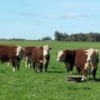
How to Atone for Beef's Sins
Cattle consume many kilos of feed for each kilo of meat they produce and they are an enormous source of greenhouse gases in Argentina, Brazil and Uruguay.
Hake Could Disappear from Argentina's Seas
Electronic systems to track fishing, support for industrialization and environmental certification as a market incentive are among the recommended steps to save the hake.
Cooperatives Turn Idle Landed Estates Green
A small dairy cooperative is harvesting its first achievement in the middle of the savannah in Venezuela, a country dependent on food imports.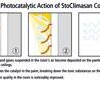
Paint that Purifies the Air
German scientists have developed an interior paint that, through a process that imitates photosynthesis, breaks down and eliminates toxic materials from the air.Ecobreves – WORLD ENVIRONMENT DAY: Fighting Climate Changing Emissions
World Environment Day was accompanied June 5 by a call to "kick the habit" of producing carbon dioxide, the principal gas associated with climate change.Ecobreves – BRAZIL: Dengue Vaccine by 2010?
A vaccine that could be effective against four strains of dengue will be available in Brazil in 2010, announced the Butantan Institute, a government research center in Sao Paulo state.« Previous Page — Next Page »





Tierramérica is the main communications platform on sustainable development and the environment in Latin America and the Caribbean. It is produced by IPS Noticias, the agency’s Spanish-language service, which created it jointly with the United Nations Development Programme (UNDP) and the United Nations Environment Programme (UNEP), with later support from the World Bank. The weekly editions of Tierramérica are published in Spanish, Portuguese and English and are picked up and printed by dozens of media outlets in the region. Follow us on Facebook and Twitter.

From the Frontline of Environment
Supported by

Tierramérica en Español

Terramérica em Portuguese

