Languages
Thursday, November 19, 2026



News and Views from the Global South
Africa
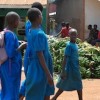
Outcry as Rwandan Govt Shifts Money to Primary Education
In an attempt to meet the development goal of universal access to primary education by 2015, Rwanda’s government has decided to reallocate a large part of its tertiary education budget to the primary education sector.Proposed Pension Bill Outrages Malawi Workers
A draft pension bill has created great concern among workers in Malawi, with some hurriedly seeking early retirement before it will be passed. The bone of contention is a section pegging the retirement age for women at 55 and men at 60.
ZAMBIA: Widespread Poverty Threatens to Reverse MDG Gains
Civil society organisations warn that unless Zambia addresses its high poverty levels, the strides the country already made in achieving some of the Millennium Development Goals (MDGs) may be reversed.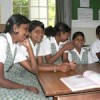
MAURITIUS: Social Ills Prevail Despite Meeting MDGs
The small island state of Mauritius is the only African country likely to meet all eight of the United Nations’ Millennium Development Goals (MDGs) by 2015 - at least on paper. But its citizens say government could do more to improve livelihoods, gender equality and environmental sustainability.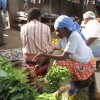
DEVELOPMENT-KENYA: Micro-Credit Helping Farmers to Plough Ahead
Seventeen years ago it seemed like an impossible dream to provide thousands of low-income farmers with a way to borrow small amounts of money. But people working in the tea sector in the rural areas of central Kenya were determined to address farmers’ lack of access to credit. They started the Muramati Savings and Credit Cooperative Society.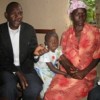
KENYA: More Men Preventing HIV Transmission to their Unborn Children
Pastor Joseph Muhembeli and his wife, Beatrice, queue at the Vihiga health centre with their six-month-old daughter for their prevention of mother-to-child treatment (PMTCT). But before long, as per the clinic’s policy, the couple are whisked to the front of the line – all because Muhembeli has accompanied his wife for the treatment.
ZIMBABWE: Debt Crowds Out Essential Spending on Health
Zimbabwe’s debt burden of about 8.3 billion dollars, owed to internal and external institutions, is crowding out essential national budget items such as health and basic services, with detrimental effects for particularly women.
SOUTHERN AFRICA: Strengthen Cooperation to Secure Power
Southern African nations need to agree on a common operational system to manage energy in the region, environmental experts advise. If they don’t, the region could experience power shortages and resulting economic deficits.Okavango’s Resurgent Floods Test Disaster Management
Despite early warnings about higher-than-usual flooding of the Okavango Delta in 2010, homes, fields, latrines and boreholes in the delta were flooded.
SIERRA LEONE: Unfulfilled Promise of Free Maternal Health Care for Mothers
Marie Musa, 37, is devastated. After the mother of four gave premature birth, her baby boy died a few hours later – because the hospital did not have enough incubators to rescue the infant.ZAMBIA: Bumper Harvest May Prove an Embarassment of Riches
Buoyed by government’s fertiliser subsidy, Zambia’s farmers produced 2.8 million tonnes of maize in the 2009/10 growing season. Initial delight over the increased harvest - up from 1.8 million tonnes the previous year - gave way to worry as farmers realised they could be stuck with most of the crop.
SOUTH AFRICA: Satellite Preparing Scientists for New Space Industry
Though practically invisible to the naked eye, a uniquely South African satellite has been orbiting the earth for the past year, creating an archive of images and jumpstarting what its creators hope will be a space revolution in the country.AFRICA: Hunger Intensifying But Cash Transfers Improving Lives
Chronic hunger is intensifying in Africa, despite the world’s commitment to address this Millennium Development Goal and reduce world hunger by half by 2015.
Lesotho Could Beat Drought With Irrigation
Bonang Charles's fields are a richly green rarity in October's parched landscapes along the Phutiatsana River. It's a vivid demonstration of the limited reach of irrigation to Lesotho's small-holder farmers.TRADE-SOUTHERN AFRICA: “Parochialism” Stymies Integration Efforts
The Southern African Development Community (SADC) has set ambitious targets for regional integration. But the goal of creating a customs union by 2010 has been postponed and the adoption of a single regional currency by 2018 may be missed due to national concerns.
MALAWI: While the President Flies, the People Queue for Fuel
A public spat has developed between the Malawian government and organisations in the small south-eastern African country over foreign exchange being "wasted" on foreign trips undertaken by President Bingu wa Mutharika. The consequence has been repeated fuel shortages, organisations say.DEVELOPMENT: Welfare of Poverty-Stricken Families Depends on New Policy
For HIV-positive Tereza Chatsilizika, the monthly cash grant of 10 dollars she receives means that she can educate her disabled daughters and put food on the table.BOTSWANA: Not All Women in Local Government Making a Difference
Florence Shagwa, a female councillor at the Gaborone City Council, considers her three-year business qualification worthless.KENYA: Room to Improve on Governance
Kimani Wanyama*, a homosexual man living in Nairobi, knows what human rights violations are all about. His attempts over three years to receive treatment for reoccurring rectal gonorrhoea had resulted in verbal abuse and intense stigmatisation from the very people who were meant to help him.ZIMBABWE: Free Maternal and Child Care Needed From Government
Mother-to-be Agnes Ncube budgets up to 100 dollars each month from her informal roadside business just so she can pay for the maternal services at her local government clinic.Liberian Women Find Their Voice
"Voice for the voiceless" is the slogan adorning the walls of Liberia’s first and Africa’s second radio station for women.« Previous Page — Next Page »


The Week with IPS

NEXT STOP - SDGs
Tracking global progress towards a sustainable world
Tracking global progress towards a sustainable world
