Languages
Thursday, November 19, 2026



News and Views from the Global South
Africa
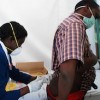
Hope for Expanded Protection Against TB
Despite the availability of a vaccine, 1.3 million people worldwide died from tuberculosis (TB) in 2008, according to the World Health Organisation. Most of them lived in Africa and Southeast Asia.SOUTHERN AFRICA: Ignoring Patriarchy, Female Politicians Rise
In Malawi, if both a girl and boy are born into a poor family, it will naturally be the boy in whom all the financial resources are invested.
Handheld Computers Speed Up Burundi Food Aid
Aid organisations say a small handheld computer will allow them to more rapidly assess where food aid is needed most urgently. As a result, fewer Burundians will suffer hunger this year.
MALAWI: Richer Soil First Defence Against Climate Change
Malawi has directed local government officials to develop local response strategies to the effects of climate change.WATER-ZAMBIA: Vanished Funds Mean Fields Stay Dry
The M’cheleka Irrigation Scheme was meant to answer water and food security challenges in the Chadiza district of Zambia's Eastern Province. But ten years after the completion of the dam wall, only six families are benefiting from the water.
Q&A: “Gender Not a Limiting Factor in Politics”
In the rural KwaZulu Natal town of Jozini, Thembeni Madlopha-Mthethwa has been the town’s mayor for a decade. And in contrast to the rest of the country, which has experienced numerous civil strikes and service delivery complaints, Jozini has rarely had any such problems.DEVELOPMENT: Fate of Millions Hangs on Global Fund Pledges
Sibongile Mavimbela has been living with HIV for the past 12 years; she has been on antiretrovirals for the past seven. But the mother of two fears the supply of free ARVs could dry up in the near future if contributions to the Global Fund on HIV/AIDS, TB and Malaria fall short of the $20 billion needed to meet development targets.DR CONGO: Mapping Road Towards Ending Impunity
Rights defenders in the Democratic Republic of Congo are encouraged by the publication of a report detailing grave violations of human rights in the DRC. The report, covering more than 600 incidents in the ten years between March 1993 and June 2003, has drawn criticism from several governments in the region.
ECONOMY: Electrifying African Interest in Renewable Energy
Various countries in East Africa are making gradual progress in moving from a solely carbon-based electricity network to a cleaner power grid.
WEST AFRICA: Black-Eyed Peas Key to Economic Development
The black-eyed pea, commonly known as the cowpea, is the new kid on the block when it comes to improving the welfare of women and their families in West Africa, researchers say.
SOUTH AFRICA: Female Entrepreneurs Forge Their Own Path
At dawn, Fatima Jardine-Millard straps a massive, German-engineered tank to her back and a tray of pastries to her waist, and prepares to cater to groggy motorists immobilised at a traffic light in Johannesburg's chaotic daily commute.AGRICULTURE-UGANDA: Pee Solves a Problem
Faced with a severe decline in soil fertility and low crop production as a result, Ugandan farmers have turned to human urine to improve the richness of their soil.AFRICA: Customary Law Bars Women’s Access to Land
Regina Namukasa has been twice dispossessed – first when her husband died and his clan left her out when dividing up his estate, and again when she was denied a share in her father's land. But this time she's fighting back.Retraining Rwanda’s Traditional Birth Attendants
Two years spent training traditional birth attendants in remote rural areas has allowed Rwanda to reduce the country's maternal mortality rate, says the country's health department.ZIMBABWE: Neonatal Circumcision Yet to Gain Ground
Judith Sikhosana recently gave birth to a healthy baby boy. And while she has strictly followed the advice of health workers about the post-natal care for her child, there is one thing she is yet to understand: why nurses want her baby to be circumcised.
AFRICA: Can Research Strike a Balance Between Food and Fuel Crops?
While researchers and farmers are still divided on the benefits of growing crops for biofuel production as Africa grapples with food security, Senegal is steadily working to balance the growing demands for food and biofuels.
AFRICA: In Search of Lasting Farming Solutions to Climate Change
In the semi-arid Laikipia district of Kenya’s Rift Valley province, research scientist Sarah Ogalleh Ayeri travels from one village to another, documenting methods used by peasant farmers as they attempt to adapt to changing climatic conditions.
Government Under Fire As Cholera Epidemic Rages
This death toll from a cholera epidemic in Cameroon's North and Far North provinces stands at 420, according to public health minister André Mama Fouda. The outbreak of the waterborne disease throws an unwelcome spotlight on inadequate access to clean water and sanitation, particularly in the country’s rural north.Uganda Failing to Control TB
John Mahanga sits on his hospital bed, coughing persistently. The 42-year-old has been suffering from tuberculosis (TB) for the past three years. He has been in treatment for it, but repeatedly stopped taking medication when he felt better. Doctors have now diagnosed him with multi-drug resistant (MDR) TB.
ECONOMY: Growing Obesity in Africa Bad for Worker Productivity
Obesity is no longer a problem confined to wealthy nations. In their developing counterparts in Africa, an increasing number of people can be categorised as obese. According to researchers this trend could be detrimental to countries’ already fragile economies.Progress in Prevention of Mother-to-Child Transmission of HIV
The number of pregnant women being tested for HIV and accessing treatment in Sub-Saharan Africa has shown significant progress – indicating that virtual elimination of mother-to-child transmission of the virus by 2015 is possible.« Previous Page — Next Page »


The Week with IPS

NEXT STOP - SDGs
Tracking global progress towards a sustainable world
Tracking global progress towards a sustainable world
