Languages
Friday, November 20, 2026



News and Views from the Global South
Africa
UGANDA: HIV-positive Teens Infecting Other Teens
HIV-positive Phiona* (19) had unprotected sex with her best friend and she prays that she did not infect him with the virus. She knew she should not have let it happen but Phiona was too scared to tell him her status, and the teenagers did not have access to condoms.HEALTH-KENYA: Agency Unaware of Anti-Counterfeit Law Suspension
The agency tasked with implementing the Anti-Counterfeit Act of 2008 in Kenya is unaware of the Constitutional Court’s suspension of the law’s application to medicines. Moreover, a large multinational pharmaceutical company has offered to assist the agency in implementing the law with regards to medicines despite the court decision.ZAMBIA: Need to Mainstream Gender Equality into all Policies
Despite the adoption almost a decade ago of a national gender policy that aims to ensure fair participation of men and women in the development process, most of the Zambian government’s policies still remain gender blind, say civil society and women's rights associations.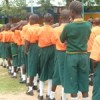
UGANDA: Too Young to Know, Yet Too Young to Die
Thirteen-year-old Jacinta Okello and her fellow primary school classmates call it "doing bad manners". But when you ask her what she knows about sex, she breaks into a shy smile, looks to her feet and giggles.Doubts Over Zimbabwe Diamonds
Three days of tense deliberations by members of the Kimberley Process have failed to reach consensus on whether diamonds from Zimbabwe's Marange fields should be certified as conflict-free. Zimbabwe has already announced that it intends to resume exports of the precious stones immediately.ZIMBABWE: ‘We Too Want to be Wealthy’
Saddled with debts of more than $7 billion, Zimbabwe is anxious to resume diamond exports, suspended in May amidst international condemnation of alleged human rights violations in the Marange diamond fields. But the treatment of people living in the fields themselves suggests the country's record on rights bears further examination.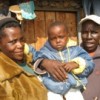
KENYA: Rural Parents Prevent HIV Transmission to their Children
When Samuel Mwangi’s one-year-old HIV-positive son died five years ago, he thought the death of his child also meant the death of his family’s legacy. "I wept. And to the bottom of my heart, I knew that that was the end of my generation," said HIV-positive Mwangi.
WORLD CUP: United For Africa – Making it Last
Perhaps Africa's World Cup began in earnest on Jun. 16, when a despondent green and gold-clad crowd began leaving the Loftus Versfeld stadium even before the end of South Africa's heavy defeat to Uruguay. Migrant African fans felt the first touch of cold post-tournament reality.DEVELOPMENT-CONGO: Deforestation Threatens South With Famine
The trees are falling in Pool, and there are plenty of people to hear the sound. In a painful irony, the end of armed conflict in 2003, has signaled the wholesale devastation of forests in this southern region of the Republic of Congo.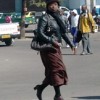
ZIMBABWE: A Chance for Women’s Voices to be Heard?
As Zimbabwe embarks on writing a new constitution with the countrywide collection of public submissions starting on Jun. 23, not all women are upbeat about the process.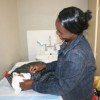
SWAZILAND: Focus on Infants in HIV Prevention
A proud mother, Nonhlanhla Mabuza cuddles her one-day-old baby boy, at the circumcision clinic of Raleigh Fitkin Memorial (RFM) Hospital. A day after delivering her second son, Thabiso Dlamini, the 20-year-old mother is not only beaming because she has just successfully delivered her tiny little tot – her bundle of joy has just undergone male circumcision.
ANGOLA: Changing More than Policies
She may have been little-known in political circles until now, but by putting herself forward as the first female independent presidential candidate, Luisete Macedo Araújo (50) has thrust herself into the limelight.
DR CONGO: Pursuing Rebels at What Price
Operation Amani Leo, launched jointly by MONUC (the United Nations Mission in Congo) and FARDC (the Congolese army) in January to regain control of mining territories in the eastern provinces of North and South Kivu from rebels, while ensuring security for the local population has been extended to September. But Congolese women are arguing for changes in the conduct of military operations.
Risking Life and Limb for Football in Somalia
"Some people think football is a matter of life and death. I assure you, it's much more serious than that," former Liverpool manager Bill Shankly once said. Uncomfortably close to a bald statement of fact for fans of the beautiful game in Somalia, who risk their lives to watch the World Cup unfolding in South Africa.Artists Refuse Silence on Zimbabwe Atrocities
In a bold attempt to stoke public debate on national healing, an art exhibition is challenging the government to publicly acknowledge one of the most hideous episodes in Zimbabwe's history.MALAWI: Changing the Face of Politics
The face of politics is changing in the southern African country of Malawi. And civil society is making plans to ensure that it changes even more.
AFRICA: Renewing the Promise of Education for All
The World Cup is wreaking havoc with a key millennium development goal in South Africa: as the football tournament hit its stride, not a single child across the nation attended school.KENYA: Pharmaceutical Companies Pushing Anti-Counterfeit Law
Much of the initiative behind the adoption of Kenya’s controversial anti-counterfeit law came from multinational pharmaceutical companies using their membership of a local manufacturers’ association to push the legislation.
Q&A: ‘True African Leaders Have Nothing to Fear From ICC’
As the first Review Conference of the Rome Statute that established the International Criminal Court takes stock of the ICC's achievements and considers amendments to strengthen the pursuit of justice around the world, the first African woman to win the Nobel Peace Prize is one of its strongest defenders.
ZIMBABWE: Learning to Survive the Mean Streets
Twelve-year-old Tapuwa Bakare* darts through the traffic as irate motorists hoot at him and the tyres of speeding vehicles screech to a halt to avoid hitting him. Miraculously, the box filled with sweets and chewing gum that he carries does not fall from his grasp.
Kenyan Women Look to the Hague for Justice
Hanging from a rafter in Jane Wanjiku’s home is a calendar bearing the image of the International Criminal Court's chief prosecutor, Luis Moreno-Ocampo. It's an illustration of how the ICC has seized the imagination of ill-treated people around the world.« Previous Page — Next Page »


The Week with IPS

NEXT STOP - SDGs
Tracking global progress towards a sustainable world
Tracking global progress towards a sustainable world
