Languages
Sunday, November 15, 2026



News and Views from the Global South
Asia-Pacific

CLIMATE CHANGE: Nepali Women Sow a Secure Future
Learning a lesson from crop failures attributed to climate change, Nepal’s women farmers are discarding imported hybrid seeds and husbanding hardier local varieties in cooperative seed banks.INDIA: Campuses Lead Gay Rights Struggle
It was with some trepidation that Nivvedan, a student at the prestigious Indian Institute of Technology (IIT) - Bombay, helped launch ‘Saathi’ (Companion), catering to the needs of people with different sexual orientations on campus.SRI LANKA: Less Guns Mean More Food
As paddy cultivation revives in Sri Lanka’s former war zones, prospects for the island’s food security have improved dramatically.JAPAN: Fukushima Blows Lid Off Exploited Labour
The Fukushima disaster has thrown up the first opportunity in decades to bring justice to thousands of unskilled workers who risk radioactive contamination to keep Japan’s nuclear power plants running.
NEPAL: Fasting Against Corruption Spreads
Inspired by Indian socialist leader Anna Hazare’s celebrated public fast against corruption in the Indian capital of New Delhi, starvation protests have sprung up in Nepal to press for a timely new constitution.
INDIA: Grave Issues Trouble Kashmiris
Rights activists say that thousands of unmarked graves newly uncovered along the Line of Control (LoC) in Indian Kashmir may hold the bodies of ‘disappeared’ people rather than those of militants killed while trying to cross the fortified de facto border between India and Pakistan.AUSTRALIA: Refugee Centres Breed Mental Illness
Concern is growing for the mental health of thousands of people locked up indefinitely in this country’s immigration detention system.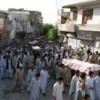
PAKISTAN: For Shia Hazaras, it’s Funeral After Funeral
Rukhsana Ahmed finds comfort visiting her husband Ahmed Ali Najfi’s grave. "I feel at peace there," says the 60-year-old widow, mother of four and member of the Shia Hazara community.
INDIA: Hunger Shows its Power
If India’s powerful central government that rules over the destinies of 1.2 billion people quails before a slight 74-year-old man, it is because he is armed with a weapon that has rarely failed in this country – extreme renunciation through a fast-unto-death.PAKISTAN: Democracy Follows Drones
Along with the devastating drone strikes the United States-led ‘war on terror’ in Afghanistan is bringing changes to punitive laws imposed by British colonialism on Pakistan’s Pashtun areas more than a century ago.INDIA: Civil Society Shows Its Muscle
In his Independence Day address to the nation on Aug. 15 Indian Prime Minister Manmohan Singh vowed to fight corruption, but nationwide agitations since then demanding an effective ombudsman to check graft showed an unconvinced public.THAILAND: Yingluck Will Need Luck and Pluck
As she stepped into her role as an ingénue on the macho stage of Thai politics, the backers of Yingluck Shinawatra, the country’s first woman prime minister, had hoped she would enjoy a honeymoon period.JAPAN: Fukushima Gives Renewable Energy a Chance
After decades of not bothering to switch off the lights in unoccupied rooms in their Tokyo home, Masayoshi Sakurai and his children now meticulously make sure they do.Sri Lanka Ducks International Probe
Although the Sri Lankan government has evaded calls for an international probe into alleged excesses while militarily defeating Tamil separatism in 2009, it may yet be called to account at the September session of the United Nations Human Rights Council (UNHRC).ASIA: Mekong Dolphins Close to Extinction
The World Wildlife Federation (WWF) has called for urgent action to prevent the extinction of freshwater dolphins in the Mekong River, including the creation of special conservation zones.Rallies Grow Across India for Jailed Activist
Huge protests have taken place across India in support of a jailed anti-corruption campaigner who has been demanding a tough anti-graft law.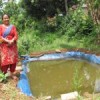
NEPAL: Adapting to Climate Change Can be Simple
Saraswoti Bhetwal’s terraced fields stand out in the sub-Himalayan Lamdihi village as a mosaic of shapes and colours formed by beans, bitter gourd, chilly, tomato, lady’s fingers and other crops.
PAKISTAN: Violence Killing the Poor
Taj Bibi’s eyes well up as she recalls the day her ten-year-old son was shot dead, a victim of the violence sweeping through the port city of Karachi since early July. "My three sons, the 12-year-old twins and Adnan, 10, went out to play cricket in the street after lunch. Around 4 pm, the twins came running to tell me that Adnan had been shot. By the time I got there he’d breathed his last," said Bibi, a Pashtun.JAPAN: Divorced Men Lose Children Along With Visas
Shahdul Huq, a Bangladeshi national living in Japan for more than 20 years, last saw his daughter almost three years ago when he lost his ‘spouse visa’ following divorce from his Japanese wife.PAKISTAN: Gem of a Plan Against Taliban
Mining gems and other valuable minerals may provide, the Pakistan government hopes, alternate careers to militancy in the restive Federally Administered Tribal Areas (FATA), bordering Afghanistan.THAILAND: The Green Cause Can Kill
In a country where the going rate for a contract killing is around Thai baht 15,000 (500 dollars), the price paid to eliminate Thongnak Sawekchinda, an environmental activist, has caught the police by surprise.« Previous Page — Next Page »


The Week with IPS

NEXT STOP - SDGs
Tracking global progress towards a sustainable world
Tracking global progress towards a sustainable world
