Languages
Wednesday, October 14, 2026



News and Views from the Global South
Asia-Pacific

Health, Nutrition & Heroes in Rural Afghanistan
The needs of Afghanistan’s children and families are immense. So are the efforts of those supporting them: teams of community workers made up of family members, teachers in community-based schools, vaccinators, and health workers working around the clock to bring life-saving services in the face of an unfolding humanitarian catastrophe.
Blue Tourism Spurs Development Goals in Bangladesh
Blue tourism, widely referred to as Coastal or Maritime tourism, is a distinct idea from traditional tourism, which capitalizes on a country's ocean, sea, or coastal region.
Transgender People Face Growing Violence, Discrimination in Pakistan
“The problems transgender people face start from their homes as their parents, especially fathers and brothers, look them down upon and disrespect them,” says 20-year-old Pari Gul.
Lawmakers’ Vital Roles in Ensuring Dignity for Aging Populations
Countries with falling population growth face twin dilemmas: Ensuring their aging population live healthy and fulfilling lives and removing barriers to parenthood. This was the focus of a recent workshop in Thailand reviewing the ICPD30 process and preparation for the Summit for the Future slated for next year (2024).
Seizing the Moment for a More Resilient Asia & the Pacific
The world faces a disaster emergency, yet nowhere is the threat more immediate than in Asia and the Pacific. Ours is a region where climate change-induced disasters are becoming more frequent and intense. Since 1970, two million people have lost their lives to disasters.
Drought-Displaced Afghan Peasants Yearn for Their Rural Life
Baba Jan, 60, a farmer in Badghis Province in Afghanistan has been forced to leave his home, not because of the war but due to the worst drought he has ever experienced. It is the second time this year he has been forced to leave his cherished home and life in the rural area for capital city, Kabul.
Is the Philippines a Beneficiary of US-Chinese Confrontation?
When President Ferdinand Marcos was running an authoritarian regime in the Philippines (1965-1986), he was once asked about rumors of rigged elections in his country. “I promised I will give you the right to vote,” he said, according to a joke circulating at that time, “But I did not say anything about counting those votes”
Vaccination Is the Best Bet Against Drug-Resistant Superbugs — Experts
The first thing you notice about eight-month-old Manahil Zeeshan is how tiny she looks on the adult-size hospital bed at the government-run Sindh Institute of Child Health and Neonatology (SICHN) in Korangi, a neighbourhood in Karachi.
Quest for Safe Water in One of India’s Most Isolated Villages
Simita Devi spent over ten days in a government-run hospital a year ago anxiously watching her critically ill nine-year-old daughter, Gudiya, who was diagnosed with typhoid. Gudiya was so sick she even went into a coma for a day. Medical staff attending to the child said she contracted the disease from drinking contaminated water.
Huge Increase in Transnational Crime in Asia’s ‘Golden Triangle’
How come that in a world where technology is -or is about to be- able to detect an ant in a jungle, the traffickers of death continue to carry out their lucrative criminal activities everywhere and in all fields, from weapons to prostitution, enslavement and drugs, to deadly fake medicines, through oil, gas and poisoned food.
Rohingya Camps Become Dengue Hotspots in Bangladesh
With the monsoon in Bangladesh, Rohingya refugee camps in Cox's Bazar have emerged as a dengue hotspot, with the mosquito-borne disease continuing to spread among the stateless refugees. "A total of 1,066 dengue cases were reported in highly cramped refugee camps in Cox's Bazar up to May 23 this year, while the case tally was only 426 among the local community there," Dr Nazmul Islam, Director of Disease Control and Line of the Directorate General of Health Services (DGHS), said.
Myanmar: Military Junta Gets a Free Pass
The violence keeps coming in Myanmar, under military rule since February 2021. The junta stands accused of war crimes and crimes against humanity, with evidence of systematic use of killings, rape, torture and other gross human rights violations in its attempt to suppress forces demanding a return to democracy.
Addressing the Scandal of Invisibility in Asia & the Pacific
Each year, the births of 64 million children under the age of five and deaths of 8.4 million people are invisible to governments in Asia and the Pacific. Most countries in the region are yet to achieve universal civil registration, leaving many people without a legal identity and, as a result, invisible to the State.
Massive Fish Mortality Strikes Kashmir’s Lake, Threatens Livelihoods
Abdul Lateef Dar, a 45-year-old man living on the outskirts of Kashmir's renowned Dal Lake, relies on the lake's fish for food and income.
Food Insecurity Fears as Pakistan Faces Cyclone, Monsoon Season
A warning by the UN that Pakistan may face acute food insecurity in the coming months should serve as a wake-up call for the government to focus on the flood-hit areas where the people still live without shelter, medication, and proper food, analysts say.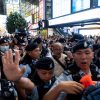
Hong Kong’s Lights of Freedom Extinguished
Nothing was more predictable than repression. Merely for holding candles and flowers, people were taken away by Hong Kong’s police. The occasion was the anniversary of the Tiananmen Square Massacre, 4 June 1989. Hong Kong was until recently home to mass annual vigils where thousands gathered to keep alive the memory of that day. But that’s all gone now in the crackdown that followed large-scale protests for democracy that erupted in 2019.
Climate Disasters Have Major Consequences for Informal Economies
In the Pacific Islands and many developing and emerging countries worldwide, the informal economy far outsizes the formal one, playing a vital role in the survival of urban and rural households and absorbing expanding working-age populations.
Sri Lanka-Japan: Return of Old Friends
On May 24, Sri Lanka President Ranil Wickremesinghe arrived on a three-day official visit to Japan, his second visit to the country, having attended the State funeral of former prime minister Shinzo Abe last September.
A Global Plastics Treaty Can End the Age of Plastic
Climate-crisis-fuelled storms have hit New Zealand hard this year. In January, we suffered unprecedented extreme weather and flooding, followed by Cyclone Gabrielle in February - the worst storm in 55 years—which triggered a national state of emergency. In total, we had 5.5 times more rain than Auckland summers typically receive.
Thailand’s Opposition Prepares for Office Despite Military Resistance
Thailand is heading to the edge of the precipice as conservative and military forces could possibly refuse to recognise the will of the people, as expressed in one of the country's biggest election upsets.
How Farmer Producer Organisations Benefit Small Scale Farmers in India
Until a decade ago, marginal farmers Gangotri Chandrol and Sunitabai lacked livelihood options in the post-monsoon season.« Previous Page — Next Page »





The Week with IPS

NEXT STOP - SDGs
Tracking global progress towards a sustainable world
Tracking global progress towards a sustainable world
