Languages
Wednesday, October 7, 2026



News and Views from the Global South
Europe

Britain Must Fix Its Anti-Muslim Sentiment Problem
In 2015, When Rabina Khan was running as an independent candidate in the Tower Hamlets’ mayoral elections in London, a male voter asked her what colour her hair was under her veil. Rabina replied and said, it was pink. This small interaction is what got Rabina inspired to write her book, My Hair is Pink Under This Veil.
Letter from Rome – Italy at the Crossroads
Italy, as other countries, has been struggling to balance the health and economic challenges posed by COVID-19. Controlling the spread of the virus implied restrictions on economic activity, on school and college attendance, and on personal movement. It also had to deal with the economic and social implications of a fall of almost 10% in GDP. This has been hard for a country which, even before the pandemic, was one of the slowest growing economies in Europe, with unemployment, especially among young people in the South of the country, at alarming levels.
Pakistanis in Italy: Against All Odds
We met 22-year old Ali B. in a park in Rome’s city center on a rather cold and windy April evening. We could not share a meal, or even a coffee, as all restaurants were shut due to continuing COVID-19 restrictions. He had travelled down from Cerveteri (a small town about 50km north of Rome) where he works for an old couple. They provide boarding and lodging as well as a decent salary and social security benefits. In return, he has to cook for them and look after the kitchen.
Brexit Shows Why Traders Need Reliable Information But Many Are Ahead of the Game
It’s now almost three months since the United Kingdom entered into a new trade agreement with the European Union. During that time, we’ve seen traders struggle to get to grips with the new arrangements. From lorry drivers having their sandwiches confiscated by Dutch customs officers to estimates of additional paperwork costs of $7 billion a year, and pig breeders watching their meat rot on the quayside for want of the correct forms.
Coup in Spain, Yesterday and Today
Forty years ago, on February 23, 1981 (later known as 23-F), in the middle of the afternoon in a cold Madrid atmosphere, the most serious attack against the reborn Spanish democracy took place. An armed contingent of more than 200 Civil Guard agents invaded the Congress of Deputies and threatened the dissolution of the government and the establishment of a dictatorship.
Elections in Catalonia: What Now?
The recent result of the elections for the Parliament of Catalonia has presented a mixture of repetition of certain previous aspects and some spectacular novelties. But the everlasting dimension of any parliamentary confrontation of the proportional variant remains unscathed.
French Editor Pays Tribute to Civil Rights Icon Angela Davis
Renowned activist and intellectual Angela Davis turned 77 years old on Jan. 26, marking more than five decades of her fight against systemic racism and inequality.
The Armored Divisions of the European Union
An anecdote tells, never sufficiently confirmed, that in the hardest moments of the Second World War when Stalin was dictating his orders of battle to his subordinates, he was told that perhaps it would be advisable to consult with the Pope. The Soviet dictator replied: "And how many armored divisions does the Pope have?"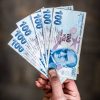
Crisis alla Turca II – From Currency Crisis to Debt Crisis?
The meltdown of the Turkish currency that began in 2018 has continued unabated with the decline reaching unprecedented proportions in recent days. The causes of that turmoil including underlying financial fragilities and political shocks were discussed in a previous piece by this author. Since then the economy has become even more vulnerable in these respects.
‘The Sahel – a Microcosm of Cascading Global Risks Converging in One Region’
The European Commission this week pledged $27.8 million in humanitarian support to the Sahel region as floods and the coronavirus pandemic exacerbate the stability in a region deeply in conflict. While the figure is less than 2 percent of the $2.4 billion that the United Nations has appealed for, Amnesty International researcher Ousmane Diallo told IPS that despite past donations from international development partners to Sahelian countries, the situation hasn’t improved over the years.
Energy Transition and Post-Covid Recovery, a Challenge for Latin America
The way forward for energy transition and its link to an economic recovery after the depression caused by the covid-19 pandemic is focusing attention in Latin America and Europe, according to the 2nd Madrid Energy Conference (MEC), which concluded this Friday 2.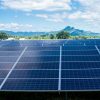
Intercontinental Energy Forum to Discuss Post-Covid Challenges
The economic recovery after the covid-19 pandemic, renewable energy, the gas situation, regulations and investment; mobility and transport, as well as new technologies and the progress of the Paris Agreement will be discussed at the Madrid Energy Conference from 28 September to 2 October.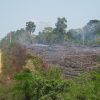
Fight Fire with Trade: How Europe Can Help Save the Amazon
The EU is thinking about agreeing to a €4 billion trade deal with Brazil, Argentina, Uruguay and Paraguay (known as the Mercosur bloc). In our new academic research, myself and 21 international co-authors looked at the details of this deal so you don’t have to. What we found wasn’t pretty.
Not Guilty Verdict in Kuciak Killing – a Chilling Message for Journalists
A Slovak businessman with alleged links to organised crime has been found not guilty of ordering the murder of journalist Jan Kuciak in a ruling that has left press freedom campaigners and politicians shocked.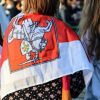
How to Help Belarus
President Aliaksandr Lukashenka’s government is teetering after he declared victory in a rigged 9 August vote. Protests have exploded. Moscow, Brussels and other stakeholders should avoid transforming the Belarus crisis into a European one, cooperate to warn against repression and insist on new, fair elections.
More Was Lost in Lisbon
The Barcelona Football Club disaster in the quarterfinals of the Champions League, which was once more appropriately called the European Cup, is indeed a cataclysmic event, unprecedented, with predicted drastic and hurtful consequences.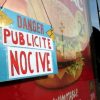
The Growing Global Movement to End Outdoor Advertising
“With advertisements removed in Grenoble you can see the city’s beauty and the mountains beyond. Adverts create obstacles. Without them you can breathe,” explains Khaled Gaiji, national mobilisation coordinator of the French anti-advertising organisation Résistance à l’Agression Publicitaire (Resistance to Advertising Aggression, or RAP). “Advertising is like an iceberg: the largest impact is below the surface. Adverts colonise our imagination.”
Make a Fool of Yourself in the Third Act
Long ago, I was reviewing the offer of readings on the Internet, as a break from the search for academic sources for one of those articles with which to comply with professional rules, impress colleagues and students, and continue climbing steps in the university.
The Good, the Bad and the Ugly
In the cinematic context of the death of the Italian and universal composer, Ennio Morricone, author of the background music of more than four hundred films, as an indirect tribute, Europe took a solid step.
Why Rwanda is a Great Green Growth Investment
In its effort to accelerate Rwanda's green growth development initiative, its local businesses encouraged their Italian counterparts to invest in the East Africa region.
HIV Services Take a Backseat to COVID-19 in Russia
In Russia, which has one of the world’s worst HIV/AIDS epidemics, an already fragile healthcare system is buckling under the pressure of dealing with COVID-19.« Previous Page — Next Page »





The Week with IPS

NEXT STOP - SDGs
Tracking global progress towards a sustainable world
Tracking global progress towards a sustainable world
