Languages
Saturday, November 7, 2026



News and Views from the Global South
Global

What Role Can South-South Cooperation Play in Post COVID-19 Recovery?
Five years ago, at the 70th anniversary of the foundation of the United Nations, world leaders adopted the ambitious Agenda 2030 for Sustainable Development. The Agenda was to be accomplished through the achievement of 17 Sustainable Development Goals by 2030: eradicating poverty, ending hunger, addressing climate change – just to name a few.
Demographic Impact of Coronavirus Pandemic: An Overview
The demographic impact of the coronavirus one year after being declared a pandemic on 11 March 2020 has been enormous. The picture that emerges is one of significant consequences on the levels and trends of the key components of demographic change: mortality, fertility and migration.
International Women’s Day, 2021
To Aspire and Achieve- Women’s Leadership in the 21st Century
As a member of the second wave of the feminist movement who were also the first generation of women to receive positions of leadership, I recall the prejudices and biases that framed our experience. Women rarely were put in charge of “hard” core issues, only what were termed “soft” ones in keeping with their role as nurturer and carer. When they were present in the Board room, they were often silent. When they spoke, they were inevitably spoken over. It was the exceptional woman who could navigate the corridors of corporate culture, male expectations, and a workplace that was unsympathetic to her dual burden.

International Women’s Day, 2021
Feminist Leadership at the United Nations — Gender Equality Within & Without
When the United Nations was founded in 1945, the principle of equality for all – regardless of sex, race, language, or religion - was enshrined in the organization's Charter.

Neoliberal Finance Undermines Poor Countries’ Recovery
After being undermined by decades of financial liberalisation, developing countries now are not only victims of vaccine imperialism, but also cannot count on much financial support as their COVID-19 recessions drag on due to global vaccine apartheid.
End Inequality and Achieve Sustainable Development for All
Back in the 1990s, the discovery of antiretrovirals offered a ray of hope to save people’s lives from the HIV epidemic. Over this decade, people living with HIV benefited from the scientific advances and began to have longer, healthier and more productive lives. However, almost all the beneficiaries were from rich countries in the global north. As a result, about nine million people died by the year 2000 due to the inequality in accessing these life-saving medicines.
A Technology-based Parasol of Protection for Victims of Domestic Abuse
During the COVID19 lockdown, there has been an approximate 25% increase in domestic abuse, dubbed by the United Nations as the ‘pandemic within a pandemic’. While the home is perceived as a secure place, for domestic abuse victims battling the pandemic is equally and increasingly unsafe. A parasol of protection is needed to rehabilitate victims of abuse starting from detection, reaching out, providing help and support.
International Women’s Day, 2021
Gender Equality is our Captain for Sailing to a Green & Just Recovery
The climate crisis doesn’t stop for anyone or anything, not even the pandemic that has forced billions of us to radically overhaul our lives. And like the pandemic, climate change has no nationality, agenda or political affiliation.

Renewed, More Ambitious Targets of Paris Agreement Needed
Projected reductions in greenhouse gas emissions are falling "far short" of what is required to achieve the targets of the Paris Agreement.That is according to the United Nations Framework Convention on Climate Change (UNFCCC), which released its Nationally Determined Contributions (NDC’s) Scorecard today, Feb 26.

Money Laundering: the Darker Side of the World’s Offshore Financial System
A sign outside a laundry in New York city had a frivolously flippant slogan: “We launder dirty clothes, not dirty money.” And a 2019 movie titled “Laundromat,” based on a book ‘Secrecy World’ by Pulitzer Prize winning author Jake Bernstein, exposed the byzantine world of money laundering.
Energy Crisis: Tribal Behavior or Quality Decisions Based on Conscious Trade-Offs?
Crises, as the one we saw across the US and Mexico last week originated by Winter Storm Uri, provide ample material for reflection. This is particularly clear from a distant viewpoint and when benefitting from the fact of not being directly affected, as strong emotions and reactions that often bias our judgements are absent.
UN Peacebuilding Commission must Prioritise Protecting Youth Activists Facing Retaliation
The United Nations Peacebuilding Commission must prioritise the protection of youth activists who face retaliation from state and non-state actors, said UN Youth Envoy Jayathma Wickramanayake.
A Growing Shift in the Narrative about Climate Action
A keen awareness about the intersection of our ecosystem and the “accelerating destabilisation of the climate” is helping shift the narrative for climate action and can help us transition from being polluters to becoming protectors of the climate, said Marco Lambertini, Director General at the World Wide Fund for Nature.
The Global Insecurity of Climate Change
For Sudanese youth, climate change is synonymous with insecurity. “We are living in a continuous insecurity due to many factors that puts Sudan on top of the list when it comes to climate vulnerability,” said Nisreen Elsaim, Sudanese climate activist and chair of United Nations Secretary General's Youth Advisory Group on Climate Change.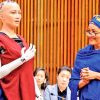
How Technology Can Promote Multilingualism & How it Cannot
Some of you may remember Sophia, the talking robot. In 2017 and 2018 she toured UN meetings and TV studios, wowing audiences with her thoughts on the future of technology and seemingly engaging in conversations with UN deputy chief, Amina Mohammed and British broadcaster, Piers Morgan.
Developing Countries Struggling To Cope With COVID-19
The ongoing COVID-19 pandemic is adversely impacting most developing countries disproportionately, especially the United Nations’ least developed countries (LDCs) and the World Bank’s low-income countries (LICs). Years of implementing neoliberal policy conditionalities and advice have made most developing countries much more vulnerable to the COVID-19 pandemic by undermining their health systems and fiscal capacities to respond adequately.
A Moral Obligation to Protect the Planet
Legends are the lodestars of history, the marriage of Sir Dorabji Tata with Meherbai on Valentine’s Day of 1898 among the most lyrical of them. Two years later, he gifted her the Jubilee Diamond, the sixth largest diamond in the world, twice as large as the Kohinoor.
Q&A: UN Environment Assembly Kicks Off With a Call to Make Peace with Nature
Its time for the world to radically change our ways if we are to make peace with the planet and create the environmental conditions so that all of humanity can thrive, delegates attending the Fifth Session of the United Nations Environment Assembly (UNEA-5) heard this morning.
UN Blueprint that Could Urgently Solve Earth’s Triple Climate Emergencies
“Our war on nature has left the planet broken. This is senseless and suicidal. The consequences of our recklessness are already apparent in human suffering, towering economic losses and the accelerating erosion of life on Earth,” António Guterres Secretary-General of the United Nations said.
Switzerland Buys itself Good Sustainability Scores at the Expense of Other Countries
According to the Sustainable Development Report 2020, Switzerland ranks at a shameful 163 of 165 in terms of so-called spillover effects. This means that Switzerland buys better sustainability scores in a number of areas, placing considerable burdens on other countries and the global environment.
The UN: From the Sublime to the Hilarious
The United Nations is an institution mired in politics focusing primarily on military conflicts, civil wars, economic sanctions, peacekeeping, plus sustainable economic development.« Previous Page — Next Page »





The Week with IPS

NEXT STOP - SDGs
Tracking global progress towards a sustainable world
Tracking global progress towards a sustainable world
