Languages
Sunday, November 22, 2026



News and Views from the Global South
Latin America & the Caribbean
Tension over Deadly Clash Between Peasants and Police in Paraguay
The death of 16 landless peasants and police officers in a clash in northeastern Paraguay drew attention once again to the long-standing problem of land ownership in the country, where 85 percent of all farmland is owned by just two percent of the population.
RIO+20: The Two Faces of BRICS Development Aid
The BRICS countries (Brazil, Russia, India, China and South Africa) face a key choice: to opt for "good" development aid, based on sustainable development, or for the "bad" old traditional model, which they criticised when they were its recipients.
Hoping To Save Millions, Antigua Turns to Backyard Gardening
As a boy, Hilson Baptiste remembers going to his neighbour's home and giving them a large slice of pumpkin grown in his family's backyard garden. In return, he would be given two fish for his family.
Learning from Argentina’s Formula to Improve Education
Argentina’s success in improving the quality of education in primary schools in low-income areas has awakened the interest of other countries in Latin America, which are keen on learning more about the experience and applying it themselves.
UN, People’s Summit Clash over Green Economy
U.N. Environment Programme Executive Director Achim Steiner believes that he and the Rio+20 People’s Summit agree that the global economic model has caused the current environmental destruction. But the discussion on what to replace it with turned into an acrid debate.Finetuning the Fight Against AIDS in Cuba
New attitudes are emerging among Cubans toward the AIDS epidemic, as HIV-positive people who are aware of its causes seek other ways to reduce infection rates in the country.
RIO+20: Developing Countries Accept Green Economy*
It’s not true that developing countries conditioned the inclusion of the green economy in the final document at Rio+20 on clearly defined provisions for financing, the head of the Venezuelan delegation, Claudia Salerno, told TerraViva.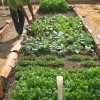
Cilantro Spices Up Coexistence with Drought in Brazil
Many grow lettuce, tomatoes, carrots, beets and other vegetables. But cilantro is ever-present in the gardens that are helping rural families weather the lengthy drought that is once again wracking Brazil’s impoverished Northeast.
People’s Summit Alive With the Sound of Voices
Swallowed up in the crowd in front of the spectacular Guanabara Bay, indigenous leader Apolinario from Brazil’s Amazon rainforest acted as an impromptu guide on the first day of the People's Summit in Rio de Janeiro.
Blood Flows in Solidarity in Argentina
Voluntary blood donations have risen markedly in the year ending Thursday Jun. 14 in Argentina, which hosted the World Blood Donor Day event for 2011. South Korea takes over for the coming year.
Science Mitigates Climate Uncertainties in Mexico City
Rising temperatures, water scarcity, loss of biodiversity, widespread respiratory ailments and urban heat islands are some of the climate impacts faced by the Mexican capital, one of the world’s biggest cities.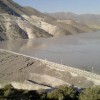
Mine Tailings Pollute a Chilean Town’s Water
People in the small town of Caimanes in northern Chile will suffer severe health problems if water pollution produced by a tailings dam built by the Los Pelambres mining company is not cleaned up, experts warn.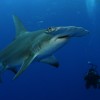
Honduras Committed to Protecting Marine Treasures
Honduras, in the heart of Central America, normally makes headlines for its political upheavals and violence. But sometimes there is good news, too. It is one of only a few countries with a shark sanctuary off its coasts, and it has just created a protected area around a reef of a coral species formerly on the brink of extinction.Private Interests Infiltrate G20 Summit
Business will push for the freeing up of trade in green goods and services, at the upcoming summit of heads of state of the Group of 20 (G20) industrialised and emerging countries in Mexico.
Health Warnings Loud and Clear on Cigarettes in Argentina
This month, Argentina will join the growing list of Latin American countries that compel tobacco companies to display health warnings about the dangers of smoking on cigarette packs, illustrated with graphic images.
Desert Opera Finds New Meanings
The imposing stronghold is almost transparent, barely noticeable, in the pitch-black desert. On top of the stands, with a thousand kilowatts at his finger’s tip, Avi Yona Bueno turns the night into lights, revealing sets, sites, and sounds. “I’m god,” smiles the lighting designer. “I’m god to my children.”Challenges for Non-Sexist Communication in Cuba
The influence of journalists and film directors who are sensitive to the issue of gender equality is becoming visible in the Cuban media, where intellectuals and activists are demanding more action to break with sexism.
MEXICO: Yearly Floods the New Reality for Rural Women
Year after year, women in rural areas of the southeastern Mexican state of Tabasco have to get ready for floods that threaten their homes, crops and livestock.
CENTRAL AMERICA Still a Long Way to Go in Fight Against Sexual Violence
Access to justice for women who suffer sexual violence in Central America and southern Mexico remains limited despite the high incidence of rape and other crimes, of which underage girls are the main victims, experts say.Chile’s Smog Still Deadly
"We are facing a very alarming situation, and solutions are urgently needed," said Cecilia Sepúlveda, the dean of the University of Chile medical school, after it was announced that 4,200 people a year in this country die from causes directly attributable to smog and other kinds of pollution.CARIBBEAN: Gay Rights Slowly Coming Out of the Closet
Over the past six months, governments in two influential Caribbean trade bloc member states – Jamaica and Guyana - have floated political test balloons on the question of whether colonial-era laws criminalising homosexuality should be amended in keeping with trends in most Western states.« Previous Page — Next Page »


The Week with IPS

NEXT STOP - SDGs
Tracking global progress towards a sustainable world
Tracking global progress towards a sustainable world

