Languages
Sunday, November 22, 2026



News and Views from the Global South
Latin America & the Caribbean

Mexico’s Spiral of Violence Causes Spike in PTSD
Since the forced disappearance of his son Jethro in May 2011, Héctor Sánchez has found an outlet for his grief in activism. So far he has turned down psychological support offered by the Mexican Attorney-General's Office and human rights organisations.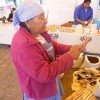
MEXICO Farmers Use Traditional Knowledge to Deal with Climate Change
Small farmers in Mexico, who receive little institutional support, are drawing on their traditional knowledge to deal with and adapt to climate change, experts say.
Billions of Brazilian Health Dollars Going Up in Smoke
Brazil spends some 10 billion dollars a year on health care for smokers – more than three times the tax revenue from the tobacco industry in this country, which is the world's top exporter and second producer of tobacco.
Samoan Breadfruit Makes a Splash in the Caribbean
Can a single species of tree significantly reduce hunger, unemployment and deforestation in the tropics? Researchers and scientists behind a surge in breadfruit activity think so.
For Dominica, Adaptation Best Option to Combat Climate Change
It has been dubbed the "Nature Isle" of the Caribbean, its craggy and dense rain forests, usually covered with fog, bearing testament to how cool temperatures can be here.
Brazilian Street Stars Dance and Shine in Spain
Arrayed in colourful garments they have made themselves, six teenagers who used to be street kids in Fortaleza, in northeast Brazil, visited this southern Spanish city to recount their life experiences and awaken solidarity.
Distribution of Laptops Expands in Latin America’s Classrooms
In Latin America, the distribution of laptops in public schools, an effort that has enjoyed success in countries like Argentina, Uruguay and Venezuela, is being studied by the governments of other nations interested in learning from their experience about the challenges that can be expected.
EL SALVADOR Women Fight Blows from Climate Change with Sewing Machines and Eggs
Amanda Menjívar is moved by the sight of the 16 sewing machines donated to help a group of local women set up a sewing centre to get over the devastating effects of the disaster caused by Hurricane Ida in the Salvadoran town of Verapaz.
Argentina’s Desaparecidos – the Epilogue
The identification of the remains of victims of forced disappearance of Argentina’s 1976-1983 military dictatorship – whose bodies were buried in secret graves or thrown into the sea - is moving forward, with periodic findings that have a strong impact on the families and on society as a whole.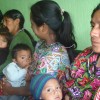
Midwives Play Key Social Role in Guatemala
"Midwives in Guatemala attend to women during pregnancy, the birth and the post-partum period. They give the women warmth and support, because they speak the same language and belong to the same culture," said Silvia Xinico with the Network of Organisations of Indigenous Women for Reproductive Health.Central America and the EU – An Asymmetric Agreement
The poverty-stricken countries of Central America will face major challenges when the Association Agreement to be signed in late June with the European Union, including commitments on trade, political dialogue and cooperation, comes into effect.
Brazil Closes Symbol of Environmental Degradation, Ahead of Rio+20
As Rio de Janeiro prepares to host the United Nations Conference on Sustainable Development, which will discuss the green economy, the Brazilian city has put an end to one of its worst environmental sins: the enormous Jardim Gramacho garbage dump on Guanabara Bay.Trade Unionists Denounce Persecution in El Salvador
Persecution of trade unionists remains a problem in El Salvador, in spite of the fact that the country is governed by a left-wing party that advocates labour rights, union leaders say.Deinstitutionalisation of Mental Health Patients in Argentina Not Enough
A new approach to mental health care is slowly making headway in Argentina, against heavy resistance. Based on short-term hospitalisation, fewer psychiatric hospitals, and more services to strengthen the social integration of patients, it is aimed at eradicating inhumane treatment of the mentally ill.
Dam Company in Chile Presses Gov’t for Supportive Policies
Colbún, the electricity generating company that co-owns HidroAysén and its multi-dam project in southern Chile, has recommended suspending the environmental impact assessment for power transmission lines that would connect the hydropower complex to the country's central grid, until the right conditions are in place.Battle Rages to Stretch the Legal Concept of Family in Nicaragua
A bill under discussion in the Nicaraguan parliament has unleashed a nationwide debate on the concept of family.MLK Centre: Building Social Networks in Cuba for 25 Years
There was little familiarity with community networks in Cuba until Apr. 25, 1987, when the Dr. Martin Luther King Jr. Memorial Centre (CMMLK) was founded. Today, this ecumenical Christian organisation links up local initiatives with others in the Americas.
Brazilian Indigenous Community Seeks Survival Through Carbon Credits
Less than 45 years ago, the Paiter-Suruí, an indigenous people living deep inside the Amazon rainforest in Brazil, had never been in contact with the outside world. Today they hope to ensure their survival through the complex mechanisms of the carbon market.
Abrupt Shift from Drought to Flooding in Central Cuba
The sudden shift from drought to heavy rainfall that caused severe flooding in central Cuba drove home to the authorities the need to redesign preparedness and prevention plans for climate-related emergencies.
Barbados Begins New Drive to Bolster Local Agriculture
Mere weeks ago Arthur Smith, who has been farming here for more than 20 years, was dangling thousands of carrots in front of local consumers, but there were no buyers to be had.
Elders in Peruvian Andes Help Interpret Climate Changes
A unique response to the challenge of global warming is happening in rural areas of Peru, where a network of indigenous elders is working out how to adjust weather forecasts in the light of climate change, while taking measures to safeguard their crops.« Previous Page — Next Page »


The Week with IPS

NEXT STOP - SDGs
Tracking global progress towards a sustainable world
Tracking global progress towards a sustainable world

