Languages
Sunday, November 22, 2026



News and Views from the Global South
Latin America & the Caribbean
ECUADOR: President Wins Defamation Suit Against Newspaper Execs
President Rafael Correa of Ecuador has won a libel suit against the newspaper El Universo over an op-ed column that referred to him as the "Dictator" and accused him of committing "crimes against humanity."BRAZIL: Nuclear Subs to Defend Oil, Project Global Power
Plans for a Brazilian nuclear submarine that had been postponed since the 1970s are beginning to materialise, as the nuclear-propelled sub is regarded as a strategic necessity to guard Brazil's deep water oil reserves, and to project global power.
MEXICO: Central American Migrants Preyed on By Organised Crime, Police
Miguel, a 32-year-old Nicaraguan, and his wife have spent several days at a shelter for migrants in the southwest Mexican state of Oaxaca, where they fled after being robbed, extorted and threatened by corrupt municipal police and youth gang members.
Q&A: CAPTCHA Creator Would Like to Tap Crowdsourcing to Fight Crime
If you use the internet, you will have come across CAPTCHA, a test to determine whether the computer user is human or a machine. What you may not know is that one of its inventors, mathematician Luis von Ahn, comes from one of the poorest countries in Latin America, Guatemala.
The “Disappeared” – New Face of Mexico’s Drug War
Chess player Roberto Galván, 33, was detained Jan. 25 by the police in the northeast Mexican state of Nuevo León as he sat on a bench in the central square of General Terán, a town 100 km from Monterrey. No one has seen him since.BOLIVIA: New Food Policy to Boost Small-Scale Farms
In the midst of heated debate with agribusiness, the Bolivian government has launched an agricultural production model aimed at boosting food sovereignty by supporting small farmers, in order to generate surpluses to cushion the swings in international food prices.COLOMBIA: Europe Presses for Justice in Wiretapping Case
Colombia's DAS domestic secret police service was under the authority of then president Álvaro Uribe "and it is impossible to think that he didn't know about" the intelligence agency's illegal spying activities, Isabelle Durant, a vice president of the European Parliament, said on a recent visit to this South American country.
COLOMBIA: ‘Matriarch’ Leads Struggle to Recover Stolen Land
"God willing, we will make it" reads the sign on a rusty old all-terrain vehicle, ideal for the complicated drive to the remote Curbaradó river valley in the banana-producing region of Urabá in northwest Colombia.Latin America Has One-Fifth of Global Oil Reserves
Fossil fuels are an energy source condemned by environmentalists, but do not appear to be on the way out in Latin America and the Caribbean, given the rise in the region's proven oil reserves in recent years.CENTRAL AMERICA: Fair Trade Taking Root
"We started out with 10 organisations and now we have 22 cooperatives with more than 19,000 members who grow and export crops with an environmental, social and economic focus," says an enthusiastic Marvin López, with the Guatemalan network of small-scale fair trade farmers (CGCJ).ECUADOR: Fate of Untapped Oil Hangs in the Balance – of Trust Fund
"Ecuador will not wait ad infinitum" for a decision by the international community, and "at the end of the year" President Rafael Correa will decide whether to extract oil that was to have been left underground at the Yasuní nature reserve, non-renewable natural resources minister Wilson Pástor has announced.
Spanish NGO Recycles Used Oil into Solidarity with Peru
Tons of artisanal soaps made from recycled olive oil are regularly shipped from Spain to Peru, where their sale and use helps finance local development and education for children in poor communities.VENEZUELA: Inmates Surrender after 27-Day Prison Standoff
Worn down by hunger, thirst and a military cordon, more than 1,000 prisoners involved in a 27-day standoff with the authorities in the El Rodeo 2 prison, 30 km east of the Venezuelan capital, finally surrendered and handed over their weapons Wednesday.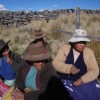
RIGHTS-PERU: Following the Clues in Exhumation of Massacre Victims
The daylight is fading, but Francisca Huanca's hopes are growing brighter. "Yes, they're his sneakers, he liked to play football," she says with tears in her eyes. She has just caught a glimpse of the remains of her husband, nearly three decades after he was murdered in the biggest massacre committed by the Maoist Shining Path guerrillas in Peru's highlands.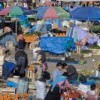
Keeping Healthy Veggies from Turning Deadly
Fatal outbreaks of food poisoning in the United States, Mexico and Europe expose the failure of regional and global initiatives to ensure that fruits and vegetables are safe and healthy.
BRAZIL: Women in Favelas Broadcast Peace
Local women's voices have begun to be heard over a community radio station now broadcasting in Complexo do Alemao, a clump of favelas or shantytowns on the north side of this Brazilian city that were ruled until recently by armed drug gangs.ENVIRONMENT-CHILE: Native Seeds in Danger of Being Monopolised
Fear is growing among environmental and indigenous organisations in Chile over the possible appropriation of native seeds by foreign companies, opening the doors to transgenic crops and their negative impact on biodiversity.RIGHTS-EL SALVADOR: Rumours of Amnesty Repeal Cause Panic
The mere rumour that El Salvador's Supreme Court (CSJ) might be thinking of repealing the amnesty law was enough to trigger an institutional crisis in this country, showing how fragile its recovery is from the wounds left by the 1980-1992 civil war.
ENERGY-BRAZIL: Small Dams, Big Problems
Several rivers in the western Brazilian state of Mato Grosso are likely to become chains of artificial reservoirs feeding small hydroelectric plants (SHP), sometimes with larger power stations in between.MEXICO-RIGHTS: Activists Tell U.N. High Commissioner They’re in Danger
Reports of extrajudicial executions, forced disappearances, kidnappings and assaults are some of the heavy baggage that U.N. High Commissioner for Human Rights Navi Pillay is taking home from Mexico.GUATEMALA: Child Abuse Starts at Home
Joshua Kotouc, a doctor from the U.S., came with a group of missionaries to San Miguel Chicaj, a small town in the mountainous province of Baja Verapaz in northern Guatemalan, in 2006. "El Gringo", as he is known in the community, decided to stay on out of "altruistic" motives.« Previous Page — Next Page »


The Week with IPS

NEXT STOP - SDGs
Tracking global progress towards a sustainable world
Tracking global progress towards a sustainable world

