Languages
Tuesday, November 24, 2026



News and Views from the Global South
Latin America & the Caribbean

Latin America Feels the “Garzon Effect”
Latin America owes Spanish Judge Baltasar Garzón, who is facing prosecution in his country for trying to investigate Franco-era abuses, for the groundbreaking invocation of legal principles that have led to trials for crimes against humanity in Argentina, Chile, Guatemala, Peru and Uruguay, human rights lawyers say.HONDURAS: Truth Commission Under Fire from All Sides
The Truth and Reconciliation Commission set up to investigate the June 2009 coup that ousted Honduran president Manuel Zelaya will begin its work in May under the sceptical watch of a wide range of observers, from human rights organisations to right-wing political sectors.
PARAGUAY: Bamboo Against Deforestation
Uncontrolled expansion of cattle farming in Paraguay has led to "cutting down trees and planting exotic grasses," says environmentalist Guillermo Gayo. To put a halt to this practice in the southern department of Paraguarí, the foundation he heads has implemented what is known as "permaculture."
VENEZUELA: Yanomami Put Body Painting Down on Paper
Men and women of the Yanomami people paint their bodies, drawing straight, curved, dotted and parallel lines, arcs and circles, triangles, rectangles, grids, spider's webs or rings, all arranged as if on a checkerboard.CHILE: Rebuilding Smiles
Alongside crucial emergency relief efforts, numerous organisations are offering free movies, concerts, plays, comedy performances and other cultural events aimed at lifting the spirits of people suffering the after-effects of the earthquake and tsunami that struck central and southern Chile on Feb. 27.MEXICO: Rights Activists Face Threats, Arbitrary Detention – and Worse
Francisco Jiménez, a member of the National Committee of Rural and Fishing Unions (CONORP) was arrested on Apr. 7 in the Mexican capital by agents from the southern state of Chiapas in what activists say is another case of arbitrary detention.
PARAGUAY: Native Group Defends Land Claim Before Inter-American Court
One of the three public hearings held this week in Lima by the Inter-American Court of Human Rights discussed the responsibility of the Paraguayan state for violations of the right of indigenous communities to collective ownership of their land.COSTA RICA: (In)human Trafficking
The rescue in a Costa Rican port of 36 Asians working as slaves in appalling conditions on two fishing boats once again highlighted the need to fight people trafficking in this Central American country.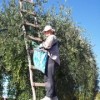
ARGENTINA: Invisible Rural Women
"I had never worked before, and now I produce kilos and kilos of dried fruit to sell. They taught me how to dry peaches, tomatoes, peppers and grapes, and I decided on my own to try it with melons and pears - and they were spectacular," Susana Robledo, a proud new entrepreneur from rural Argentina, told IPS.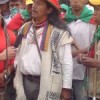
COLOMBIA: Indigenous Justice Put to the Test
Feliciano Valencia, who holds the rank of minister for the Nasa indigenous people in the southwestern Colombian province of Cauca, was arrested Saturday but released on bail.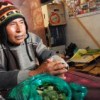
Q&A: “Morales Is a Guide in a Long Period of Change”
The resurgence of the thinking of Aymara "amautas" or shamans about nature, the collective welfare of society and the defence of life is now a political project in Bolivia led by left-wing President Evo Morales.JAMAICA: Nursing Exodus May Only Get Worse
The shortage of nurses throughout the Caribbean has reached chronic proportions, in a region already struggling with an ailing health care system.ARGENTINA: Fathers of the Plaza de Mayo – the “Rearguard”
Through their decades-long struggle to uncover the fate of their missing children, forcibly disappeared during the 1976-1983 military dictatorship in Argentina, the Mothers of the Plaza de Mayo in their emblematic white headscarves have earned international renown. Now a new documentary shines the spotlight on the men who supported and encouraged these brave women from the shadows: the fathers of the Plaza de Mayo.
Q&A: Equality for Women – “The Core of the Problem is Care”
"Women help to reduce poverty and raise family incomes, but they pay too high a price for it, because in every country their working days are longer than men's," said Sonia Montaño, head of the Economic Commission for Latin America and the Caribbean's (ECLAC) Division for Gender Affairs.
COLOMBIA: “Body Count” Scandal Haunts Uribe’s Candidate
The front-runner in the polls for Colombia's presidential elections, Juan Manuel Santos, has come under fire from his rivals for his role in the scandal over young civilians killed by the army and passed off as guerrilla casualties, which broke out while he was defence minister.GUATEMALA: Bringing Murdered Activist Bishop Back to Life on the Screen
On the evening of Apr. 26, 1998, as Bishop Juan Gerardi returned to the parish house at St. Sebastian's Church, three blocks from the seat of national government in the heart of the Guatemalan capital, he had no idea it would be the last day of his life. That night, his head was bludgeoned with a concrete block.ECUADOR: Environmental Inspection in Yasuni Park
Representatives of Ecuador's ombudsman's office and environmental groups are visiting the Yasuni National Park on Saturday, home to some of the world's last indigenous people still living in voluntary isolation, in order to verify reports of illegal activity by oil companies.ENVIRONMENT-BRAZIL: A Tragedy of Local and Global Dimensions
The people who live in the favela of Guararapes are probably unaware that the heavy rains that forced them to flee their homes were caused by a phenomenon that is affecting the whole planet: global warming.CHILE: Custody Decision Violated Lesbian Judge’s Rights
The attorneys representing Chilean Judge Karen Atala, a lesbian who brought her case before the Inter-American Commission on Human Rights claiming discrimination in the loss of custody of her three daughters, accused the Chilean state of sending out "unequivocal" signals of a lack of will to implement the regional body's recommendations.
CARIBBEAN: Final Throes for Jamaica’s ‘Hippie Paradise’?
For centuries, Negril, a seven-mile stretch of white sand beach on the western tip of Jamaica, was cut off from the rest of the island by bad roads and a large swamp.
SOUTH AMERICA: Clear Water – Mercosur’s Underground Treasure
Invisible beneath a vast area of Argentina, Brazil, Paraguay and Uruguay, the Guaraní Aquifer is one of the world's largest reserves of freshwater. Despite supplying water to millions of people, it is neither contaminated nor overexploited.« Previous Page — Next Page »


The Week with IPS

NEXT STOP - SDGs
Tracking global progress towards a sustainable world

