Languages
Wednesday, November 25, 2026



News and Views from the Global South
Latin America & the Caribbean
SOUTH AMERICA: Anti-Nuclear Activists to Form Common Front
Environmental organisations in Chile plan to revive the anti-nuclear movement in the Southern Cone of South America, in response to vigorous lobbying by corporations and politicians in favour of nuclear energy in the region.
NICARAGUA: Women Bear the Brunt of the Crisis
"Don’t worry, your job will be here when you come back," Lorena Castillo’s supervisor reassured her when she asked to take a day off for a gynaecologist appointment. She had been working at the textile factory for the past six months and it was the first time she asked for a day off. It turned out to be her last.URUGUAY: Rural Schools Threatened by Emptying Countryside
Cono Perdigón rides a bus that bounces its way down a dusty, pitted road to reach the rural schoolhouse where he teaches.COLOMBIA: UN Confirms ‘Systematic’ Killings of Civilians by Soldiers
Philip Alston, the U.N. rapporteur on extrajudicial executions, said this practice is "systematic" in Colombia. But he added that he did not have evidence that it was a state policy, as many victims and human rights defenders argue.PERU: Govt Partly Backs Down in Standoff with Native Groups
The Peruvian Congress repealed Thursday two of the most controversial decrees that sparked protests by indigenous groups which ended in bloodshed early this month.ENVIRONMENT-LATIN AMERICA: Green Parties Going It Alone
Fed up of waiting for existing parties to take up the cause of sustainable development and establish appropriate government policies to that end, environmental campaigners in Latin America have begun an increasingly high-profile battle for power in order to carry out their proposals themselves.BRAZIL: ‘Historic’ National Commitment to Wind Energy
A commitment signed by federal and state authorities in Brazil Thursday was described by the energy minister as a "historic step" towards promoting wind power.PARAGUAY: University Opens Doors to Native Students
Video camera in hand, Isidro Romero is getting ready for another day of classes in the Paraguayan capital. He is studying Communications as part of a programme aimed at breaking down the barriers that have blocked access to university level studies by the country’s small indigenous minority.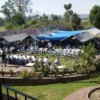
MEXICO: Scientists and Communities Forge Eco-Alliances
Graciela González answers phone calls, organises meetings and gives interviews as part of her work to save a river from ecological disaster. Thousands of kilometres away, farmer Gonzalo Rodríguez helps take air samples in a region polluted by petrochemicals.CHILE: Festival to Showcase Films on Native Peoples
Thanks to the growing number of films by and about indigenous peoples, over 90 movies, mainly from Latin America, will be screened and voted on by spectators at the First Chilean Indigenous Peoples' Film Festival in the Pacific port city of Valparaíso.TRINIDAD: Environmentalists Win Round in Smelter Plant Battle
Wayne Kublalsingh could hardly contain himself. Minutes after Trinidad's High Court issued a ruling Tuesday temporarily halting construction of a controversial smelter plant, Kublalsingh ripped open his shirt, revealing a jersey emblazoned with the words: "No Smelter".
ARGENTINA: Out of the Frying Pan and Into the Engine
A town in Argentina has launched a programme that requires restaurants and other food producers to hand over their used vegetable oils to be distilled into biodiesel, which will be used to run the city's vehicles and public transportation.PERU: Congress Probes Massacre; Prime Minister to Quit
At the initiative of the opposition parties, the Peruvian parliament approved the creation of a committee to investigate the clash early this month between indigenous protesters and the police near the town of Bagua in the northern province of Amazonas, which according to official reports left a death toll of 34.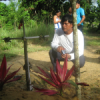
PERU: Families of Dead Native Protesters Tell Their Stories
Sobbing, an indigenous woman dressed in black cries out as she sees us arrive: "My son, my son, they have killed my son!" She is Andrea Rocca, the mother of Felipe Sabio, a young man who died in a clash between police and indigenous protesters in the northern Peruvian region of Amazonas.GUATEMALA: Crisis Hits Local Governments in Pocketbook
Incomplete infrastructure works and development projects and dismissals of teachers and municipal employees are some of the consequences of the global economic crisis in rural Guatemala, due to the central government’s decision to cut the budget for the country’s 333 municipal administrations.
Q&A: “The Order Was to Kill Us”
The Peruvian government described the recent deaths of police officers in clashes with indigenous protesters in the country’s Amazon rainforest as "genocide" at the hands of "extremist savages."
HAITI: Student Protests Rock State University
The National University of Haiti (UEH) has been gripped by crisis for the last two months, operating under the constant threat of student strikes staged to demand reinstatement of cancelled courses and an increase in the minimum wage.
VENEZUELA: Grassroots Empowerment for Women
In Venezuela "women have passionately embraced community activism, taking on a more committed and active role, and this is reflected in the increasing female participation in neighbourhood assemblies," Alba Rojas, spokeswoman for a community council in Tacagua, a township that spreads along the Caracas-La Guaira highway, told IPS.
JAMAICA: For an Abortion Law That Reaches the Poor
When a Jamaican women’s group Sistren realised the voices of poor women were missing in a national debate on abortion rights, they boldly staged a play before parliamentarians reviewing a draft law that seeks to clarify when abortion can be deemed legal.COLOMBIA: All the President’s Spies
Colombian journalist Hollman Morris phoned an international news agency and said in an agitated voice: "I am being followed by the police."CHILE: Mixed Reception for Indigenous Protection Code
Although it is still in the process of being drafted, a "code of responsible conduct" promoted by the Chilean government to regulate public and private investment in indigenous areas has already drawn resistance.« Previous Page — Next Page »


The Week with IPS

NEXT STOP - SDGs
Tracking global progress towards a sustainable world

