Languages
Monday, October 26, 2026



News and Views from the Global South
Latin America & the Caribbean
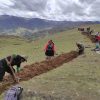
Rural Women in Peru Seed Water Today to Harvest It Tomorrow
"When I was a little girl we didn't suffer from water shortages like we do now. Today we are experiencing more droughts, our water sources are drying up and we cannot sit idly by," Kely Quispe, a small farmer from the community of Huasao, located half an hour from Cuzco, the capital of Peru's ancient Inca empire, told IPS.
Green Gas: Energy as a By-Product of Sugarcane in Brazil
First came sugar. For four centuries, it was the main sugarcane product in Brazil. But since the 1970s sugarcane has grown and diversified as a source of energy: ethanol, electricity and biogas.
Ecuador and the Pandora Papers: Death Threats and Impunity
In a ceremony in early October, the president of Ecuador and my opponent in the presidential elections, Guillermo Lasso, issued a warning to those "daring who seek to scrutinize" his assets. He was referring to the Pandora Papers published by the International Consortium of Investigative Journalists (ICIJ), which revealed how dozens of world leaders - including Lasso - hid billions of dollars to avoid paying taxes.
Energy Inequality in Latin America Exacerbated by Pandemic, High Prices
The effects of the covid-19 pandemic and high energy prices have had an impact on the consumption of polluting fuels in Latin America and the Caribbean, exacerbating energy poverty in the region.
Homeless Camps, a Reflection of Growing Inequality in Chile
Camps made up of thousands of tents and shacks have mushroomed in Chile due to the failure of housing policies and official subsidies for the sector, aggravated by the rise in poverty, the covid-19 pandemic and the massive influx of immigrants.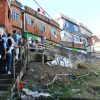
Climate Crisis Exacerbates Urban Inequality in Latin America
The Brazilian megalopolis of São Paulo recorded 932 flooded premises on Feb. 10, 2020. The Mexican city of Tula de Allende was under water for 48 hours in September 2021. In Lima it almost never rains, but the rivers in the Peruvian capital overflowed in 2017 and left several outlying municipalities covered with mud.
Poor Communities on the Salvadoran Coast Face Constant Threat of Eviction
Small farmer Francisco Martínez pushed his son’s wheelchair to another part of the courtyard of their house, located in a small coastal community in El Salvador, before saying sadly: "It would be a great injustice if they kicked us out of here."
Growing Amazon Deforestation a Grave Threat to Global Climate
For three weeks, the Brazilian government concealed the fact that deforestation in Brazil’s Amazon rainforest increased by nearly 22 percent last year, accentuating a trend that threatens to derail efforts to curb global warming.
No Vaccine for the Pandemic of Violence Against Women in Latin America
Despite significant legal advances in Latin American countries to address gender-based violence, it continues to be a serious challenge, especially in a context of social crisis aggravated by the covid-19 pandemic, which hits women especially hard.
Corporate Fear Drives Caribbean Vaccine COVID-19 Mandates
When face-to-face Cabinet meetings resumed in Jamaica following more than a year of virtual meetings due to COVID-19, Ministers lined up to have their immunisation cards inspected.
Why Seed Companies Fear México
Last month México’s Supreme Court provided hope for biodiversity, especially in the Global South, while flaming fear for seed companies. In a historic step, it ruled for corn advocates and against genetically modified (GMO) corn. The decision was a momentous act in country where maíz (corn) carries daily and sacred significance.
Biofuels, the World’s Energy Past and Future
The number of victims of serious burns, some fatal, has increased in Brazil. Without money to buy cooking gas, the price of which rose 30 percent this year, many poor families resort to ethanol and people are injured in household accidents.
Indigenous Communities & Human Rights Defenders Under Siege in Colombia
On 21 October, I had the honor of addressing the UN Security Council at the annual open debate on Women, Peace and Security. I spoke as a member of Cxhab Wala Kiwe, which means “Great People’s Territory” in the Nasa Yuwe language, also known as ACIN—Association of Indigenous Councils of the North of Cauca—in Colombia.
Obtaining Water, a Daily Battle in Argentina’s El Impenetrable Region
Next to the brick or adobe houses of El Impenetrable, a wild area of forest and grasslands in northern Argentina, loom huge plastic barrels where rainwater collected from the corrugated iron roofs of the houses is stored. However, the barrels are empty, because it has hardly rained for two years, local residents complain.
FRANCE: Translating a Harlem Renaissance Writer
Claude McKay is having something of a rebirth in France, thanks to independent publishers and to translators such as Jean-Baptiste Naudy.
Risky business: Why Sustainability is now Central to Mitigating Risk
The COVID-19 pandemic has undoubtedly caused the largest economic and societal shock the world has experienced this century. Yet it was not unforeseen.
Combating Energy Poverty in Chile with Community Inclusion
More than 90 percent of Chile's 17.5 million people have access to electricity. But many live in energy poverty because they do not have access to hot water, have unsafe connections, houses without thermal insulation and with indoor pollution, or can't afford to pay the monthly bill.
Climate Crisis Fuels Exodus to Mexico, Both Waystation and Destination
In September, 31-year-old Yesenia decided to leave her home on the outskirts of the northern Honduran city of San Pedro Sula, driven out by violence and the lack of water.
Latin America Heads to Glasgow Climate Summit with Half-Empty Hands
Latin America and the Caribbean are heading to a new climate summit with a menu of insufficient measures to address the effects of the crisis, in the midst of the impact of the covid-19 pandemic.
For Girls, the Biggest Danger of Sexual Violence Lurks at Home
"During the pandemic, sexual violence against girls has grown because they have been confined with their abusers. If the home is not a safe place for them, what is then, the streets?" Mía Calderón, a young activist for sexual and reproductive rights in the capital of Peru, remarks with indignation.
10 Days to Defeat 2547 Miles of Pain
They call it the Tlaxcala-New York Route. Between one end and the other, there are 2547 miles. An infamous road that today is one of the most important channel for human trafficking gangs. And a route seemingly impossible to destroy because of its million-dollar profits.« Previous Page — Next Page »





The Week with IPS

NEXT STOP - SDGs
Tracking global progress towards a sustainable world
Tracking global progress towards a sustainable world

