Languages
Wednesday, November 18, 2026



News and Views from the Global South
Latin America & the Caribbean

No Hope in Sight for Latin America’s Prison Crisis
In Latin America’s prisons, notorious for extreme overcrowding and violence, inmates live in constant danger of being killed – a contradiction in a region where virtually every country has abolished the death penalty.
Ecological Latrines Catch on in Rural Cuba
Most people in Cuba without toilets use the traditional outhouse. But an innovative, ecological alternative is catching on in remote rural communities.
People’s Tribunal Hopes Verdict on Mining Abuses Gains Traction
A recent case study on Canadian mining abuses in Latin America has woven one more thread of justice into the tapestry of international law.
Missing Students Case Also Highlights Racism in Mexico
The mother tongue of Celso García, a 51-year-old indigenous Mexican, is Mixteca. As a boy, García, the father of one of the 43 students forcibly disappeared four months ago, had to learn Spanish to make his way in mainstream society in this country where most people are of mixed-race heritage.
OPINION: Brazil Can Help Steer SDGs Towards Ambitious Targets
With the current Millennium Development Goals (MDGs) expiring at the end of this year to be replaced by the Sustainable Development Goals (SDGs) which will set priorities for the next fifteen years, 2015 will be a crucial year for the future of global development.
Teenage Girls in Argentina – Invisible Victims of Femicide
The murder of a young Argentine girl on a beach in neighbouring Uruguay shook both countries and drew attention to a kind of violence that goes almost unnoticed as a cause of death among Argentine adolescents: femicide.
Antiguan Shanty Dwellers Ask if Poverty Will Be the Death of Them
It was early on a Saturday morning and there was no sign of life in the community. The shacks erected on both sides of the old, narrow road that winds through the area are all surrounded by zinc sheets which rise so high, it’s impossible to see what lies on the other side.
Young People in Latin America Face Stigma and Inequality
Young people in Latin America now enjoy greater access to education. But in many cases their future is dim due to the lack of opportunities and the siren call of crime in a region where 167 million people are poor, and 71 million live in extreme poverty.
Cuba and U.S. Skirt Obstacles to Normalisation of Ties
The biggest discrepancies in the first meeting to normalise relations between Cuba and the United States, after more than half a century, were over the issue of human rights. But what stood out in the talks was a keen interest in forging ahead, in a process led by two women.
Forced Disappearances Are Humanitarian Crisis in Mexico
The Mexican government will face close scrutiny from the United Nations Committee on Enforced Disappearances – a phenomenon that made international headlines after 43 students from a rural teachers college were killed in September in Iguala, in a case that has not yet been fully clarified.
Prosecutor’s Death a Test for Argentine Democracy
The death of a special prosecutor investigating one of the biggest unresolved mysteries in the history of Argentina, the bombing of a Jewish community centre over 20 years ago, has put to the test an immature democracy that is caught up in a web of conspiracy theories and promiscuity between the secret services and those in power.
The Bahamas’ New Motto: “Sand, Surf and Solar”
When it comes to tourism in the 15-member Caribbean Community (CARICOM), The Bahamas -- 700 islands sprinkled over 100,000 square miles of ocean starting just 50 miles off Florida -- is a heavyweight.
OPINION-CUBA/US: Catching a Glimpse of the Possible Future
All Cubans, on either side of the Florida Straits, but in places like Spain, France or Greenland – where there must be a couple of Cubans - as well felt it was a historic moment that included each and every one of us, when U.S. President Barack Obama announced on Dec. 17 the normalisation of relations after half a century of hostility.
Caribbean Youth Ready to Lead on Climate Issues
At 24 years old, Stefan Knights has never been on the side of those who are sceptical about the reality and severity of climate change.
Cuban Diplomacy Looks Towards Both Brussels and Washington
Cuba has decided to move ahead in its talks with the European Union towards an agreement on cooperation parallel to the negotiations aimed at normalising relations with the United States after more than half a century of hostility.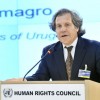
OPINION: A New Era of Hemispheric Cooperation Is Possible
Two decades after the first Summit of the Americas, a lot has changed in the continent and it has been for the good. Today, a renewed hemispheric dialogue without exclusions is possible.
OPINION: Cuba and the United States – A New Era?
On Dec. 17, by freeing the five Cuban anti-terrorists who spent over 16 years in U.S. prisons, President Barack Obama repaired a longstanding injustice while changing the course of history.
Electioneering Undermines Fight Against Crime in El Salvador
The upcoming municipal and legislative elections in March and the hiring of former New York mayor Rudolph Giuliani as a kind of anti-crime tzar are not the best equation for bringing down El Salvador’s high murder rate, analysts say.
Anemia in Eastern Cuba Reflects Inequality
Cuba has met the United Nations goal of reducing hunger. But anemia caused by malnutrition is still a problem among infants, small children and pregnant women in this Caribbean island nation, which has been in the grip of an economic crisis for over two decades.
Island States Throw Off the Heavy Yoke of Fossil Fuels
The Caribbean nation of St. Kitts and Nevis, on a quest to become the world’s first sustainable island state, has taken a giant leap in its programme to cut energy costs.
Haitians Worry World Bank-Assisted Mining Law Could Result in “Looting”
With Haiti’s Parliament having dissolved on Tuesday, civil society groups are worried that the Haitian president may move to unilaterally put in place a contentious revision to the country’s decades-old mining law.« Previous Page — Next Page »


The Week with IPS

NEXT STOP - SDGs
Tracking global progress towards a sustainable world
Tracking global progress towards a sustainable world

